
Taxing affair as Supreme Court makes history in Glasgow

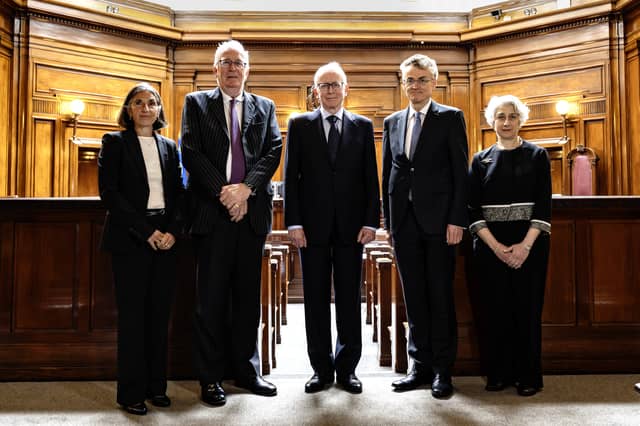

UK’s highest court begins week-long series of hearings in Scotland’s biggest city
It is an ornate nook in the heart of one of the finest municipal building complexes in Britain which ordinarily deals in common or garden matters relating to pub licences and betting shops.
But yesterday, Burgh Court Hall played host to the highest court in the land, attracting legal students, the odd solicitor, and a gaggle of ordinary members of the public.
For the first time ever, the Supreme Court convened in Glasgow on Monday, offering a unique opportunity to witness the UK’s most senior justices at work.

As part of efforts to make the court more accessible to the public, it will sit for four days in the historic chamber, which once handled an array of civic and legal matters in the days of Glasgow’s burgh court system.
Nowadays, the grandly space - a vision of mahogany panels and Victorian flourishes - is routinely used for hearings of the City of Glasgow Licensing Board, as well as British citizenship ceremonies.
Some may be more familiar with its exterior, which featured in a high-speed car chase scene in Hobbs & Shaw, the ninth instrument of the Fast & Furious movie franchise. Anyone hoping the visit of the Supreme Court - only the fifth time it has heard cases outside of London - would be a similar high-octane ride was in for a rude awakening.
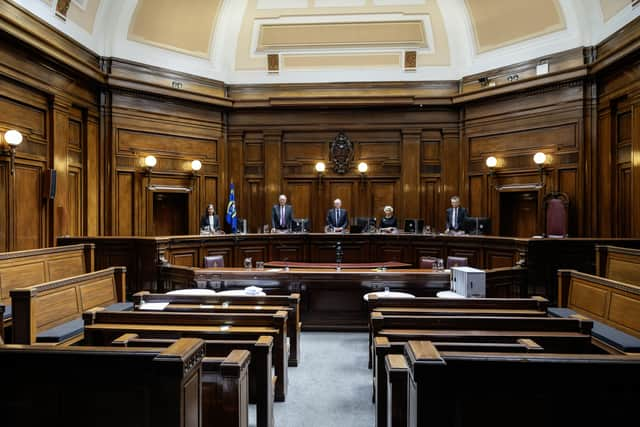
Which is not to downplay the significance of the occasion. Indeed, for some on the bench, it was clear the occasion was tantamount to a homecoming, with Lord Reed of Allermuir, the court’s president, smiling as he began the hearing.
“We’re delighted to be here,” said the 69 year-old, who previously served as a senior judge in Scotland for 13 years. “We’ve got a very interesting week ahead of us, and this is a good place to start, involving a company that’s based in Glasgow.” One of his fellow justices, Lord Doherty, who sat as a judge in the Inner House of the Court of Session, nodded along approvingly.

The initial case, as Lord Reed indicated, undoubtedly involved a Glasgow-headquartered institution, but whether it was as engrossing as he suggested depended entirely on your appreciation of, and interest in, complex taxation legislation.
The appeal stemmed from a probe by the energy regulator, Ofgem, into ScottishPower regarding misselling, poor complaints handling, and a lack of cost transparency.
The firm agreed to pay a £28 million penalty, then went on to attempt to claim tax deductions, which were denied by HM Revenue & Customs - the subject of the current dispute.
Given the public money involved, it is clearly a case of considerable significance. What it did not involve, however, was sweeping narratives. Instead, the court heard a series of dry submissions from David Ewart KC, representing HMRC, around the specific consumer-related payment calibrations, and whether they could be deducted to lower taxable profits.
Initially, the courtroom was close to full, but after lunch, it had thinned out a little, in spite of Lord Reed’s efforts to draw as large an audience as possible. The same trend was in evidence online, where by 2.30pm, only nine people were tuned into a live stream.
It may be that other cases due to be heard this week will be easier to digest, not least a hearing involving Rogano, the famous Glasgow seafood restaurant.
Comments
Want to join the conversation? Please or to comment on this article.