
Storm Amy Scotland: 400-year-old sycamore tree planted by King of Scotland 'severely' damaged by Storm Amy

The tree is described as a ‘living symbol’ of the monarch’s reign in Scotland.
A 400-year-old sycamore tree thought to have been planted in the early 17th century by James VI, the former King of Scotland and England, has been severely damaged by Storm Amy.
The tree lies in the gardens of Scone Palace in Perth, a category A-listed historic house that was once the site of the Stone of Destiny - an ancient symbol of Scottish monarchy still used to crown kings and queens in the UK.
A statement posted on the palace’s Facebook page said staff were “heartbroken” to discover the tree had lost a limb in the aftermath of the storm, which whipped wind gusts of over 85mph across Scotland.
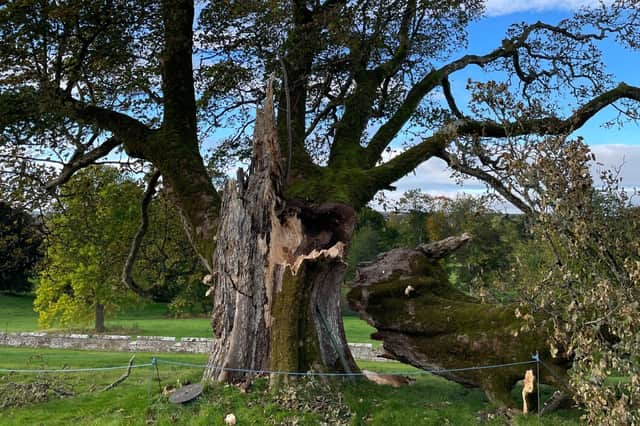

William, Viscount Stormont of Scone Place, said: “We are devastated that there has been damage to this important and historic tree. The tree has been enjoyed by many visitors to Scone Palace for at least four centuries, and we hope the work our team does will preserve the life of the tree for a few more decades”.
The palace’s dedicated gardening team and tree surgeons are doing everything possible to preserve what remains of the historic tree, a statement said.
Palace management said they wanted to use the wood from the fallen limb to create something that would be a “lasting reminder” of the tree’s centuries of growth and endurance.
The natural landmark is described as the “finest” of the commemorative trees planted in the gardens around the palace by royalty from the United Kingdom, Sweden, Spain and Japan.
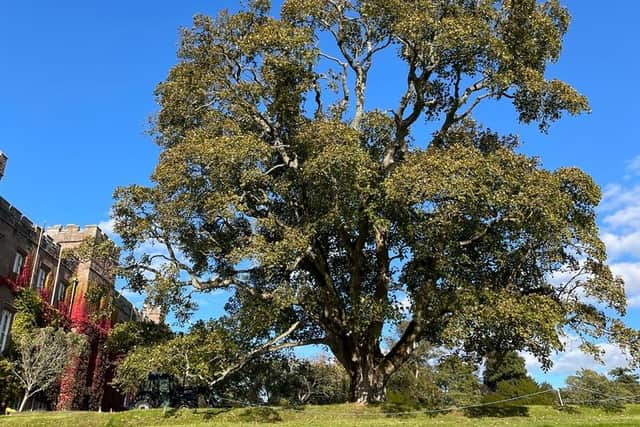
The palace’s website reads: “Throughout the centuries, the King James VI Sycamore has borne witness to countless royal ceremonies, celebrations and gatherings. Its sturdy trunk and verdant canopy have provided shade and shelter to generations of visitors, offering a peaceful respite amid the splendour of the palace gardens.
“The significance of the King James VI Sycamore extends beyond its historical roots. For many, it serves as a tangible link to Scotland's rich heritage and royal traditions, evoking a sense of pride and reverence for the nation's storied past.”
Born in 1566, James VI and I was the son of Mary, Queen of Scots. He became the king of Scotland in 1567 when Mary was forced to abdicate.
After the death of Elizabeth I in 1603, he became James I of England. He is therefore known as James VI and I.
He spent the majority of his life in England after he became king, and only returned to Scotland once in 1617, when he spent around three months touring his castles and palaces.
First Minister John Swinney said on Monday that weather events such as Storm Amy were an “illustration of the climate problem” and showed the urgent need for action.
“The fact that we’re having storms of this nature, and we’re experiencing the degree of disruption that we are facing, is a practical demonstration of the effects of climate change,” he said.
“These storms are happening more frequently. They are disrupting power supply, they are disrupting people’s lives as a consequence.”
Engineers were still trying to reconnect thousands of homes that remained without power overnight after Storm Amy battered the country on Friday and into the weekend.
Comments
Want to join the conversation? Please or to comment on this article.