
Every mobile phone in Scotland to blast emergency siren in government test - here's what you need to know

The system has been deployed for real five times since it was first tested in 2023
Mobile phones across the UK will be sent a siren alert in a second national test of an emergency system warning people of danger to life, the UK government has announced.
The system is used by the government in emergency situations where there is a threat to life, such as terrorist attacks or during extreme weather. It allows information and advice to be shared widely in an emergency.
The test is scheduled for September and is the second UK-wide trial of the system.
It was first trialled in April 2023, however some users reported that their phones did not receive the alarm, including many Three network customers.
The government has committed to test the system regularly to ensure people are familiar with the alert and smooth out any technical problems.
What should I expect?
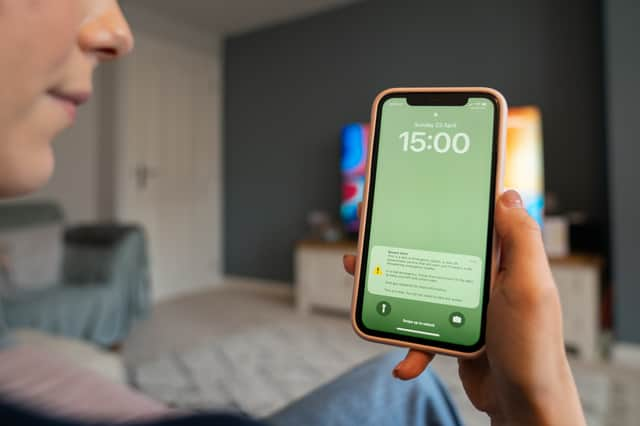
The test is scheduled for around 3pm on Sunday, September 7. It will see phones vibrate and make a loud siren sound for around ten seconds.
The alert will be accompanied by a pop up message confirming that the alert is a test.
The siren will sound even if your phone is on silent but not if it is switched off. Your device does not have to be connected to mobile data or wifi to receive the alert.
The government said only those using 4G and 5G phone networks in the UK will receive the alert.

Has the system been used before?
So far, alerts have been deployed five times at a regional level.
In January this year, 4.5 million people in Scotland and Northern Ireland received an alert during Storm Éowyn after a red weather warning was issued.
Approximately 3.5 million people across Wales and the South West of England received an alert during Storm Darragh in December 2024, which killed two people.
The system was also deployed when an unexploded World War II bomb was discovered in Plymouth.
Pat McFadden, Chancellor of the Duchy of Lancaster, said: “Emergency Alerts have the potential to save lives, allowing us to share essential information rapidly in emergency situations including extreme storms.
“Just like the fire alarm in your house, it’s important we test the system so that we know it will work if we need it.”
Countries including the US and Japan use similar systems to alert people in an emergency.
How will vulnerable groups be protected?
Domestic abuse charities have previously raised concerns that the alarm could inadvertently expose the location of hidden phones used by victims to communicate with family members and services.
The government said it is engaging with charities in the sector and that in some scenarios people may choose to switch off alerts if, for example, it may reveal a concealed phone.
A guide has been published advising people on how to opt out if needed.
For people who are deaf or blind, it said audio and vibration attention signals will alert people to the message, if accessibility notifications are switched on.
Targeted communications campaigns will also be launched to support vulnerable groups ahead of the test.
The government said personal data like location will not be collected or shared, and emergency services and the UK government do not need your phone number to share an alert.
Comments
Want to join the conversation? Please or to comment on this article.