
How Scottish football can exploit the feel-good factor around historic World Cup qualification
The World Cup qualification is the ideal catalyst for driving forward all levels of Scottish football

Like many footsoldiers in the Tartan Army, Stuart Murphy has witnessed some of the defining moments in the history of the Scotland’s men’s team. But nothing comes close to Tuesday night.
“I can remember the 1974 World Cup, the Archie Gemmill goal against Holland four years later, and the Davie Narey toe poke,” he said. “But the Denmark win eclipsed all that.”
The 61 year-old, the chief executive of the Scottish Football Union fans group, and a former chairman of Dundee FC, was rejoicing after Tuesday’s historic 4-2 victory at Hampden. That triumph brought to an end Scotland’s excruciating near three decade-long absence from the FIFA World Cup.
As with many who hold a keen interest in the future health of the game, he wants to harness the feel-good energy around Steve Clarke’s team and ensure it is put to good use.
“The euphoria across the whole country has been infectious, and now is the moment to capitalise on that,” he said. “We need to get kids playing football, going to see their local clubs and making sure they’re engaged with the game.”


With Hampden Park set to host games for the UEFA European Championships in 2028, the profile of, and interest in, the men’s national team is likely to remain significant for years to come. For those in positions of power, the challenge is to build on that, both at an elite level, and at the foothills of the game.
Quite how those aims are achieved, however, is subject to debate and has been for years. After a succession of strategies, reviews and summits, can the buzz around 2026 finally help deliver sustained, multi-level success?
‘It’s not conclusive, but it helps’
Even among those with a deep and informed interest in the game, it is a difficult question to answer. “The evidence to substantiate that qualifying for a World Cup and the extent to which that directly boosts lasting participation in football is at best mixed, not conclusive, but it helps,” said Professor Dr Grant Jarvie, chair and director of the University of Edinburgh’s Academy of Sport.
“When Andy Murray was winning at Wimbledon, it boosted spikes in participation, but only for a while. Motherwell’s attractive football style has undoubtedly increased attendance figures at Fir Park … the year after the Lionesses won the 2022 European Championships, 1,500 new teams registered.
“Increased visibility, feel-good factors and success may or may not contribute to participation boosterism, depending on the context and the circumstances.”
For its part, the Scottish Football Association (SFA) said it is committed to ensuring the legacy of 2026 is felt for years to come. One immediate boost is the promise of around £9 million to £10m in prize money from FIFA for reaching the group stage. But once player bonuses and the costs for travel, setting up a base camp and other logistics are factored in, the investable windfall will be around a third of that figure.
Participation on the rise
Yet change is already underway. Only last month, the SFA published a review of youth development, which noted that achieving consistent qualifications for major international tournaments and the financial sustainability of the nation’s clubs both required a strong youth-set up. Coupled with ongoing efforts to target help towards children in deprived areas, and further bolster the girls’ and women’s game, the governing body said it wanted to ensure Scotland’s qualification benefits everyone.

“We have been pro-active in ensuring the success of the men’s team in qualifying for the World Cup for the first time in 27 years has the deepest impact possible, positively affecting the country as a whole and enabling us to provide better opportunities for people of all ages and abilities to love the game and aspire to emulate Scotland’s new generation of heroes,” an SFA spokesman said. “This is the real power of football - inspiring the nation and transforming lives.”
Statistics certainly show the SFA and other organisations have been making headway in driving up participation levels at the non-professional and non-elite levels of the game. At the end of 2023, it could count on 161,412 registered grassroots participants, more than 60 per cent of whom were under the age of 18.
That total figure marked a new record, and the second consecutive year the milestone had been reached. It is understood the numbers have continued to grow since, with participation in girls’ and women’s football continuing to enjoy a sharp upward trend.
Call for ‘radical changes’
Even so, senior figures with first-hand experience of the sport’s policies believe more can, and should, be done. “There’s no better time than now, because when the international game is on the up, that’s the best moment to capture self-belief and ambition, and try and rethink how we’re spending money and the youth set up we have,” former first minister Henry McLeish said. “There have been many complaints recently from people in the grassroots game that there’s not enough money coming through to them.
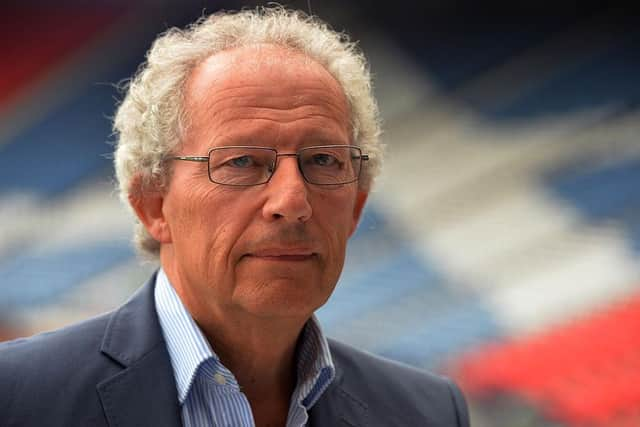
“We don’t need to start afresh, there’s a great deal to build upon. But if the future of the game is about investment in youth, then I think there has to be some radical changes.”
Along with the well-known statistic concerning Scotland’s pained wait for a World Cup, the SFA’s youth development review pointed out that since 2000, the nation’s under-19 and under-21 men’s teams qualified for one out of 39 possible UEFA Euros. The percentage of young players making it through to senior football in the Scottish Premiership were reaching “crisis point”.
The review said that despite “substantial efforts and investments” made to improve the development of Scottish talent since the turn of the millennium, the focus has been on players aged 12 to 16. It therefore advocated a shift in strategy, away from just formal, structured football events to a more holistic approach around the early years.
The overarching aim of the review is to improve youth development in men’s football, and realising its ambitions will require more than a recalibration of how younger age groups play.
Prof Jarvie said while there were undoubtedly links to be made between elite football success and boosting junior and grassroots participation, it takes “much more than just a one-off sporting success or the hosting of one major football tournament”. He stressed: “It has to be repeat business, and it requires joined-up, committed synergies across the football landscape including government and local authorities.”
Facility woes
Elsewhere, the SFA’s latest annual strategic report notes that football facilities, especially at grassroots level, “need investment”. In December last year, the SFA launched Pitching In, a campaign to raise £50m by 2030 to improve facilities. It has raised £13.6m to date, with some £8.6m coming from the UK government. The Scottish Government has made no direct investment.
Depending on how the youth development review’s recommendations are executed, its benefits could extend beyond improving the production line of elite-level players, especially where children and young people are concerned. Many believe that is sorely needed.

While the number of participants in the nationwide Active Schools programme - a network run by sportscotland and local authorities - has increased for two consecutive years, reaching 276,965 in 2024/25, that trend ignores deeper problems. The initiative is still playing catch up after the pandemic, and its current numbers are at the lowest level seen since 2015/16.
The latest Scottish Health Survey, meanwhile, found only 68 per cent of children met the guidelines for moderate or vigorous physical activity, including those carried out at school. That is the lowest level on record, and a sharp drop on the 76 per cent recorded a decade previously.
Prof Jarvie pointed out that while more than 90 per cent of football and sport in Scotland is delivered at local authority level, it is not a statutory provision, with variations in how councils provide it. “Once statutory provision is provided for, there is very little money left for football provision,” he said. “If football and indeed sport is important to Scotland, it should be provided for through statutory provision with recognised agreed standards of provision.”
Mr McLeish, meanwhile, agreed that any shift in strategy must dovetail with national policies and targets. “I think that far too often, Scottish football is seen in isolation to the rest of society,” he reflected. “In my view, we should be doing more to involve schools football in the wider game. It’s a way to get a lot of young people playing and realising their ambitions.”
It will take time, money, and political will to deliver the change outlined, but unlike previous efforts to bolster grassroots and youth football, there is an all too rare feeling of elation around the Scotland side to act as a catalyst.
“I don’t want us to look back 25 years from now and realise we haven’t grasped the nettle,” Mr Murphy said. “If we had put forward looking plans in place back in 1974, we might have qualified for tournaments on a regular basis ever since.”
Comments
Want to join the conversation? Please or to comment on this article.