
Eilish McColgan and partner subjected to 'disgusting' racist abuse online
Commonwealth champions calls for action from social media companies

Eilish McColgan has revealed she suffered racist abuse online after posting pictures of her engagement to former athlete Michael Rimmer.
McColgan, who won a gold medal at the 2022 Commonwealth Games in Birmingham and was this week named as an official ambassador for the 2026 Games in Glasgow, has called for social media companies to do more to combat online hate.
She would like to see platforms such as X and Instagram use formal identification to prevent the abuse she faces every day. McColgan, 34, says she has become “numb” to it but appreciates the trauma it causes others.
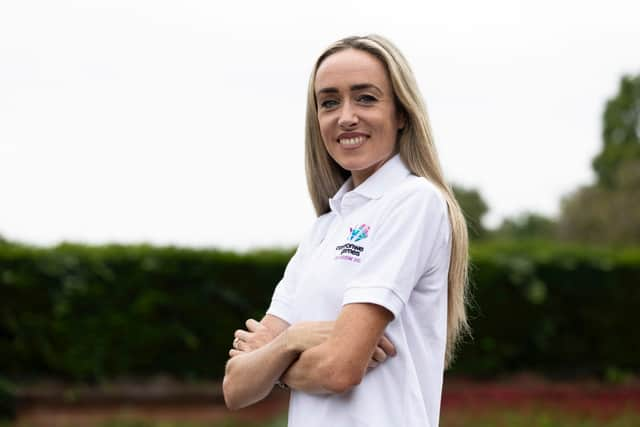

Asked specifically about the racial abuse aimed recently at the England footballer Jess Carter during the Euros, McColgan revealed that she and Rimmer had also been targeted.
“For myself, it [the abuse] is always about body image but I recently posted my engagement to my partner and the racist abuse that we received, being a mixed race couple, was honestly disgusting,” said McColgan.
“I've never read anything like it in my life. That was probably pretty eye-opening for me because it was a different type of abuse that was coming towards me that I'd never experienced before. And it's maybe how my parents feel when they read stuff about me. It was me reading that about someone I love, which was difficult to do, so it probably gave me a little bit of a greater appreciation of what my family probably have to go through when they read stuff about me online.
“Sadly, that's the downside of social media and the online world that we're in. All we can do is keep standing up for ourselves, voicing our disgust at it, outing people who are maybe not afraid to share their names and stuff online but also ask for verification on social media.”
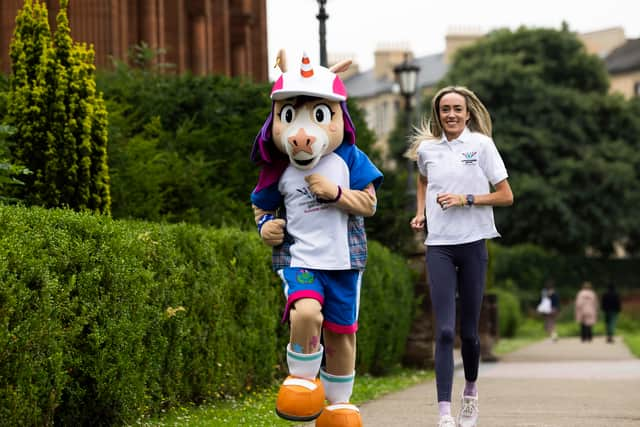
McColgan, who was in Glasgow for the unveiling of the 2026 Commonwealth Games mascot, would like social media users to be verified before being given a platform.
“I think social media probably needs to do better, just small verification checks, whether it's uploading a passport, whatever it is,” she said. “I think it would make a big difference because people won’t want their employers seeing what they're saying online. It's harder to hide behind that because there's probably more consequences behind it. I think it stops people from making bad decisions but, as I said, it is part and parcel of just being online.”
Carter is part of the England squad that has reached the final of the Euros in Switzerland and said this week she would take a step back from social media after suffering online racist abuse since the tournament began. McColgan expressed sympathy for the footballer.
“I mean it's obviously not stopping,” said McColgan. “I don't think it's a new conversation at all. As I said, it's been happening to me for a long long time. It's not right but sadly that's the way the world has gone.
“Honestly, I've become so numb to it. Even speaking about it, I just feel like it's just part of everyday life like I can't stop it so there's no point in me getting all stressed and worked up about it but I do appreciate that for other athletes, it does wind them up and it does actually take a lot out of them emotionally, mentally.
“They find it hard to deal with so all we can do is continue to call it out, try and educate the next generation on not being an arsehole, pretty much. There's not much we can do. Social media needs to crack down on it, having verification would be a very easy way of cutting down probably 90 per cent of the people online that are hiding behind fake names, fake addresses, fake images.”
Comments
Want to join the conversation? Please or to comment on this article.