
Royal Navy signs £135 million deal with BAE Systems to maintain torpedoes


The Torpedo Repair and Maintenance (Tram) deal secures around 315 jobs including 50 across Edinburgh and near Glasgow
The Royal Navy has signed a new £135 million contract with BAE Systems to maintain and repair its torpedoes.
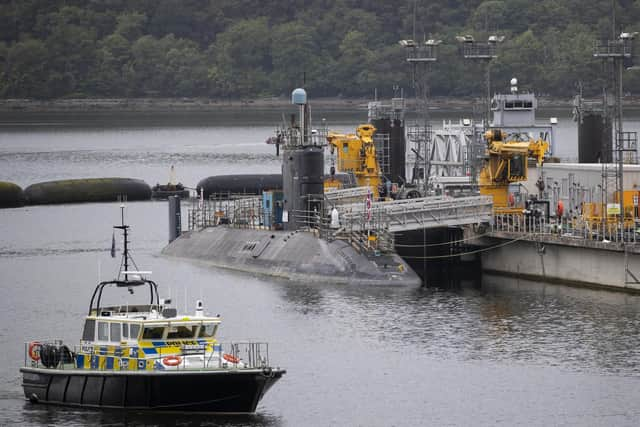
It covers the Navy’s Spearfish and Sting Ray torpedoes used by submarines, surface warships and maritime patrol aircraft to protect UK waters and maintain its nuclear deterrent at Faslane Naval Base, in Helensburgh.
The Torpedo Repair and Maintenance (Tram) deal secures around 315 jobs jobs across the UK, including 150 highly skilled engineering roles, and a further 165 in BAE’s UK supply chain.
The engineering and technician roles include 100 in Portsmouth and 50 more across Edinburgh, Chelmsford and near Glasgow.
The Government has said this is part of its commitment to use defence spending to drive economic growth and deliver well-paid, long-term jobs in advanced manufacturing and engineering across the UK.
Defence minister Luke Pollard said: “This is defence spending doing exactly what it should – keeping our country safe while securing 315 skilled jobs and creating new opportunities across our country.
“We are proud to be backing British jobs, British skills and British industry.”
The three-year contract runs from July 2026 to June 2029.
The contract bridges to a longer-term programme, Whitehead2, which will deliver a modernised torpedo support solution from 2029 onwards.
Rear Admiral Matt Stratton, who is the Navy’s director naval acquisition, said: “This contract extension ensures the Royal Navy retains a safe, reliable and continuous torpedo support capability.
“It is a critical enabler of our operational readiness and directly supports the UK’s continuous-at-sea deterrent.”
Richard Murray, who is director lethality and protect at the National Armaments Director Group Materiel, said: “This contract extension secures continued, reliable support to the UK’s torpedo capability.
“Bringing together the Navy, National Armaments Director Group and industry as a single team has delivered real, tangible results for UK defence.”
Scott Jamieson, who is managing director of BAE Systems’ maritime and land defence solutions, said: “Since 2019 we have delivered consistently high levels of torpedo availability for the UK Armed Forces, supporting both the successful entry into service of Spearfish and the ongoing operational readiness of Sting Ray.
“As a trusted partner to UK defence, we are proud to underpin the nation’s continuous at sea deterrent and anti-submarine warfare capability through exceptional reliability, availability and performance.”
The government says without torpedoes, Britain’s ability to defend its waters, protect trade routes and maintain its nuclear deterrent would be at risk and that the contract will ensure sailors and submariners always have reliable, battle-ready equipment when they need it.
The Spearfish can damage frigates, destroyers, large warships and hostile submarines.
The torpedo's modern variant is said to have a new warhead, a better fuel system, a smarter electronic 'brain', and a fibre-optic guidance link with its parent submarine to improve its accuracy.
It is seven metres long, and the torpedo can hit speeds of up to 80 knots using its gas turbine engine.
In terms of its capabilities, it can be used against targets more than 48km away, and it holds a 300kg aluminised PBX high-explosive charge.
The Stingray can reach speeds of up to 45 knots, can track, identify and attack targets by itself, is also used by the Norwegian armed forces.
The Mod 1 variant has a new sonar system, an insensitive munition warhead, a new tactical and navigation system and a new seawater battery system.
Comments
Want to join the conversation? Please or to comment on this article.