
NHS Scotland crisis: 'Record number' of private hospital and clinic admissions in Scotland revealed

Private admissions reached a historic high of 13,195 in January to March.
An uptake in private medical insurance has been cited as the main reason for Scotland recording a record number of private admissions in a three-month period.
Scotland recorded a 5 per cent increase in private hospital and clinic admissions in January to March compared to the same quarter last year, reaching a historic high of 13,195.
The Private Healthcare Information Network (PHIN), which has just released its latest quarterly update, revealed this was the highest number of admissions ever recorded in a single quarter in Scotland.
The body said the increase had been driven by a 10 per cent rise in private medical insurance-funded admissions, which has exceeded 8,000 for the first time.
Insurance-funded treatments now account for 62 per cent of all private admissions in Scotland, which is the highest proportion since the Covid pandemic. In contrast, self-pay admissions fell by 2 per cent, totalling 5,465 cases.


PHIN’s data also highlights demographic shifts, with increases in admissions among patients aged 40 to 49 and 60 to 69 each rising by 12 per cent. The body said the number of active consultants in private practice was at a record high of 508 for the second quarter running, with significant growth in general surgery and gynaecology specialties.
In June, chair of the British Medical Association (BMA) Scotland Dr Iain Kennedy said the NHS was "dying before our very eyes". His comment came after a survey found almost a third of Scots (29 per cent) said they or someone they lived with had used private care in the past two years.
Diffley Parternship surveyed 1,203 Scots on behalf of the BMA between May 30 and June 4 and found that a total of 64 per cent of those who reported accessing private care for themselves or someone they lived with said it was because the NHS waiting list was too long.
‘Waits are simply too long and people seek other solutions as a result’
After the latest PHIN report, Dr Kennedy said: “All of the evidence points to more and more Scots being forced to use the private healthcare sector in Scotland as they cannot access the care they need on the NHS.
“Waits are simply too long, and people seek other solutions as result, either drawing on insurance policies or dipping directly into their own pocket.
“These statistics back up the research that Diffley Partnership conducted on our behalf in the summer, which found almost a third of Scots (29 per cent) say they or someone else from their household have had to use private care in the past two years.
“It is clear that through a lack of clear planning and proper investment we are left with a two-tier system in Scotland, where increasingly only those who can afford it are able to access timely care.
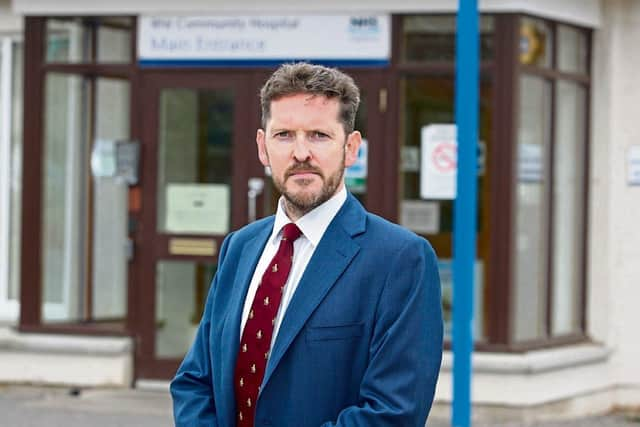
“Be in no doubt, the founding principle of the NHS, that it should be free at the point of need is not just at risk, but rapidly disappearing. This is something simply too valuable to just fritter away, so we need urgent action to rescue the NHS as we know it.
“That includes a proper, detailed workforce plan that considers how we will ensure we have the staff we need to meet future demand, finally shifting the balance of care into the community in a carefully planned way that protects care provided in our hospitals, a greater focus on prevention and better measurement and evaluation of what our NHS does.
“If we act now, then we can still reverse these trends and put our NHS on a sustainable footing for generations to come.”

Richard Wells, PHIN’s director of technology and insights, said: “The record levels of insurance-funded admissions in Scotland reflect a shift in how patients are preparing for, and accessing, healthcare for themselves and their families.”
Health Secretary Neil Gray said: “The Scottish Government remains laser focused on reducing waiting times. In the latest quarter, 64.6 per cent of new outpatient appointments were attended within 12 weeks — an improvement from 61.3 per cent in the previous period – while 40.5 per cent of those still waiting had done so for less than 12 weeks.
“We’ve also seen progress in inpatient and day-case admissions, with 57 per cent taking place within 12 weeks, up from the previous quarter, while a third of those still waiting had done so for less than 12 weeks.
“These are encouraging signs that efforts to improve access and efficiency are beginning to deliver results. We know, however, that some people are simply waiting too long and we are determined to drive improvements.
Comments
Want to join the conversation? Please or to comment on this article.