
Prisons Scotland: More rounds of emergency prisoner release expected as 'political bravery' urged
Deeper reform needed to address issues behind prison population in Scotland

More rounds of prisoner releases are expected in Scotland, experts have claimed, as it was warned political courage was needed to end a reliance on such emergency schemes.
Holyrood this week approved plans for the early release of almost 1,000 short-term prisoners by April next year.
The move comes as Scotland’s prison estate continues to struggle with a rising population. It is the third such early release scheme rolled out since last summer.
Dr Cara Jardine, a senior lecturer in social policy at the University of Strathclyde whose research has focused on imprisonment and punishment, said it was “reasonable” to expect further tranches of early releases. She pointed out the impact of such initiatives was “hard to predict”.
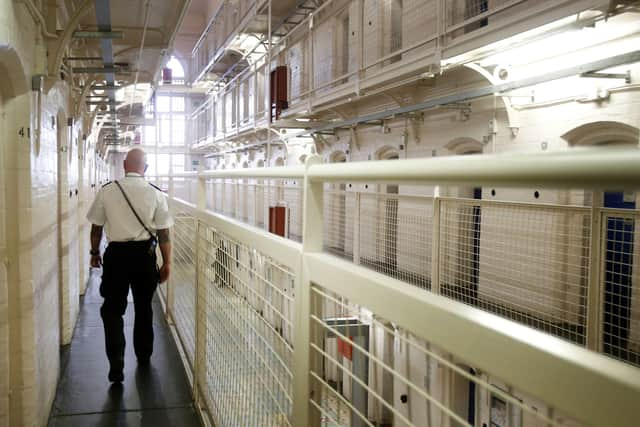

Dr Jardine said following the initial early releases in summer 2024, numbers returned to critically high levels “faster than many people would have anticipated or hoped,” reasoning the early releases did not address the “systemic issues” driving prison numbers.
“With the caveat that future predictions are difficult, it would seem reasonable to expect that further early releases might be required given that the previous rounds of release have not been able to bring prison numbers down to safer levels,” she said.
“Scotland needs to take bolder steps to address the systemic issues driving our prison rates, which are amongst the highest in Western Europe - for instance by moving away from our overuse of remand and ensuring cases progress quickly through the courts.
“There is also a need to revisit policy changes, which increased the amount of time people serving a long-term sentence spend in prison before release as this potentially reduces the amount of time this group is supported in the community and contributes to high prison numbers by driving up sentence lengths.”
Any such steps, Dr Jardine said, would require “political bravery” and a commitment to resisting punitive demands.
“We need to establish a consensus that long court delays and reduced community supervision do not serve victims, survivors, families or communities as well as driving high prison numbers,” she said.
Dr Katrina Morrison, associate professor in criminology at Edinburgh Napier University, said emergency release was not a sustainable way to manage the prison population. She suggested the scheme’s ongoing use depended on whether the “political courage” was found to address sentencing issues in greater detail
Dr Morrison said potential substantive steps could include cutting remand numbers pre-trial through court changes and stronger community provision, supporting people to pass parole when eligible, reducing entry to custody via diversion, wider use of deferred sentences, and the consideration of an “outright ban” on sentences of 12 months and under.
Elsewhere, Howard League Scotland said the possibility of further emergency releases of prisoners would “always remain” unless substantive steps were taken to address significant overcrowding in the prison estate.
A spokesperson for the penal reform charity said: “Clearly emergency releases of short-term prisoners are simply not having a significant enough effect on the overall prison population to reduce it to appropriately safe levels. We can all see that crisis management is not the answer.
“The reality is that the increasingly high prison population isn't being driven by short-term prisoners primarily. It's being driven by long-term prisoners remaining in prison for longer. As an example, the average punishment part of a life sentence 20 years ago was just under 14 years and it's now over 19 years.”