
Exclusive:Why Scotland should prepare for more tropical, mosquito-borne diseases
The risk posed by mosquitos is growing in Scotland due to climate change

"First of all, don't panic, but also realise the risk is growing and that we need to be prepared.”
That’s the message of Professor Heather Ferguson, an infectious disease ecologist who specialises in the transmission and control of mosquito-borne diseases.
The University of Glasgow academic leads the Mosquito Scotland project, which has been running since 2023 and tracks mosquito populations north of the Border.
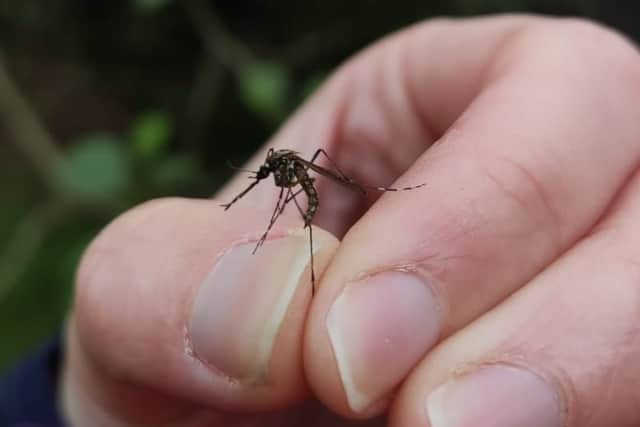

Mosquitoes, she points out, have been present in the British Isles for longer than people, despite receiving less attention than the notorious midge.
Her project has systematically surveyed the insects for the first time, finding them “pretty much everywhere”.
READ MORE: Ambulance staff 'working five hours or more' beyond finishing time due to workload pressures
This included the northernmost report of a mosquito in the UK, just north of Lerwick in Shetland. Tentsmuir Forest in north east Fife is a particular hotspot, but there are also reports from Glasgow and Edinburgh.
"We have 21 species approximately that are native [to the UK], and the majority of these don't prefer to bite humans, unlike the ones that might bother you on holidays,” Prof Ferguson told The Scotsman.
“Most of the species would commonly bite birds or other animals, and just a few occasionally bite humans. So we've probably been coexisting with them for quite a long time without necessarily noticing their nuisance like we do with midges."
However, things are changing.
"Probably one of the most concerning links between climate and health globally is the role it is playing in leading to the expansion of mosquito populations and then the diseases they bring,” Prof Ferguson said.
She added: “One of the things it can do is to help mosquitos that are usually only found in the tropics move more north.
“We have this very much with the case of the tiger mosquito, Aedes albopictus. This is quite a good, we use the word vector - it means a mosquito that can spread a particular disease.
"So this tiger mosquito is very good at spreading things like dengue, chikungunya and Zika [virus].
"Although historically it's really a tropical mosquito, we've seen it undergo a massive global expansion in the last 30 years, almost certainly due to climate change and other factors, and it's now well established in France where it has been causing local outbreaks of dengue and chikungunya over the past few years.
"And this is a mosquito that very happily bites humans, so it's coming our way."
Prof Ferguson, who has advised the World Health Organisation for more than a decade, is giving a talk this weekend at the Royal Society of Edinburgh’s (RSE) free Curious festival, in which she will outline how environmental change could influence the risk of mosquito-borne diseases in Scotland.
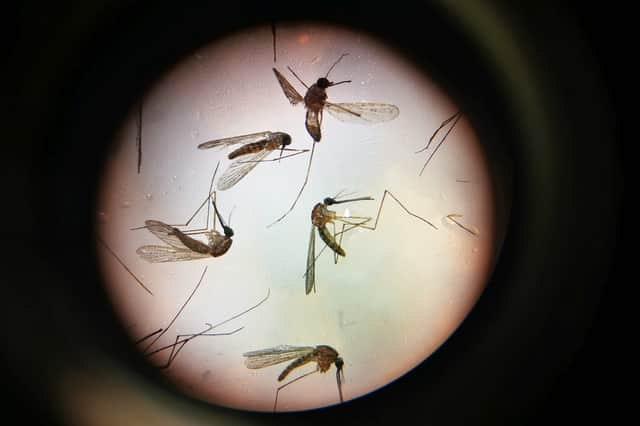
Speaking ahead of the event, which takes place on Saturday evening, she said: "First of all, there's a lot of attention being given to the role of climate in spreading these tropical mosquitos, and that's definitely important and we know that's a clear risk.
“At the same time, some of the mosquitos that we have in Scotland, our native species in the UK, are perfectly capable of spreading diseases under the right conditions.
"For example, people generally don't know that in about the 1700s we had quite a lot of malaria transmission in Scotland all along the borders and mainly the east coast.
"And the type of mosquito that spread that is still here, it's still in Scotland, but there were enough changes to land use, mainly mass draining of the land, changes in agricultural practices, improvements in housing, that meant that transmission cycle was broken.
"So when we see the environment changing again, absolutely there could be the risk of some of these tropical mosquitos and the diseases they spread becoming more likely. But also it might increase the capacity of our local, our native mosquito species to carry diseases that they didn't in the past."
Earlier this year, it emerged the first cases of Usutu virus had been found in blackbirds in Arran. This tropical disease can be spread by a type of mosquito common in northern Europe.
"This mosquito is quite capable of spreading Usutu virus and also another virus that is closely associated with it called West Nile virus - and this is the big concern, West Nile,” Prof Ferguson said.
"But the virus can only replicate inside that mosquito under warm conditions. So when it's a cool climate, the virus would just die in the mosquito and can't complete its development.”
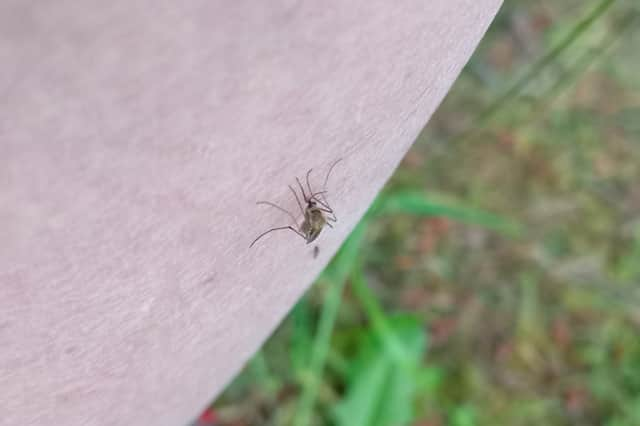
Scientists knew Usutu had been in London since around 2020 but thought it was too cold in Scotland for the virus.
"The worrying thing about Usutu is that Usutu is usually the knock on the door that you find a couple of years before you see West Nile virus, which has more serious consequences,” Prof Ferguson said.
The latter presents itself as a mild infection in the majority of people, but for the elderly or those with underlying health conditions it can be much more serious.
However, Prof Ferguson stressed people should not panic.
"While these threats are coming, still the risk of getting any disease if you are bitten by a mosquito in Scotland is very, very low,” she said.
"But it's rising, so what can people do? First of all, we need to invest in surveillance, so that means active monitoring, which for the past little while hasn't happened in Scotland.
"There is some regular mosquito surveillance that has been happening in England for the past 10, 15 years, but it's not yet rolled out to Scotland so we would like to see that happen, and our team is carrying some of that out.
"We want to be able to detect mosquitos and disease risk very early on, when there's a chance of doing some local control or elimination.”
Prof Ferguson also wants to get the public involved. A tropical mosquito was discovered breeding in London this summer via a citizen science platform.
But to completely eliminate the risk requires global action.
"I can give you a 100 per cent foolproof way to make sure that the UK public will not be at risk of these diseases in the future: eliminate them from Africa,” the scientist said. "We're all safe when everyone is safe."
Comments
Want to join the conversation? Please or to comment on this article.