
Who are the Scottish voters backing Nigel Farage's Reform UK?
Data can shine a light on who is switching to Nigel Farage’s party - and why.

Nigel Farage's Reform UK is set to make a major breakthrough in Scotland at next year's Holyrood election. Polls show the party securing upwards of a dozen MSPs, while defections are contributing to a growing sense of momentum.
But who are the Scottish voters backing Reform, and what do we know about them?
Ailsa Henderson, a professor of political science at Edinburgh University, leads the Scottish Election Study.


"The overwhelming answer is that they are former Conservative voters, and within that they are Leave-supporting former Conservative voters,” she told The Scotsman.
"Although it's also worth noting that if you stuck with the Conservatives in 2024 [at the general election], having backed them already in 2021 [at the Holyrood election], then you are less likely to be jumping ship to the Reform party now.
"About a quarter of 2024 Conservative voters are moving to Reform, whereas it's up around 40 per cent of 2021 voters. So if you hung on in there in 2024, you're less likely to go.”
Prof Henderson added: "The other thing we know is that they are more likely to be men. It's not just Conservatives, it's male Conservatives who are moving to Reform.
"If we're looking at Conservative men, almost half are switching to Reform, whereas if you're looking at women, it's less than a third. Just over a quarter of female Conservative voters are switching to Reform.
"So it's Conservatives, but within that it's men. And within that again, it's the oldest members of the party. In our data set, Reform has twice as many 80-year-olds backing them as any other party, twice as many as the Conservative Party.
"And actually, if you look at both those in their 70s and 80s, they've got more than any other party. So it's Leave-voting, male, older Conservative voters."
According to Ipsos polling, support for Reform is highest in the north-east and central regions, and lowest in Glasgow. Meanwhile, data suggests the party’s appeal stretches across the social classes. Unsurprisingly, immigration is the defining issue.
"The thing that separates Reform voters from everyone else is that they care more about immigration than anyone else,” Prof Henderson said.
“The corollary of that is that they care less about the economy, education and health, the three political main pillars that most people say are absolutely the thing that governments have to pay attention to."
The decreased salience of the independence debate is also having an impact. The Tories have long traded on their staunch support for the union, but the constitution no longer dominates Scottish politics in the way it once did.
Nevertheless, support for Reform may have already reached its limit in Scotland. "There's a ceiling of Reform support in Scotland in a way that might be lower than in England,” Prof Henderson said.
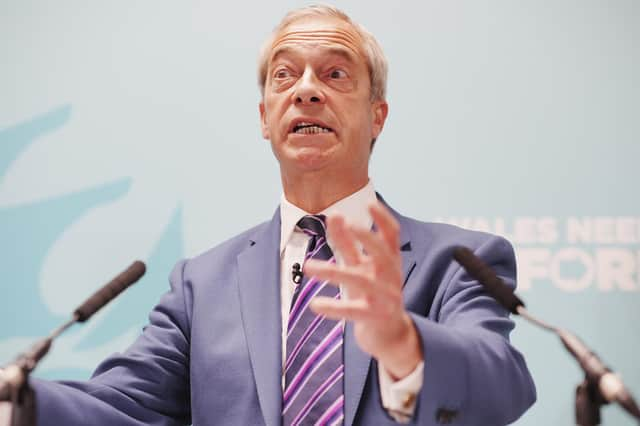
"So on the one hand, you might think that there's a real appetite for Reform in Scotland, because first of all, this is an electorate that has been primed to believe the claim that the status quo is not great and things could be better in the future.
"'The status quo is not great, things are not working', a message communicated by the SNP as an argument for independence is also a message communicated by the Reform party in terms of moving things forward.
"So we have an electorate that's kind of conditioned to accept that argument, and so on the one hand that should suggest that things could go very well for them in Scotland.
"We also have an electorate that in many ways is very similar to the English electorate on left-right values, but in the current political culture does not like its Conservative Party, for the past 40 years has not liked its Conservative Party.
"We have a small 'c' conservative portion of the electorate that won't vote Conservative, and so there's space there for a right-wing party that is not the Conservative Party. So those would be two things driving Reform support, but there's a ceiling effect there."
Prof Henderson pointed to the results of “propensity to vote” questions, which ask people how likely they are to vote for a particular political party on a scale of zero to ten.
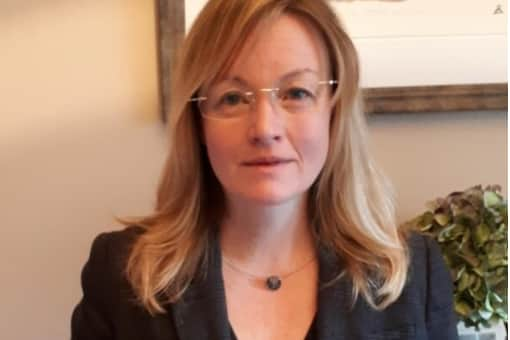
"We know that the Conservatives have always been the party with the highest proportion of people saying zero out of ten, 'I will never, ever vote for this party', and it's usually just over half,” she said.
"But Reform are at 62 per cent. Sixty-two per cent of the Scottish electorate say they are zero out of ten likely to ever vote for that party. So that's a real ceiling on support.
"Recently, in one of our surveys we said 'is there ever any chance that you would vote for this party?' One option was no and then the other option was 'well, there's some chance maybe in the future'.
"And almost 70 per cent of people say there was absolutely no chance they would ever vote for the Reform party in Scotland.
"So those figures are higher in Scotland, which means the ceiling is lower for Reform, and it could well be that they are actually at it in terms of current polling, and there's not much more room to manoeuvre."
Mr Farage is also a “deeply unpopular leader”, added Prof Henderson. “The only political leader less popular than Nigel Farage is Donald Trump in Scotland,” she said.
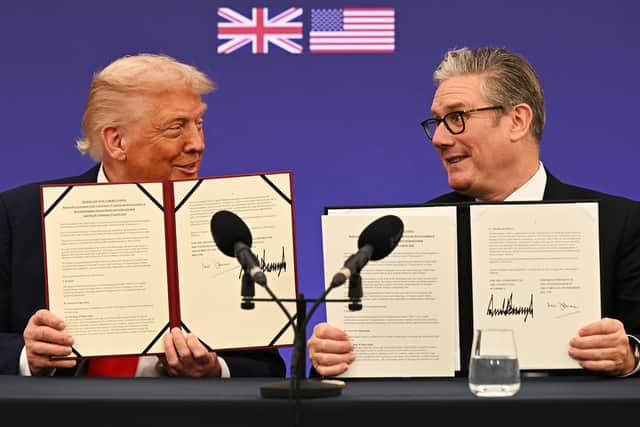
“We know he's seen as someone who thinks that Scotland is not important. We know he's seen as someone who cares more about England, who doesn't have the best interests of Scotland at heart.
"So there's a personal leader effect that is also going to operate as a ceiling on Reform support."
Comments
Want to join the conversation? Please or to comment on this article.