
What the assisted dying vote in Westminster means for Scotland - the mood music, fears and next steps

Legislation affecting England and Wales has passed its first parliamentary hurdle
This was a huge moment. After a sometimes emotional, four-and-a-half-hour debate in Westminster, a proposed law to legalise assisted dying in England and Wales passed its first parliamentary hurdle.
But what does it mean for Scotland? The legislation may not apply north of the Border, but that does not mean events in the House of Commons will have no impact here.
Liam McArthur, a Liberal Democrat MSP, has brought forward similar proposals in Holyrood, and the debate in Scotland will naturally be influenced by what happens down south. We do not exist in silos.
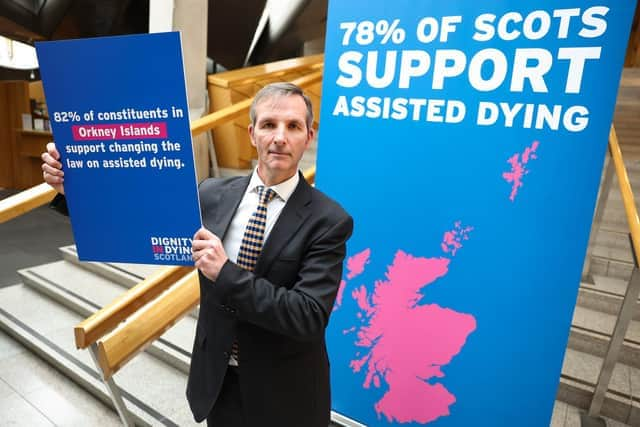

Mr McArthur said he was “delighted” by the vote. “This debate has shown the UK Parliament at its best with thoughtful contributions from across the House, and a vote which shows a clear recognition that the present blanket ban on assisted dying does not work and that more choice, alongside excellent palliative care, is what dying people need,” he said.
But Mr McArthur added: “It is important to note that this is not the end of the process. The Bill will now get detailed consideration and everybody is going to have the opportunity to have their say.
“However, it is clear that today’s vote reflects the wishes of the UK public, who overwhelmingly back a change in the law to offer choice and compassion. I am confident that MSPs in the Scottish Parliament will do the same when they vote at stage one on my Assisted Dying for Terminally Ill Adults (Scotland) Bill.”
If MPs had rejected the Westminster legislation outright, that could have altered the mood music in Scotland. It would have been perceived as a blow for Mr McArthur, and may even have swayed those yet to make up their minds.
The issues at stake, after all, are the same. North and south of the Border, politicians are grappling with deeply complicated moral questions for which there are no easy answers.
There are fears over coercion, as well as the impact on disabled people and the vulnerable. Many believe legalising assisted dying for the terminally ill would be a “slippery slope”.
On the other hand, there are heart-rending stories from those in excruciating pain who simply want to die with dignity.
None of this is straightforward. The legislation in Westminster may have passed its first hurdle, but it could yet hit the buffers.
Whatever happens, those around Mr McArthur argue there are important differences between the debates in Westminster and Holyrood. Many MPs raised concerns the legislation down south had been rushed. The same cannot be said in Scotland.
Mr McArthur has been working on his Bill for more than three years. He has spent many, many hours speaking to MSPs from across the political spectrum about its details and safeguards. This has been a long process.
Of course, that does not mean his legislation is certain to pass - far from it. There are plenty of politicians who remain deeply opposed, for all sorts of reasons.
Mr McArthur expects the first key vote to take place in the Scottish Parliament either in the late spring or early summer of 2025. Whether it can pass its first hurdle remains to be seen. But supporters will take heart from events in Westminster.
Comments
Want to join the conversation? Please or to comment on this article.