
How Sir Keir Starmer's 'cool' approach to Donald Trump tariffs is paying off after 'vindication'
Reduced tariffs still damage the UK

Donald Trump has performed a dramatic U-turn on the scale of his tariffs on other countries, but this is still not a return to the status quo.
The US President has rowed back on the larger tariffs rises on every country, except China which now faces a 125 per cent hint, but the damage will continue.


A ten per cent tariff is not a new normal that can be mitigated, it is still an extra charge on goods sold into the US that will damage economies all over the world, including America.
For the UK, the change means little, with British exporters still facing the original ten per cent tariff, plus the 25 per cent on automobiles.
It is not so much a respite for other countries, as being a terrible scenario, rather than a worst-case scenario. British businesses stay in the same predicament, where the rate is the same, as is the scale of the uncertainty.
That’s the problem with tariffs, the consequences are not so easily mapped out. American importers will have to pay more to buy from the UK, and that cost could then be felt in profits, the supply chain, or, more likely, passed on to customers. It’s also not as simple as just adding a ten per cent on to the cost. Tariffs on other countries mean the global supply chains will undoubtedly be disrupted, something that in turn will be felt by UK businesses. If the countries impacted the most, such as China, decide to sell more to the UK, those cheap imports could then squeeze companies further.
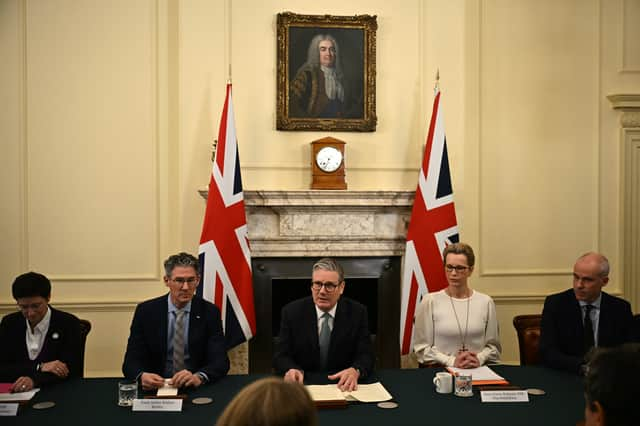
In Downing Street, there is a sense of vindication in the changes, a belief by not taking a hard stance in response, by refusing to condemn or threaten tariffs like other European countries, the UK has maintained good relations with the White House, and not risked the chances of a trade deal. A Downing Street source said the development vindicated Sir Keir’s approach and showed that “cool and calm can pay off.” In short, by saying little, Sir Keir has done the right thing, staying patient and letting Mr Trump buckle. If he does this with tariffs on countries he does not have a good relationship with, there is a hope the UK can still get out of them.
Speaking on Thursday, the Prime Minister admitted tariffs were not “good news”, and said the UK would adapt, while still not condemning the US president. He talked of rising to the moment, and with an India trade deal close, there are signs that improved relations with other countries could be fundamental to off-setting the tariffs. The Chancellor will visit the US this month, while a UK-EU summit in May has been described as a “chance “to refresh our relationship and make it easier for businesses to trade”.
The FTSE has rebounded following its downturn in earlier days, but the index of the UK’s top shares is still far below where it was in the days before the tariffs came into force.
There are signs of stabilisation, but there is still work to be done. The UK is trying to wait out the US, soften them up over time, while also improving trade with other countries to take the edge off.
Comments
Want to join the conversation? Please or to comment on this article.