
Three quarters of public want UK to 'produce as much of its own oil and gas as possible'
But an energy expert warned that increased drilling in the North Sea would not reduce energy prices.
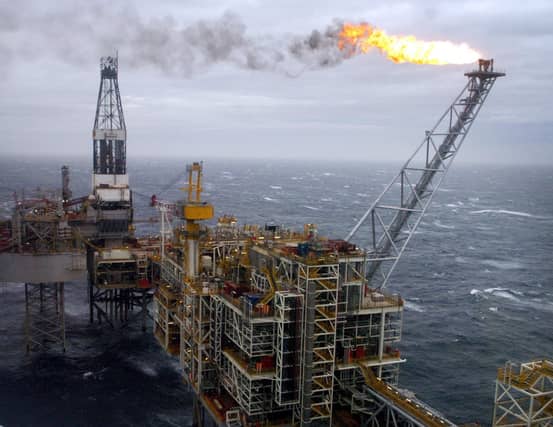

Three quarters of of people want the UK to “produce oil and gas at home rather than rely on imports”, according to a new poll, as concerns mount over energy security amid global turmoil.
The research, carried out by Opinium for Offshore Energies UK, said that 76 per cent find it convincing that “because global events can disrupt energy supplies, the UK should continue producing oil and gas at home rather than relying more on imports.”
Some 74 per cent of the sample of 2,000 adults said the UK should “produce as much of its own oil and gas as possible rather than rely on imports.”

Yesterday, an energy boss has said price rises may be “inescapable” if the war in the Middle East drags on, as the Government insisted there is no need to ration fuel.
There are increasing concerns about how the Iran conflict could affect the cost of living, with the Prime Minister due to hold a Cobra meeting next week to discuss plans to help households.
David Whitehouse, CEO of Offshore Energies UK, said: “The public are clear: the UK needs homegrown energy and a balanced transition that strengthens our national security.
"People want renewables and UK oil and gas working side by side - not one instead of the other - and they want decisions based on long‑term rules, not short‑term politics.
"A rules‑based approach to taxation is part of that stability. It ensures the public receives a fair share in times of genuine windfalls while giving companies the certainty needed to keep investing in UK energy, UK jobs and the UK's transition.”
The UK Government is currently considering whether to give two oil fields off the coast of Scotland the go ahead.
Rosebank is 80 miles to the west of Shetland and contains around 300 million barrels of oil, making it the UK's last major undeveloped oil site. Jackdaw is 150 miles east of Aberdeen.
The UK government has committed to banning new oil and gas exploration licences. There will be no new licensing rounds, but preapproved projects like Rosebank and Jackdaw may still go forward.
Professor Karen Turner, Director of the Centre for Energy Policy at Strathclyde University, said that drilling more in the North Sea would not bring down oil and gas prices - but could provide more revenues for the public purse.
She said: “One of the things is that with oil, even if companies are extracting from the North Sea, they still have to sell at the global price. So it goes into the global market, even if things are transported locally, it goes into this market that is going to determine the price.
“Gas is the same, but there’s more regional markets so it’s perhaps not quite as global.
“We are an oil and gas producing nation. If we produce more, the benefits would be that you wouldn’t have to transport from so far.
“But you would still have the same prices.
“I think what you have to look at with the oil and gas industry is the other side of it: economic activity.
“When we’re talking about all the interventions... you need to have people to have jobs, but also the government needs revenues.
“So the oil and gas industry, if that’s generating revenues, that’s something that goes into the public purse (for) firefighting once people are already in trouble, if the government has to step to intervene.
“That would be the argument. You would have the more local supply. You would have more economic activity around it.
“But in itself, it wouldn’t lower the price.”
The poll also showed that 40 of people believe the best approach to UK energy security is investing in a balanced mix of renewables and UK oil and gas.
This was compared to just 26 per cent who want a renewables‑only approach and 13 per cent who want oil and gas only.
It comes as the oil and gas industry has urged the UK Government to remove the energy profits levy ( EPL) - which is currently set to remain in place until 2030.
The windfall tax, which was brought in by the Tories as a temporary measure in May 2022, sees oil and gas producers paying a headline tax rate of 78 per cent on their profits.
Some 59 per cent of those surveyed said they think oil and gas companies should pay higher taxes when prices are unusually high.
But 67 per cent said any windfall tax must be rules‑based, providing clear, predictable certainty about how companies will be taxed.
Scottish Conservative shadow energy secretary Douglas Lumsden said: “The message from the public could not be louder or clearer – support the extraction of North Sea oil and gas before it’s too late.
“At a time when 1,000 jobs in the industry are being lost every month, the desire of both the SNP and Labour to turn off the taps in the North Sea is an act of national self-harm and economic sabotage.
“The escalating crisis in the Middle East has only reaffirmed how crucial it is to support oil and gas production from our own waters rather than relying on foreign imports.
“This poll shows that both governments are blatantly ignoring the needs of the public, and are totally disconnected from what people in the real world think.
“Both the SNP and Labour are continuing to decimate our oil and gas industry by refusing to support Rosebank, Cambo and Jackdaw, while threatening our energy security in the process.
“It’s high time John Swinney and Keir Starmer drop their reckless playground politics, and follow the lead of the Scottish Conservatives by supporting Scotland’s oil and gas industry.”
Yesterday, , the chief executive of Centrica, which owns British Gas, said global oil supplies are down 20 per cent because of the conflict.
Chris O’Shea said: “Cornwall Insight, I think, have predicted that there’s going to be an increase in prices.
“If it stays as it is then I think that’s inescapable.
“The world uses about 100 million barrels of oil a day. We’ve lost about 20 per cent of that through the Strait of Hormuz.”
Housing Minister Steve Reed also urged people not to start panic-buying fuel.
He said: “There’s no need to ration fuel. People should go around and buy their fuel just like they always would.
“If the situation were to change, then the Government would look at what was required in that circumstance.
“We did intervene when it came to heating oil, because we saw the prices escalating and people were seeing their bills doubling and tripling overnight. We can’t have that, so we stepped in to support people.”
The Conservatives have said the Government should scrap “green taxes” to cut costs.
Shadow housing secretary Sir James Cleverly also said North Sea oil and gas fields should be opened.
He said: “We’ve said a lot of these green taxes were put in place when the world was in a very, very different state and are now inappropriate and counterproductive, so we’re saying we should reduce those to make sure that we are not imposing additional, unnecessary costs.”
Speaking about North Sea oil and gas fields, he said: “The Government should be doing those things today which will alleviate the problem in the near future.”
The UK Government was approached for comment.
Comments
Want to join the conversation? Please or to comment on this article.