
Wegovy: Thousands of poorest Scots to receive free weight loss jabs under UK government funding
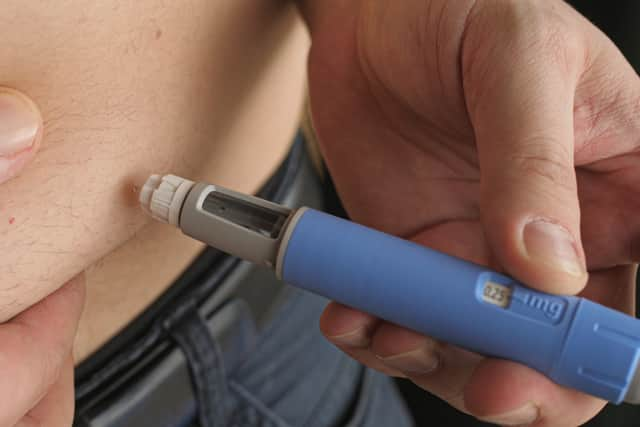
The UK Government is funding a study which will involve 5,000 people from some of Scotland’s most deprived areas being given Wegovy injections.
Thousands of the poorest Scots are to receive free weight loss jabs as part of a UK government funded trial, as ministers explore the potential wider roll-out of the drugs on the NHS.
The multi-million pound University of Glasgow study will involve 5,000 people from some of Scotland’s most deprived areas being given Wegovy injections from next year, The Scotsman can reveal.
It comes as UK ministers plot a “faster” roll out of the drugs to fight the country’s obesity epidemic. A total of £650,000 has been committed for the first phase of the project, with extra funding to be spent up to 2029.

Public Health Scotland has projected a surge in the number of adult cases of excess weight in Scotland by 2040. Scottish Health Survey results published this year show about two-thirds of Scottish adults are overweight, with one-third living with obesity.
Govan and Pollok have been cited as examples of deprived areas where people would be eligible for the weight loss jabs.
UK health innovation minister Dr Zubir Ahmed said the drugs could help people drink less alcohol and eat less junk food.
He said: “We're funding a multi-million pound trial that we're funding looking at how anti-obesity medication can make maximum impact in Scotland. Scotland has, as a population, one in three of whom are obese. In deprived communities, that can go up to almost a half.
“That's a situation that we're not willing to accept as a UK government, and therefore we're providing funding to start this study that's going to direct anti-obesity medication to the most deprived communities, and study at the same time its effects and how we can roll it out faster to the rest of the population.”
The Labour MP for Glasgow South West added: “One in three Scots across Scotland are officially obese, which is not a situation that's tenable.” He added: “At the moment what happens is, if you can afford it, you go and get yourself a drug online, or [get] a private prescription. And if you can't afford it, you suffer. And a Labour government can simply not allow that to happen.”

Dr Ahmed said the trial was “the Labour government exploring ways we can make ... access to weight loss drugs more equitable across society”.
“Because unfortunately, if you're less privileged, you actually have an increased risk of obesity,” he said. “Obesity has become, in the 21st century, a disease of poverty, rather than of affluence.”
Dr Ahmed said there was a two-tier system based on wealth when it comes to weight-loss drugs. He said he would “in principle” like to see weight loss medication become free over time.
When asked if he would like weight-loss drugs to become free at the point of use, Dr Ahmed said: “In principle, I think that is a direction of travel I'd want to explore ... because I think it's likely that these these medications are going to reduce chronic disease in the long term, and are actually going to then reduce the burden on the NHS. And so that's the economic kind of calculation I'm looking forward to seeing from this study.”
When asked if they could be used to help reduce the UK Government’s bid to reduce the number of people on sickness benefit, he said: “There is definitely, I think, potential to be using these medications and for there to be a benefit in terms of getting people back to work.”
Pharmaceutical firms Novo Nordisk and IQVIA will be involved in leading the trial.
Scottish Government Health Secretary Neil Gray said: “The Scottish Government is proud to be leading the way in tackling obesity through innovation and collaboration. This study places patients and communities at the heart of cutting-edge research into weight-loss medicines, ensuring we build the evidence needed to deliver the greatest benefit to those who need it most.
“By developing a robust knowledge base, we can ensure these treatments are used effectively and equitably, helping to reduce health inequalities and improve lives across the country. This is a vital step forward in our commitment to world-class, real-world research that shapes global clinical practice.”
Jason Gill, lead of the Scotland CardioMetabolic Impact Study (SCoMIS) consortium and professor of cardiometabolic health at Glasgow University, said the research would focus on “four critical questions”.
“It will test how weight‑loss medicines can be delivered effectively and fairly in everyday NHS care,” he said. “It will measure the level of weight loss and improvements in quality of life, particularly for patients in disadvantaged areas.
“It will examine the impact on obesity‑related illness, NHS use and overall healthcare costs. And it will explore whether better health through weight loss can help people stay in work, reduce sick leave and take a fuller part in society.”
Comments
Want to join the conversation? Please or to comment on this article.