
Rachel Reeves has badly failed to show mettle with the UK Budget - but watch out for Scotland's 'guddle' next
Rachel Reeves needed to be more upfront with the public - but she has failed, writes John McLaren
The Autumn Budget was another opportunity for the Labour-led UK government to show some mettle, make tough choices and set out a pathway forward. It failed on all three counts.
No one is claiming the Chancellor found herself in a fortuitous position, but such stiff fiscal and economic challenges make the messy Budget that emerged even more of a disappointment.
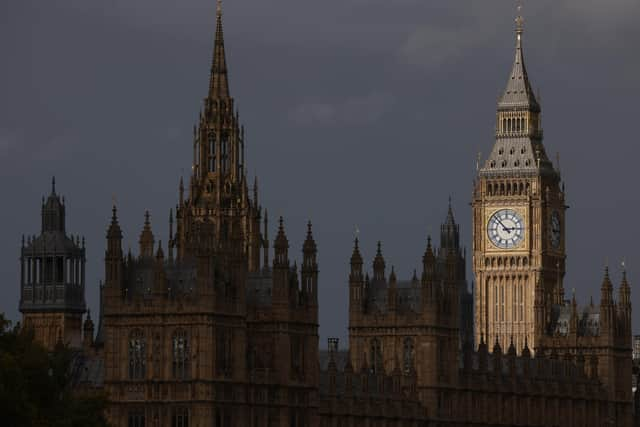

Before looking at some of the Budget details, it is worth highlighting the changed landscape that any finance minister faces.
First, we are in an era of slower economic growth, a point emphasised by the Office for Budget Responsibility [OBR] downgrading its annual productivity and GDP forecasts.
Second, we face the Covid-related fiscal challenges of high debt levels - now stable at close to 100 per cent of GDP - as well as public service backlogs and a weaker labour market.
Third, we face new spending commitments in relation to debt interest payments (taking up 10 per cent of the entire budget), increased defence spending and a growing welfare bill.
Once you put those three challenging circumstances together, along with a historically high tax burden, then something has to give.
Non-acceptance of this harsh modern-day reality leads to present-day Budget thinking, using a sticking plaster when major surgery is needed.
So what does the OBR say about future prospects and how this Budget has changed them?
Economic growth is flat, at a dismal 1.5 per cent a year in real, adjusted for inflation, terms, and cumulative growth over the forecast is down 1.3 percentage points compared to the Spring Statement of March.
Reaching the CPI inflation target has been pushed further back and, after falling into next year, interest rates are then forecast to climb back above 4 per cent by 2030.
National debt, as a share of GDP, keeps rising until peaking at 97 per cent of GDP in 2028 with only a slight, and unconvincing, decline thereafter.
The tax burden is now expected to reach an all-time high of 38 per cent of GDP from 2029 onward.
Resource (day-to-day) spending, post 2028-29, is falling, in real terms, by an average of 3 per cent a year, outside of the NHS and defence.
So this Budget has not improved growth prospects, has not reduced inflation or interest rates, has not brought down the national debt, and has not improved the long-term funding position. In fact, in most cases, prospects have worsened.
In order to change the dynamic, big decisions need to be made, and priorities need to be identified.
Should business taxes go down to encourage economic growth?
Do middle-income earners need to pay more, as they do in many social democratic, high-tax, countries in Europe? Do benefits need to be more targeted to reduce the welfare bill?
Should the retirement age be explicitly linked to longevity?
These are not uniquely British issues; most European countries face similar dilemmas. The French government cannot pass a Budget and cannot push through efforts to increase the retirement age - from 62 to 64.
All such issues and dilemmas were pretty apparent pre-the 2024 election, but the Labour Party decided to play it safe. It had no real economic strategy, other than hoping for faster growth, and once this failed to appear, it faced the same old problems.
Rachel Reeves had another opportunity at the Budget to be more upfront with the public. She could have said “it won’t be easy, and there will be short-term losers in order to arrive at long-term winners, but we need to change”, then laid out a firm plan for where she was headed and how she was going to get there.
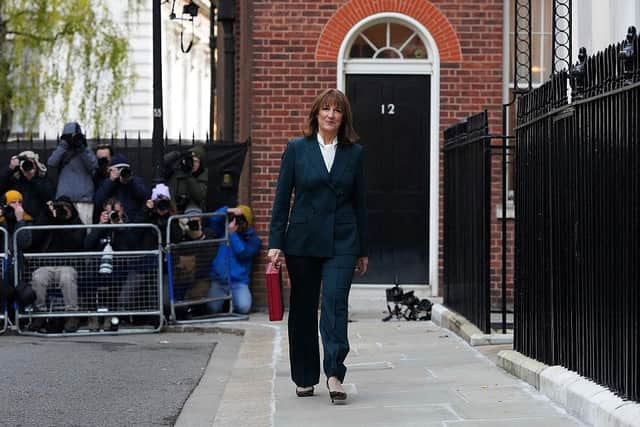
She did not, instead reverting, again, to a timid and politically conservative position.
Will the Scottish Government be any better at grappling with these issues? What do you think?
The position in Scotland is actually worse because so many extra promises have been made that are currently unaffordable. Where does the money come from to keep the university sector world-class without any tuition fees?
Will the health budget keep suffering in order to keep devolved benefit payments at above UK levels? Eventually, people are going to catch on to the fact that Scots are now getting less spent on their health than in Wales, Northern Ireland and parts of England, including the North East and the North West. What then?
Scotland suffers from the economic and fiscal mistakes made at Westminster, which are then compounded by a cynical and spendthrift Holyrood, for whom faster economic growth is even more of a chimera. We only have to wait two months to see how much of a guddle the Scottish Government can make out of the pig’s ear it’s been bequeathed.

Ultimately, the fundamental problem is a slow-growing economy; almost everything else is either a temporary issue or a knock-on impact. Unfortunately, we do not know how to return to pre-financial crisis rates of economic growth. Yet we cannot wean ourselves off the kind of spending levels that pertained during that higher growth era.
Furthermore, any such, already difficult, fiscal adjustment is hampered by the build-up in national debt. A reduction of debt has been possible in the past but usually during propitious times. At present, times are tough.
Unfortunately, the chances of any mainstream political party being successful in resolving the current situation seem slim. Which means it is increasingly likely that some, deluded, populist option— Liz Truss on steroids— will be attempted before reality finally hits and the necessary hard facts are faced up to.
- John McLaren is a political economist who has worked in the Treasury, the Scottish Office and for a variety of economic think tanks.
Comments
Want to join the conversation? Please or to comment on this article.