
The £1.6 billion bed blocking bill paid by Scotland over last decade

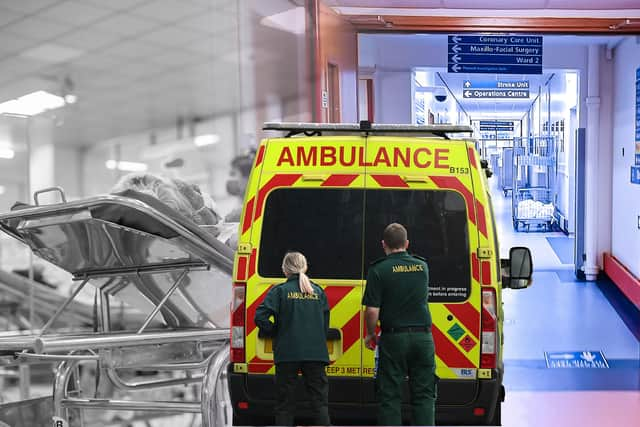
It has now been 10 years since the SNP promised to eradicate bed blocking - and yet the problem has continued to get worse.
Bed blocking has cost the NHS over £1.6 billion over the last decade, according to new statistics.
New analysis shows £1,654,756,756 has been lost since March 2015 due to the Scottish Government’s failure to eliminate delayed discharges. This is when a patient is medically fit enough to leave hospital, but cannot because of a lack of social care services at home.
Back in January 2015, the then SNP health secretary Shona Robison told the BBC she wanted to “get rid of delayed discharge” and for it to “become something of the past”.

At the time, she suggested moving to a 72-hour standard where people were discharged within 72 hours of being clinically ready to leave hospital.
Since then almost 6 million bed days have been lost due to bed blocking, with the numbers increasing almost every year since.
Scottish Labour is now accusing the Scottish Government of presiding over a “decade of failure” by not tackling rising bed blocking.
Dame Jackie Baillie MSP, the party’s health spokeswoman, said: “It is absolutely disgraceful that the SNP’s decade of failure on tackling delayed discharge has cost Scotland’s health service over £1.6 billion.
“That is taxpayers’ money that could be going to frontline services to help cut waiting lists for treatment, ease the strain on A&E, and support hardworking staff who are increasingly feeling burnt out because of the pressure they are under.
“Over 10 years have now passed since the SNP promised to end delayed discharge, yet too many patients are still left languishing in hospitals for days or weeks on end waiting for a care package.
“These latest figures show the extent of that failure, but rather than being held to account, Shona Robison has been allowed to fail upwards and now still remains around the cabinet table as finance secretary.
“It is clear that the SNP has absolutely no idea about how to ease pressure on hospitals and to make meaningful improvements to social care in Scotland.”
According to analysis by Scottish Labour, there were 567,853 bed days lost to delayed discharge in 2015/16, at a cost to the NHS of £132,309,749.
This dropped to 399,315 days in 2016/17 - a cost of £93,439,710 - but then jumped back up to 494,123 in 2017/18 ( £122,542,504), 521,772 in 2018/19 ( £134,095,404) and £134,095,404.00 in 2019/20 (£142,057,448).
The numbers dropped again at the start of the coronavirus pandemic to 358,426 in 2020/21( £98,925,576), but it has increased every year since.
In 2021/22 there were 540,302 bed days lost ( £149,123,352), 661,705 in 2022/23 ( £195,864,680) and 666,190 in 2023/24 (£207,185,090).
This jumped to a high of 720,119 in 2024/25 at a cost to the NHS of £232,598,437.
Between April and October 2025, there were 409,521 bed days lost to delayed discharge, costing the NHS £135,960,972.
This brings the total number of bed days lost to bed blocking over the past 10 years to 5,931,548.

Dame Jackie said Labour would purchase “hundreds” of temporary care home places to place patients who are medically fit enough to leave hospital to use while they wait for a permanent care package.
She added if Labour wins the 2026 Scottish Parliament election, they would create an extra 1,000 non-residential care packages to make care-at-home more widely available.
Scottish Labour has placed the NHS as its top priority in the election campaign, including the pledge to tackle bed blocking. Polling suggests the NHS remains voters’ top priority in Scotland going into the 2026 Scottish Parliament election, followed by tackling the cost-of-living crisis.
Brian Whittle MSP, the Scottish Conservatives’ public health spokesman, added: “Successive SNP health secretaries have miserably failed to eradicate delayed discharge over the last decade and the consequences have been devastating.

“Their broken promises are leaving patients who are otherwise fit to leave languishing in hospital, while others are seeing operations cancelled at last minute or are left facing excessive delays at A&E.
“The SNP’s only answer to this crisis was to put forward a plan for a centralised care service which was doomed from the start and would have taken more money away from local care providers.”
He says the Scottish Conservatives have a “fast track to care policy” which would tackle bed blocking - this similarly includes plans to temporarily place patients in care homes within 48 hours of being declared fit to leave hospital.
Health Secretary Neil Gray said: “Ninety-seven per cent of all hospital discharges happen without delay - our plan to reduce delayed discharge is backed by over £220 million which is helping boards to tackle waiting list backlogs, improve capacity and remove blockages keeping some patients in hospital longer than they need to be.
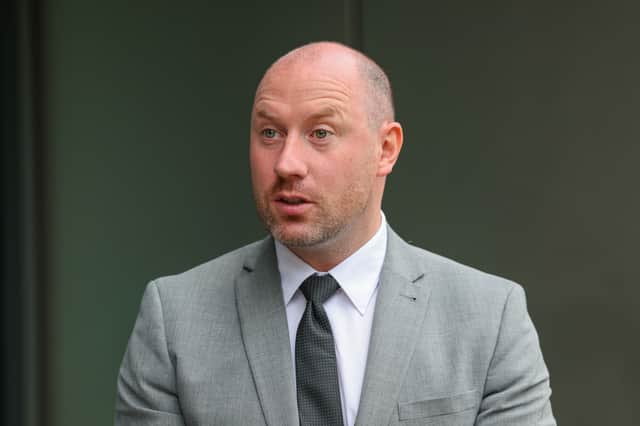
“This includes up to £20m to bolster social care capacity and address pressure at the front door of A&E.”
The SNP has a “hospital at home” scheme which provides “urgent, short-term, hospital-level care” for patients within their own home to avoid them taking up a hospital bed.
A year ago the Scottish Government said it was investing £100m in the service to turn it into the “biggest hospital in Scotland” in the hope of finally tackling bed blocking.
Comments
Want to join the conversation? Please or to comment on this article.