
Exclusive:The Holyrood squeeze: What will be the impact of Scottish Parliament rushing through its work?
There are still 26 outstanding bills to be dealt with before the 2026 Holyrood election in just seven months’ time.

This week saw more late nights for MSPs in Holyrood as they sat late into the evening hashing out the Scottish Government’s Housing Bill.
It was still not enough time. They will need to come back on Tuesday to finish the debate off and vote to pass the legislation.
This all came less than a week after Parliament sat late to vote for sweeping justice reforms, including the decision to abolish the ‘not proven’ verdict in Scottish courts.
While late nights are part and parcel of the job of being an elected MSP, there are growing concerns this will be an almost weekly feature of Holyrood going forward as MSPs try to squeeze in as much legislation as they can before the May 2026 election.


Since the 2021 election, 44 bills have been passed by the Scottish Parliament and become law. A further two are waiting for royal assent.
These bills have covered everything from tourist taxes, pardoning those convicted in the miners’ strike, firework control zones, abortion buffer zones and emergency coronavirus legislation. The Government has also passed a budget bill annually.
It has taken 52 months to get through these 44 bills - yet Holyrood is expected to get through a whopping 26 outstanding bills in the next seven months alone.
This means that on average, a bill has been passed every 36 days since May 2021. MSPs will have to work at a rate of passing a bill every eight days between now and May if they are to get everything done. This timeframe also includes the Christmas holidays, a February recess and the election campaign when the Parliament will not be sitting.
It is a feasible task and there is technically enough time left. But many within Parliament are concerned that legislation will end up being rushed, not properly scrutinised or thrown in the bin because of the time left on the clock.
Tim Eagle is the Scottish Conservatives business manager. He does not believe there is enough time to get through the bumper programme of bills and do a good job.
“There is enough time if we stay until 11pm each night, but that has implications for those with younger families,” he told The Scotsman.
“We would have to be ruthless at kicking out amendments and curtailing our speeches. But if we want good legislation, which is what Parliament should be doing, then I don’t think we should be limiting debates like that. Practically we can, but in reality it means we are not necessarily getting good legislation.”
His colleague Edward Mountain MSP, added: “There is absolutely not enough time. There is so much to consider between now and the end of Parliament like the climate change plan and the budget.

“It is possible the Government will try and ram these bills through, but then we will end up with bad legislation. The lack of knowledge in this parliament, which leads to this bad legislation, is embarrassing.”
Willie Rennie is the Scottish Lib Dems’ business manager. He said there was “a real danger” MSPs would run out of time to get through all 26 outstanding bills.
“It is frustrating when we have so many government debates that are self-congratulatory or are meaningless when we could be organising more time to debate bills,” he said. “If MSPs do not focus here, there are some bills that could fall.”
All three believe the February recess will end up being cancelled because of the sheer amount of work that needs to be completed. Mr Rennie said: “The February recess will be cancelled, it is already gone.”
When it comes to determining how the Scottish Parliament got itself into this mess, many of the fingers are pointing squarely at the door of Scottish Government ministers.
There are two main types of bills in Holyrood - government bills brought forward by government ministers, and members’ bills, which are brought forward by backbench and opposition MSPs.
Bills then go through three stages of debate and scrutiny. They do not become law unless a majority of MSPs back a bill at stage three.
Martin Whitfield MSP is Scottish Labour’s business manager. He said the problem was too many government bills were not properly defined, resulting in “massive” pieces of legislation that try to cover too many things at once.
He told The Scotsman: “We will now have legislation every other week until March because the Government has not been great at knowing what their bills are.
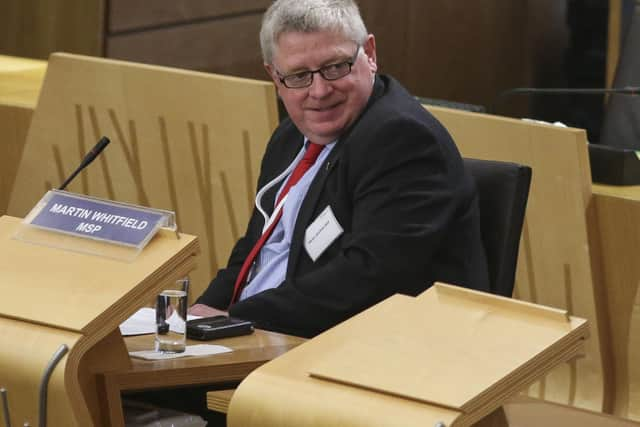
“That is how we’ve ended up with massive bills like the housing bill and the justice reform bill, which just exploded in size. Ministers will not grapple with this problem until it hits them in the face.”
Mr Whitfield added: “The Government is entitled to bring forward an optimistic manifesto, but they also have a responsibility to timetable it. The current Government has pushed out so much and getting through it all is entirely dependent on how well the Government works with opposition parties.
“The areas we are being asked to legislate on are so enormous it is hard to reach a compromise. For example, the housing bill’s amendments are drifting into taxation policy when the bill is meant to be looking at things like rent protections.”
As the SNP is a minority government, it will need the backing of other parties to get government bills to pass.
Mr Eagle said the SNP government was to blame here, adding: “There has been slow progress over the last few months and some are complicated or controversial bills, which do not progress at the speed they need to.

“The SNP has not managed its timetable well and is now trying to rush through a lot of stuff right at the end.”
There are 16 outstanding members’ bills, 13 of which are still only at stage one. They cover a range of important issues such as overhauling prostitution law, preventing domestic abuse, the right to addiction recovery, and tackling ecocide.
Some of these members’ bills will rightly take up a lot of parliamentary time, such as Liam McArthur MSP’s assisted dying bill.
There are also 13 outstanding government bills, yet the Government says the number of bills is not the reason for the build-up of work being seen now.
A spokesperson told The Scotsman: “There has been no increase in the number of Scottish Government bills introduced to the Scottish Parliament in this session compared to previous sessions, and this includes the fact we had to introduce two coronavirus-related bills early in the session.
“We are aware, however, that the time committees currently require to conduct their stage one scrutiny of a bill has increased in this session and the number of amendments being lodged and debated at stage two and three of bills has seen an increase in recent years.”
The spokesperson said government ministers were “working collaboratively” with the Scottish Parliament to make sure all legislation was properly scrutinised, but added: “The timetable is, of course, for the Parliament to determine.”
Mr Rennie said he believed the amount of time taken to debate amendments was to blame for how long bills were taking to progress.
“We have got ourselves to blame for this,” he said. “On this current timescale, we will have eight stage three debates in March, which will be really difficult to get done, especially if we have hundreds of amendments like the housing bill this week, many of which were debated at stage two for weeks and weeks on end.

“There needs to be some self-control from MSPs, who think it is necessary to put in amendments that have little chance of succeeding and have already been aired - everyone needs to do that.
“Ministers are also making substantial amendments at stage three, which should have been picked up at earlier stages.”
All of this has a wider impact on the general public and on MSPs and their families and staff as well.
Mr Whitfield said: “This has a massive impact on the people of Scotland, but also on each MSP, staff member and their families if we are sitting until 9pm.
“People outside Parliament will rightly say ‘yes, that is your job’. But when you are under pressure and tired, that is when proper oversight cannot take place without some reliance on government assurances, which are not then followed through.
“That’s how we end up with legislation in court. We would never choose to do legislation this way - a more competent government would have looked at its time in office and timetabled it properly.”
Mr Eagle added: “No parliamentarian is bothered by working late because that is part of the job, but it needs to be working late with a purpose. These bills are being rushed through.”
The Tory MSP noted other events in parliament may be impacted by this as well and may even be cancelled at the last minute. He pointed to an event for the Royal National Lifeboat Institution (RNLI) that was disrupted earlier this week due to the housing bill debate as an example.
A Scottish Parliament spokeswoman said: “The bureau is responsible for the timetabling of parliamentary business, which is then agreed by parliament as a whole. The bureau meets regularly to discuss the parliamentary timetable, including the amount of legislation.”
Comments
Want to join the conversation? Please or to comment on this article.