
The 5 biggest challenges facing Scottish Labour and Anas Sarwar ahead of its annual conference
Scottish Labour leader Anas Sarwar faces an uphill battle - and here are the clear challenges ahead

For Scottish Labour, last summer’s general election must feel like a very long time ago.
The party won 37 out of 57 seats north of the Border, up from just one in 2019, while the once mighty SNP was reduced to nine MPs. Anas Sarwar, the Scottish Labour leader, was widely talked of as the next first minister.
Fast forward seven months and things look quite different. A recent poll showed Mr Sarwar’s party on course for its worst Holyrood election result since devolution.


The unpopularity of Sir Keir Starmer’s UK Labour government and the rise of Reform are both eating into Scottish Labour’s support. The SNP, meanwhile, has a renewed confidence.
Mr Sarwar has little over a year to turn things around before the next Holyrood election. So, as his party meets for its annual conference in Glasgow this weekend, what are the key challenges likely to be keeping him awake at night?
Sir Keir’s unpopularity
Perhaps the biggest problem, or the hardest to solve, is Sir Keir and the UK Labour government. A Norstat poll for The Sunday Times showed the Prime Minister is Scotland’s least-liked politician, behind even Donald Trump.
A series of unpopular decisions over National Insurance, winter fuel payments and compensation for Waspi women have led to damaging headlines. There is a sense the promised “change” has yet to materialise.
Ian Murray, the Scottish Secretary, said some “really impossible, difficult decisions” had to be taken early on in the party’s tenure at Westminster.
“I’m looking at the great growth programme we’ve got ahead of us and I’m looking forward to taking that much more positive agenda and what we can do for the future, delivering our manifesto out to the people of Scotland,” he said earlier this week. “That will turn the polls around.”
Mr Sarwar can only hope he’s right.
The rise of Reform
Elsewhere, Labour is feeling the squeeze from Reform UK. Polls suggest Nigel Farage’s party is further splitting the unionist vote in Scotland, despite having little visible presence up here.
The Norstat poll showed Reform on course to win 15 seats in Holyrood, placing it not far behind Labour and the Tories, who would be on 18 each. That would be a seismic result for a party that has zero MSPs and just a handful of councillors.
Reform is more popular than Labour among working-class voters, and is the second most popular party among older men, after the SNP. And all this has been achieved with no real campaign and no separate leadership in Scotland.
John Swinney’s success in steadying the SNP ship
Scottish Labour unquestionably benefited from the chaos in the SNP that followed Nicola Sturgeon’s resignation.
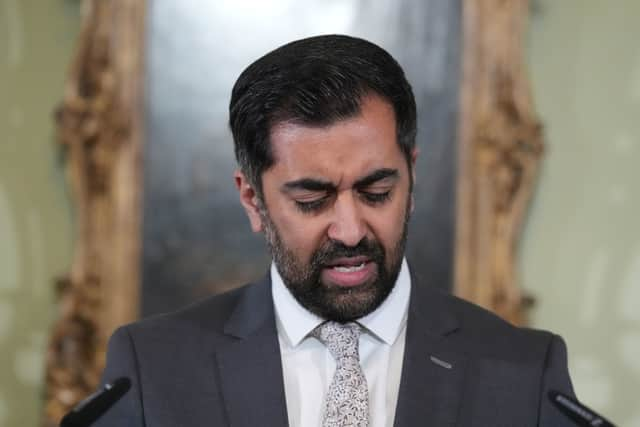
Humza Yousaf, her successor, never managed to get on the front foot, and eventually shot himself in said appendage by ripping up the Bute House Agreement with the Greens.
But John Swinney has managed to steady the ship since taking over as First Minister. He is the least unpopular of the main party leaders in Scotland, with a score of -2 per cent compared to Mr Sarwar’s -17 per cent, according to the latest Norstat poll.
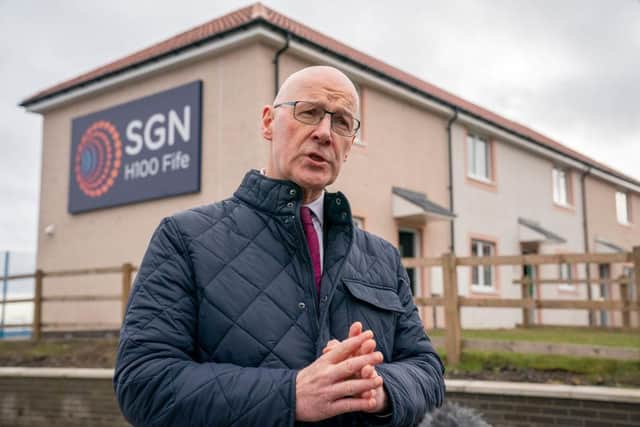
Make no mistake: the SNP is not enjoying an electoral surge. As polling expert Professor Sir John Curtice pointed out over the weekend, support for the party “is still well down on the last Scottish election”.
However, it has a healthy lead over its rivals, and there is an air of confidence around Mr Swinney and his team.
Nevertheless, Operation Branchform, the ongoing police investigation into the SNP’s finances, still hangs like a cloud over the party, and surveys show Scots are unhappy with the state of public services.
Perceived lack of vision
What does Scottish Labour actually stand for? And what does Mr Sarwar want to achieve in power? I’ve lost count of the number of times I’ve heard variations of these questions.
The party has been announcing a number policies in the run-up to this weekend’s conference, including pledging to abolish peak rail fares, but there is still a sense that it lacks a compelling vision for Scotland.
This mattered a lot less when the Tories were in power in Westminster and the SNP was reeling from high-profile arrests and police raids. But with Sir Keir struggling and the SNP’s internal storm settling - at least for now - things are no longer quite so simple.
Last month it was reported Scottish Labour had dumped its “change” slogan partly because of its association with Sir Keir, and was instead promising a “new direction”. It will need to flesh out exactly what this means in the months to come.
Time
The next Holyrood election is expected to take place in May next year. It goes without saying that a year is a very long time in politics, and anything could happen between now and then.
After all, Mr Yousaf’s resignation was less than a year ago, but already feels like a half-remembered fever dream.
Having said that, political parties need time to craft their message, and it takes longer still to hammer it home with the public. There’s a reason politicians repeat soundbites over and over again.
Labour will want to frame the next election in terms of failing public services and political stagnation. The SNP, meanwhile, will want to make it all about the unpopular UK Labour government.
If Mr Sarwar wants to seize back the narrative, time is of the essence.
Comments
Want to join the conversation? Please or to comment on this article.