
Spending war of words will only heat up as Holyrood election looms
The battle lines have been well and truly drawn ahead of 2026


It didn’t take long for the traditional war of words to kick off between ministers north and south of the Border.
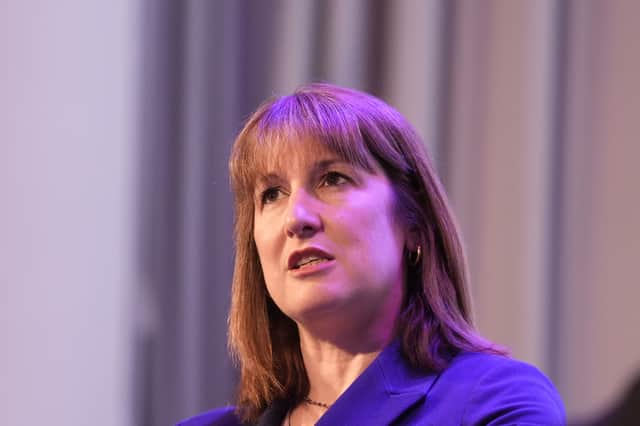
The Chancellor’s spending review was a blizzard of big numbers. Rachel Reeves said it would deliver an average block grant for Scotland of £50.9 billion per year over the next three years.
This is the largest settlement in real terms since devolution was introduced, she said. UK ministers said it amounted to an extra £9.1 billion for the Scottish Government over the review period.
“That's more money than ever before for them to invest in Scottish public services like our NHS, police, housing and schools,” said Scottish Secretary Ian Murray.
Keen Holyrood watchers will not be surprised to learn that Shona Robison, the SNP’s Finance Secretary, took a different view. She insisted Scotland was yet again being treated “as an afterthought”.
READ MORE: Acorn project funding uncertainty as 'final decision' still to be made by Chancellor Rachel Reeves
“Today’s settlement for Scotland is particularly disappointing, with real terms growth of 0.8 per cent a year for our overall block grant, which is lower than the average for UK departments,” she said.
“Had our resource funding for day-to-day priorities grown in line with the UK Government’s overall spending, we would have £1.1 billion more to spend on our priorities over the next three years.
“In effect, Scotland has been short-changed by more than a billion pounds.”
Analysis by experts such as those at the Fraser Of Allander Institute (FAI), attached to Strathclyde University, helps cut through some of the noise. The wider UK picture, it said, is one of “largesse in the short-run” followed by cuts in future years.
On the day-to-day spending side, the Scottish Government’s funding will indeed grow at an average of 0.8 per cent a year after accounting for inflation. This is lower than forecast by the independent Scottish Fiscal Commission last month.
“We have seen some Labour MPs and MSPs describing this event as increasing the block grant by £9.1 billion over the spending review period,” experts at the FAI wrote in a blog post.
“While it is true that Barnett consequentials add up to this figure (across different periods for resource and capital), this doesn’t seem like a particularly transparent or helpful way of describing the changes.
“It essentially assumes that no additional funding would have been made available for the Scottish Government in cash terms relative to that in 2025/26 – which is not a credible baseline.
“A much more insightful – though perhaps less cheery – conclusion from looking at the SFC’s forecast is that by 2028/29, funding will be £0.7 billion lower than their central estimate published on 29 May.”
David Phillips, from the Institute for Fiscal Studies, said the increase in the Scottish Government’s day-to-day funding was frontloaded, at 1.2 per cent in 2026/27, then 0.6 per cent and 0.7 per cent in subsequent years.
“With devolved elections looming, this poses a risk: it will be easier to fund any pledges/giveaways around the time of the election than later years,” he wrote on social media. “Parties need to avoid the temptation to promise unfunded 'goodies'; their pledges will need to be carefully scrutinised.
“While the Scottish Government’s budget will increase overall, the NHS could easily absorb all of the increase - necessitating cuts to other spending.
“That's particularly likely from 2027/28 onwards, due to combo of smaller increases in UK funding and devolved tax and benefit forecasts.
“It's perfectly legitimate for the Scottish Government to prioritise benefits and public sector pay rises - but without further tax rises that will squeeze many services even more than in the rest of the UK.”
Of course, there were other big announcements for Scotland in the spending review, not least money for a long-awaited carbon capture project in Aberdeenshire.
The Acorn facility, which had previously been overlooked in favour of schemes down south, is in line for “development funding” from the UK Government, although it is not clear how much money is actually on the table.
Ms Robison said the Scottish Government had been provided with no figures and no timeframe.
Elsewhere, the Chancellor confirmed up to £750 million in funding for the creation of a supercomputer at Edinburgh University, which could be one of the most powerful in the world.
The plan had previously been scrapped by Ms Reeves in the early weeks of her Government taking office.
There was also an initial investment of £250 million over the next three years in the Faslane naval base, the home of the UK’s nuclear deterrent, while Glasgow will benefit from wider munitions funding.
Increased cash for the NHS and housing in England will see more money flow north to Scotland, and SNP ministers will be under pressure to pass this on.
"What we have done previously is we have passed on health resource consequentials and [then] some, going back years and years,” Ms Robison told journalists in Holyrood.
"We haven't just matched health resource consequentials, but we've given more than that. So that has been our pattern of investment in the health service previously."
But as the Holyrood election looms next year, it is clear the war of words over spending - and who is to blame for the state of public services - will only heat up.
In a briefing for Scottish journalists, Chief Secretary to the Treasury Darren Jones said the spending review will mean £2.9 billion extra for Scotland each year.
“The question then becomes, who do you trust to spend that?” said Mr Murray, the Scottish Secretary. The battle lines are well and truly drawn.
Comments
Want to join the conversation? Please or to comment on this article.