
SNP plans to shrink public sector workforce 'off course'
The Scottish government had pledged to reduce the size of the public sector workforce in a bid to plug a £5 billion gap in the public finances
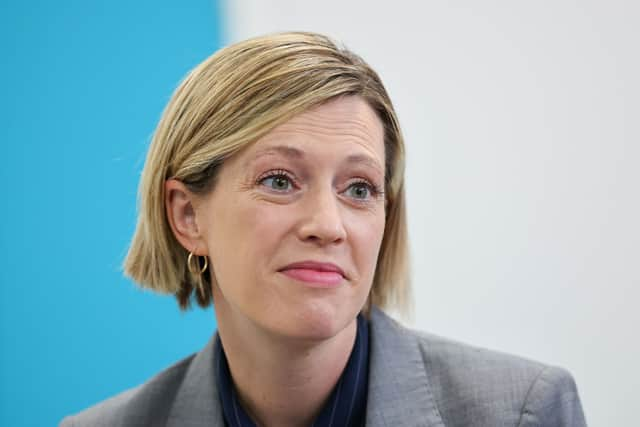
The SNP’s finance chief has admitted the government’s plans to shrink the public sector workforce are “off course”.
Deputy First Minister Jenny Gilruth also defended the government’s decision to scrap plans to give a financial update this month as the data they have is “out-of-date”.
This comes as the Scottish government grapples with a looming £5 billion black hole in the public purse, and ambitious plans to reform public services like the NHS and local government to try to plug the gap.


Ms Gilruth was at Holyrood’s finance committee on Wednesday morning when she said the government is “not where we should be” in its plans to reduce the number of public sector workers.
Government ministers are currently trying to shrink the size of the public sector workforce by an average of 0.5 per cent a year, totalling a 2.5 per cent reduction by 2029/30. However the Scottish Fiscal Commission said in its last update that “the devolved public sector workforce was higher at the end of 2025/26 than at the start”.
Ms Gilruth told the finance committee the government’s plans “are off course at the current time”.
Scottish Labour leader Michael Marra then asked: “You admit you’re off track?”
Ms Gilruth, who is also the finance secretary, said: “We’re not where we should be.”
Liam Kerr MSP from the Conservatives also asked Ms Gilruth to set out the level of job reductions the government wants in 2027/28 to get back on track, and Ms Gilruth said: “[Ministers] will need to revise and consider how we drive that progress because we are not going in the right direction at the current time.”
She also admitted the reduction in workforce numbers will not be “felt evenly across the board”, and added: “I think that is fair to say, because we need to invest in our NHS, we all accept that.
“We want to protect frontline workers. We want to protect certain elements of our public sector because we recognise that is important.”
Ms Gilruth said the government has already identified £2.6 billion in savings from public sector workforce and reprioritisation by 2029/30.
She added: “It would be remiss of me not to mention that in the Scottish Government we have been able to reduce the core workforce by 12.7 per cent since March of 2022.
“I accept it had increased, so there was a requirement for us to shrink it, but it is important that we get our own house in order.”
During her appearance at the committee she also defended her decision to scrap a planned statement on the state of public finances.
Back in June she told the finance committee there would be no medium-term financial strategy published year and she would instead make a fiscal statement to parliament in September.
However earlier this week she said the statement was no longer going to be going ahead.
Finance committee convener Clare Haughey wrote to the deputy first minister on September 21 asking her to confirm when the statement will be given, and Ms Gilruth wrote back to say: “I will set out the key fiscal challenges facing the Scottish budget in more detail at my appearance before the committee on September 30, and the parliamentary debate on the asks of the UK Government budget, on October 1.”
Mr Kerr challenged Ms Gilruth on why she decided to not publish a medium-term financial strategy or give the proposed fiscal update in September.
Ms Gilruth said: “There has been real significant political change with a new Prime Minister and a new chancellor which fundamentally changed the approach to this update.
“The other thing we need to be mindful of is that if I had given an update, the data used would be outdated as the OBR [Office for Budget Responsibility] data predates the Middle East war.
“I would have been using outdated data to give an update to parliament, and then we would have a UK budget in 28 days. So giving an update at this point wouldn’t have been helpful as it would have been outdated.”
When Mr Kerr challenged her again on why the Scottish Government did not have the resources to respond to the fiscal challenges presented by the war in the Middle East, Ms Gilruth reiterated it was down to outdated OBR data.
She said pressing ahead with the planned statement would have been “unhelpful and inaccurate” and “wouldn’t have informed parliament”.
She added: “This would also have been four weeks in advance of the UK Government budget with a brand new Prime Minister and chancellor, who have already taken decisions on defence spending which we think will have negative approaches.
“We thought it prudent not to give an update that would be out-of-date in three or four weeks’ time.”
Ms Gilruth also told the committee the new UK Government under Andy Burnham is “markedly different” from its predecessors, and said she welcomes Mr Burnham’s rhetoric on further devolution, as she “expects” that to come with additional finances for the Scottish Government.
Mr Marra also raised concerns that her comments could mean the government is shifting to not regularly publishing medium-term financial strategies in the future, but Ms Gilruth said this is not the case and the government wants to be as transparent as it can with Holyrood’s finance committee.
Comments
Want to join the conversation? Please or to comment on this article.