
Doctors demand NHS 'long-term and radical reform' amid national treatment centres fears



SNP ministers are unable to confirm whether the remaining flagship national treatment centres will proceed amid budget pressures.
Scotland’s new health secretary has been told to “urgently set out a comprehensive plan for the future of the NHS” amid fears over paused and watered down flagship proposals for national treatment centres.
A leading doctors’ organisation has called on Angela Constance to bring forward “long-term and radical reform” of Scotland’s NHS as the Scottish government has been unable to confirm the remaining planned national treatment centres will proceed.
The appeals come after fears emerged over the stalled treatment centre at Forth Valley Royal Hospital which has been beset by issues for months over a stand-off between an NHS contractor and Falkirk Council’s building standards.

The flagship treatment centres, which were intended to deliver an additional 40,000 procedures by 2026 and help reduce waiting times, were billed as a national network of purpose-built healthcare facilities across Scotland for planned and diagnostic care.
They were intended to provide an increase in capacity to support patients to access treatment, increased flexibility for patients accessing treatment and to support collaborative working across territorial NHS boards.
The national treatment centres were to be funded by direct investment from the Scottish government. But after capital spending budgets from Westminster were cut, SNP ministers officially paused the five remaining projects in 2024.
As of March, £169m had been spent on facilities in Kirkcaldy, two in Clydebank and Inverness that have already opened - while more than £36m has been spent on the five paused projects in Ayrshire and Arran, Grampian, Lothian, Lanarkshire and Tayside.
In 2023, spending watchdog, Audit Scotland, warned that delays to the national treatment centre programme meant targets for increased NHS activity were unlikely to be met.

In January, then finance secretary Shona Robison suggested that any new treatment centres could now be “repurposed" existing NHS facilities, instead of the original vision for new flagship buildings.
Ms Robison highlighted a “signal of a different direction of travel” for the NHS “that is more about national planning”, arguing that health boards “doing their own thing” was “really not sustainable anymore”.
Now doctors at the British Medical Association (BMA) have called for “long-term and radical reform” to the NHS and raised concerns about staffing pressures at national treatment centres.
Dr Iain Kennedy, chair of BMA Scotland, said: “There has long been a mismatch between capacity and resources in the NHS, along with a failure to plan for the future which has led to waiting times growing.
“We have raised concerns about how the pledged national treatment centres would be staffed against the background of an increasing medical workforce crisis, highlighting the need for a comprehensive long-term workforce plan for the NHS.”

He added: “The uncertainty over the future of planned national treatment centres underlines the need for the Scottish government to urgently set out in the new parliamentary session a comprehensive plan for the future of the NHS.
“It’s only by looking at the whole system that we will tackle long waiting lists, ensuring services are properly staffed, properly resourced and able to deliver the change required.
“These plans must not just tinker around the edges, but deliver the long-term and radical reform that finally puts our NHS on a sustainable footing.
“Properly resourced and factored into wider reform, these treatment centres could play an important role, but they currently appear a symptom of a piecemeal approach focused on eye-catching announcements which we need to move away from.”
The SNP government’s infrastructure delivery pipeline documents, published alongside the budget in January, state that “projects that had previously begun the business case process but were then paused, such as the remaining national treatment centres…will be considered” as part of a “whole system planning work, with priorities determined based on strategic needs assessment across the whole of the NHS estate”.
The papers add: “The Scottish government is currently working with all health boards to develop a whole system infrastructure plan (WSIP), rather than individual boards developing business cases for future projects in isolation.
“This process will identify investment priorities across NHS Scotland.”
But it emerged this week that a new ward to treat orthopaedic patients from all over Scotland is still not complete almost four years after construction began.
There has been no sign of any work at the national treatment centre at Forth Valley Royal Hospital while an NHS contractor and Falkirk Council’s building standards fail to reach agreement on what is required.
In June 2022, NHS Forth Valley said the centre would enable an extra 1,500 operations to be carried out every year, mainly hip and knee joint replacement surgery.
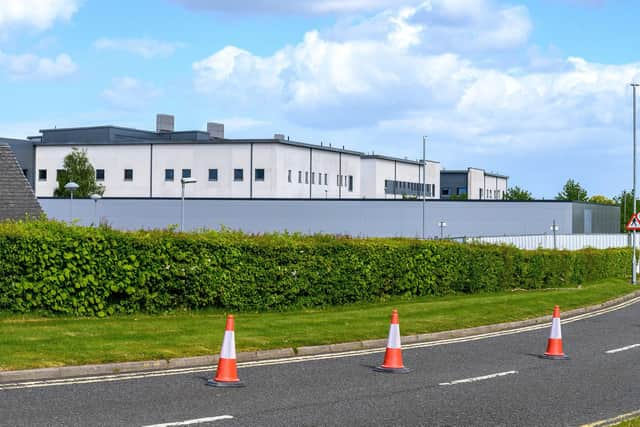
But it will not be used for local patients until "waiting times across Scotland are equalised".
Reports suggest that 14 beds are currently being used in the hospital to provide this orthopaedic care. But while they are being used for patients from across the country it means that there are less beds available for people in the Forth Valley are at a time when the hospital consistently has capacity issues.
The new ward was to be the final part of a £17m investment which also funded the opening of two additional operating theatres at the hospital and a state-of-the-art MRI scanner which are already operational.
In October 2022 around 48 large modular units, which make up the main building blocks for the new ward, were placed by crane onto the construction site.
However, 12 months later NHS trouble-shooters identified issues with the building project.
A review by NHS Scotland Assure found several areas of concern around ventilation, fire safety and flooding.
NHS Assure inspectors found two significant and 19 major issues with the project, including a lack of detail within the fire strategy, non-compliance with some NHS guidance and a lack of detail on pre-commissioning checks.
Set up to monitor the quality, safety and running of health board construction projects, NHS Assure said if the issues were not addressed they could "potentially compromise the safety of patients and staff".
An issue with water getting into the site that resulted in damage and mould growth on internal walls was also spotted during one of the inspections.
Without a satisfactory NHS Assure review, new health facilities cannot open to the public.
Last October both NHS Forth Valley and Falkirk Council said they were working together to find solutions that complied with guidance – but seven months later they appear to be no further forward.
In March, then health secretary Neil Gray admitted that “there is an ongoing dispute with the contractor over final works required to bring the facility into appropriate condition for operational service”, adding that “the final costs remain a point of negotiation”.
A spokesperson for NHS Forth Valley said: “An NTC service has been operational at Forth Valley Royal Hospital for over a year which is providing orthopaedic treatment to patients from across Scotland.
"This service is fully funded by the Scottish Government and remains within budget.
"The service is temporarily located in an existing ward within Forth Valley Royal Hospital while work continues to address the remaining outstanding issues linked to the construction of the new NTC inpatient ward.
"Falkirk Council’s building standards department is working with the contractor to review their proposals in relation to pipework and fire compliance regulations for the new ward. Once a solution has been agreed by all relevant parties, a detailed workplan will to be developed to take forward any required changes along with a timetable for the completion of this work.”
Opposition MSPs have called on newly-appointed health secretary, Ms Constance, to prioritise getting the national treatment centres up and running.
Scottish Labour health spokesperson, Jackie Baillie, said: “Hundreds of thousands of Scots are stuck on NHS waiting lists but the SNP is dragging its heels delivering long-promised national treatment centres.

“There can be no more dither and delay when it comes to fixing the crisis in our NHS.
"John Swinney and Angela Constance must get on with delivering these Treatment Centres and driving down waiting lists for good."
Scottish Conservative health spokesperson, Miles Briggs, said: “The SNP’s failure to build their long-awaited national treatment centres sums up their incompetence.
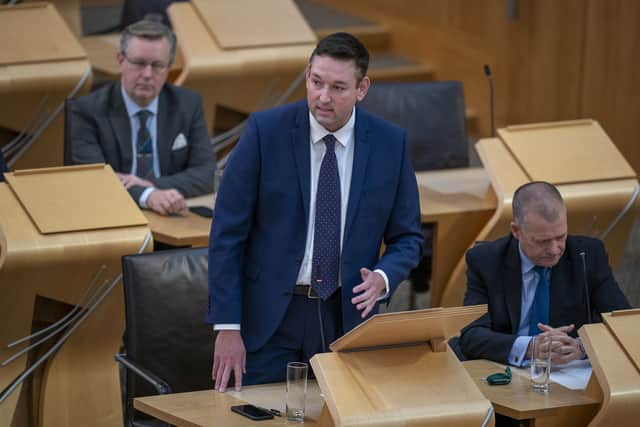
“Their mismanagement of Scotland’s NHS over the last two decades means that without these centres, hundreds of thousands of Scots are still languishing on waiting lists.”
He added: “Completing these centres must be a top priority for new SNP health secretary Angela Constance if we are to treat people as quickly and as close to home as possible.
“However, if her track record in previous government roles is anything to go by patients and staff will have little faith in her delivering them.”
A Scottish government spokesperson said: “The Scottish government’s infrastructure investment delivery pipeline 2026 sets out the infrastructure projects and programmes the Scottish government will fund over the next four financial years.
“We are working with all health boards to develop a whole system infrastructure plan to identify investment priorities across NHS Scotland.
“Projects that had previously begun the business case process but were then paused, such as the remaining national treatment centres, will be considered as part of this work.”
Comments
Want to join the conversation? Please or to comment on this article.