
Exclusive:SNP minister says more needs to be done to support young mothers in politics, as John Swinney defends record
Natalie Don-Innes, the SNP’s children’s minister, has addressed the exodus of female politicians from Holyrood at next year’s election

More needs to be done to support young mothers in politics, a Scottish Government minister has claimed, as the SNP faces questions about an exodus of women from the party’s senior ranks.
Natalie Don-Innes, who is the SNP’s children’s minister, is standing down at next year’s Holyrood election after serving as the MSP for Renfrewshire North and West since 2021. She is also the mother to five-year-old Ailsa and three-year-old Thomas.
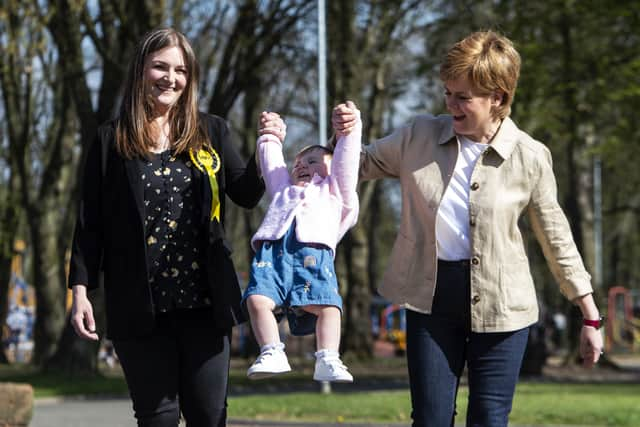

But one of the reasons for her resignation is the difficulties in juggling those two roles.
“When I first joined Parliament, my daughter was 14 months old and I was seven-and-a-half months pregnant with my son,” Ms Don-Innes told The Scotsman.
“Having been elected in May 2021 and then having my son in the July, I have quite a unique perspective of having two young children and taking maternity leave when I first became an elected member.
“It is difficult and while I could continue, I just don’t think that is what is best for my family, myself or the people I represent. Giving 100 per cent can be challenging when you have two little ones who need looked after.”
Ms Don-Innes wants to see more support and understanding for politicians with young families, saying parents cannot be discouraged from standing for election.
She said: “This goes beyond one political party or Parliament - politics is not built for the 21st century. For example, decision time is at 5pm, but it can go late, which is difficult.
“Over and above your working week there are meetings at night that you are expected to go to, parliamentary receptions at night which not only are you expected to go to, but are beneficial for networking and meeting people, things at the weekend and campaigning. There’s a whole range of different things involved in being an elected member.
“I don’t have a large support network around me to help with my family, so there is a whole combination that has led me to decide to stand down.
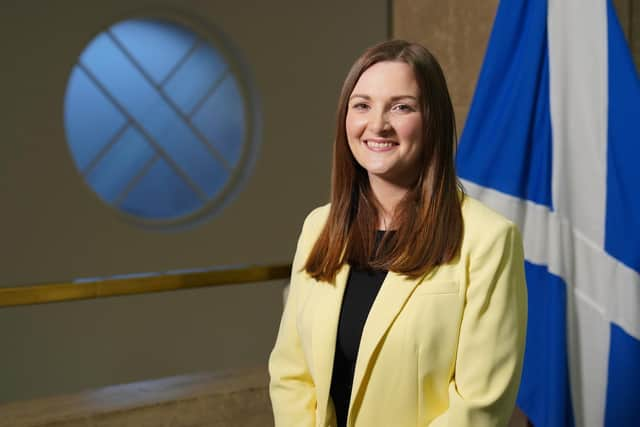
“There has been some progress already with remote working, which was really helpful for me when I came back from maternity leave. But I do feel that is diminishing a little bit when it should be encouraged.
Ms Don-Innes has been “vocal” about childcare facilities at Holyrood. The Scottish Parliament has a creche, which can only take children for four hours at a time - significantly less than the working day of an MSP.
The Care Inspectorate refused to grant the Parliament a licence to run a full on-site nursery because it does not have access to safe outdoor space.
So far at least 28 MSPs have said they will not stand for re-election in 2026 - but 16 of these MSPs are female. Amongst the departing SNP MSPs, two-thirds of those who have announced they will not stand again are women.
Ms Don-Innes said while this trend was not because Parliament simply does not work for women, she stressed improvements did need to be made.
She said: “Women are 28 per cent more likely than men to be targeted with abuse on social media. That is not the reason I am standing down, but when you factor that in it does make it more difficult.
“My family hates to see things written about me on social media. My kids are not old enough yet, but it fills me with dread for them to see the nasty stuff I get.
“We need to take the toxicity out of politics and remind people that we are here to make a difference and change things for the better.”
Such is the exodus of women from SNP ranks at the next election that First Minister John Swinney was forced to last weekend defend his party’s record, saying it does not have an issue with women.
Asked if the party had a woman issue, the First Minister said: “No, I don’t think that. I think there are some big issues about how women feel in public life because of the amount of abuse that’s hurled about.”
Mr Swinney added: “I want to encourage women to participate in public life and in politics and to come forward for election and for us to benefit from their contribution.”
A SNP spokeswoman said the party had “consistently improved the gender balance” in recent years, pointing to the fact more than half of its MSPs were women and that it was one of the first governments in the world to be gender balanced.
The spokeswoman added: “The SNP will continue doing everything we can to ensure equal representation for women in our national parliament and wider society - recognising the challenges that exist in our current political culture, including the behaviour of the media, politicians and online trolls towards women in politics.”
The Scottish Greens said the party had “gender balancing measures” at all levels of politics, particularly its co-convenership and co-leadership measures and its women’s network to support women before they are even elected.
But Maggie Chapman MSP, the party’s equalities spokeswoman, said female MSPs were under “much more scrutiny” than their male counterparts.
She said: “We are chastised for our appearance, our speaking style, our voices, our approach to political debate, and much more harshly judged.

“My Green colleagues who are women are often accused of not knowing what we are talking about, because some of us are foreign-born, or because some of us are not parents. This does not happen to men in politics to the same degree at all. It’s clear that xenophobia and misogyny often go hand in hand.
“Women in politics are also more likely to be doxxed than men, and more likely to receive relentless threats of violence on social media.
“I can post about job losses in Dundee and not one reply I receive will be on topic. They are often threatening, transphobic or sexist remarks, because of who I am and my allyship with the trans community.
“When women step into politics, they deserve to do so without fear for their personal safety or the safety of their families.”
Ms Chapman claimed there was a “real lack of mutual understanding and support” from other female politicians.
Scottish Labour’s deputy leader Dame Jackie Baillie said: “Women make up more than half the population - it’s essential they are properly represented among those debating and deciding Scotland’s laws.

“Scottish Labour operates a twinning mechanism in constituencies to encourage female candidates, and roughly half of our MSPs and 40 per cent of our MPs are women, including many in senior positions.
“The challenges may change, but Scottish Labour is committed to supporting women into politics for decades to come.”
Roz McCall, from the Scottish Conservatives, described it as “deeply disappointing” to see so many female MSPs resigning in 2026.
She said: “While there are a number of different reasons as to why this is the case, it once again raises questions about how the Scottish Parliament can do more to create an environment that gives better support to female politicians.
“The Scottish Conservatives are fully committed to getting more women involved in politics through excellent organisations such as Women2Win and the Conservative Women’s Organisation.”
Christine Jardine MP, the Lib Dems’ women and equalities spokeswoman, said: “Politics can be very difficult, and we need to be aware of the particularly intense challenges facing women.
“Many female parliamentarians have had the courage to speak up about their experiences, whether that’s the abuse they receive online, rape or deaththreats and other kinds of violent misogyny.
“It’s depressing that we live in a world where that takes place, and it’s clear that we need much greater action to combat it.
“Lib Dems understand that progress doesn’t just end once we get more women into politics - that’s why we are committed to nurturing an environment that allows them to stay, rooting out misogynistic practices, doubling statutory maternity pay and expanding parental leave.”
Comments
Want to join the conversation? Please or to comment on this article.