
SNP minister admits NHS will have to axe procedures amid 'sacrifice' warning
Scotland’s auditor general has warned the NHS may need to examine which procedures it can continue to provide

Health Secretary Neil Gray has suggested “procedures of low clinical value” will need to be axed from the NHS after the auditor general warned well-established parts of healthcare may have to be “sacrificed” and services deprioritised.
Mr Gray stressed his overhaul of the NHS will include both ramping up the “preventative agenda” alongside “structural reform”, with a need to “embrace innovation”.
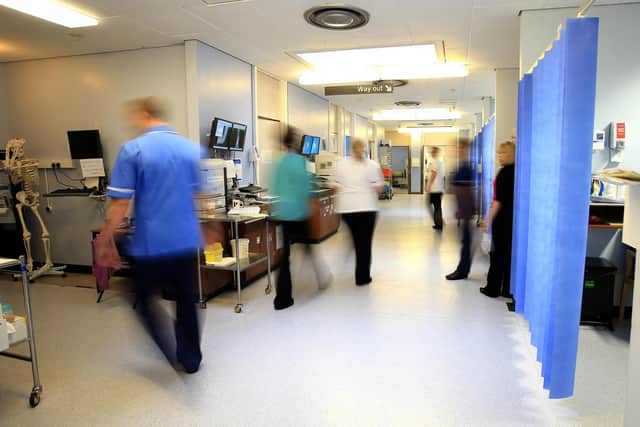

The admission by the health secretary came after auditor general Stephen Boyle issued a warning to the Scottish Government it “can’t spend your way” out of attempting to place the NHS on a more sustainable long-term footing, stressing parts of the health service may need to be “sacrificed” as funding is shifted from acute services to preventative care such as education and housing.
Mr Boyle, delivering a speech at a conference held by the Royal College of Physicians of Edinburgh, in partnership with Chest, Heart and Stroke Scotland and the Enlighten think tank, raised the prospect of a conversation about “what the NHS should potentially stop doing”.
He pointed to healthcare strategies highlighting “the need to prioritise or stop some aspects of service”.
Mr Boyle insisted that “Scottish Government and public bodies need to focus more on longer-term reforms”, with frank discussions “about what the NHS should potentially stop doing”
He added: “We might have to move into a place where we deprioritise certain ways of spending and what that means for careers and interests.”

The conference heard from various clinical experts who highlighted repeated past promises for more funding to be put into prevention.
Mr Boyle warned that “we've not been able to change how we are spending money”.
He added: “We haven't yet delivered upon that ambition to shift the balance of care away from large public acute hospitals into our community settings.
“The difficulties with delivering on that ambition can't be understated. We have to make this change.
“The NHS in Scotland is experiencing immediate financial challenges - rising demand, operational pressures. There needs to be a sustained increased focus on improving the health of Scotland's people to reduce the pressure on the NHS and social care.”
In response, Mr Gray said: “I accept there are procedures of low clinical value that we may no longer be able to do. On that, I will take clinical advice as to what those may be around where there are areas of low clinical value that we wouldn’t do any more.
“I think fundamentally the health service has got to be there to meet the needs of the population.”

Also speaking at the event, Scottish Labour health spokesperson, Jackie Baillie, pointed to her “deep frustration” at “18 years of not having that collaboration”, under the SNP in power.
She added: “We have brilliant people in Scotland. We have some of the best plans and strategies and frameworks and working groups but we’re simply not implementing it.”
Mr Gray warned that the “public narrative” about the NHS, and it being entirely negative, “damages staff morale and their ability to do their job”.
Professor Andrew Elder, president of the Royal College of Physicians of Edinburgh, told the conference that “it is not possible for us to go on saying we can do everything for everybody all of the time”.
Prof Elder stressed a conversation was needed over “how do we spend what we have available”, warning that “collectively, we need to talk about what healthcare we can and cannot fund”.
He also made a “plea to our politicians”, pointing to clinicals and social care leaders pledging to work differently as part of any transformation.
Prof Elder added: “Surely our politicians need to work in new and different ways. By that I mean cross-party working, longer-term planning. The way our politics impinges on healthcare at the moment, demoralises its staff.
“Of course we should prioritise prevention. I don’t think there's any doubt at all about that. I'm not sure the resources that will be shifted to education and housing, how we work that out. But it will have a lag time before its effect. It will also not substantially impact trajectories of people who are currently in their 60s.
“It’s cold outside, winter looms again over the Scottish NHS. We are normalising the unacceptable in many of the things that we are currently doing. We have the oxymoron of corridor care as a matter of routine. That is what's ahead for the next 20 years. No amount of prevention can substantially shift that.”
Comments
Want to join the conversation? Please or to comment on this article.