
SNP ministers attacked by own commission over 'deindustrialisation' and failure to support energy workers

The Scottish government’s just transition commission has issued a stark assessment of progress in ensuring workers are not left behind in any strategy to reach net zero.
SNP ministers have been warned there is "no just path to net zero through deindustrialisation" and criticised for a lack of progress providing a transition for workers in a scathing report by the Scottish government’s own commission.
The assessment from the Just Transition Commission comes amid fears that the so-called “social licence” where governments have general public support for measures to tackle climate change is now “under threat” and “needs to be defended”.

In its final report, the commission has made clear that progress is “falling short of what is needed” in order for a just transition for workers to take place.
This would see workers in parts of the economy such as energy, manufacturing and agriculture have opportunities for alternative roles in the move towards decarbonisation.
READ MORE: North Sea oil and gas workers braced for 'unjust transition' as SNP ministers have 'no plan'
But Scotland’s transition, particularly in the energy sector, has been plagued with big industrial employers closing before many green technologies have scaled up - resulting in hundreds of workers losing their jobs.
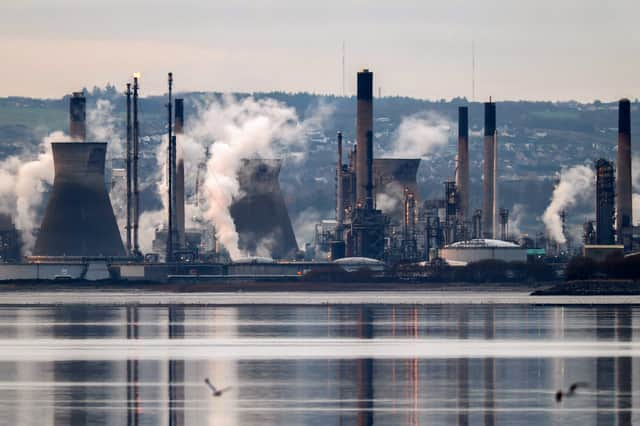
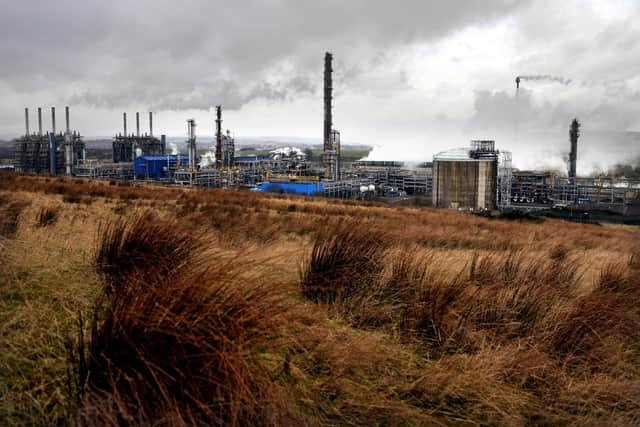
In April 2025, Petroineos closed its Grangemouth oil refinery while ExxonMobil closed its Mossmorran plant earlier this month. Fears have also been raised about the scale of job losses in the North Sea oil and gas sector.
But in the stark report, the commission warns that “our current trajectory exposes us to further repeats of the unplanned-for closures at Grangemouth and Mossmorran”.
The document adds that “there is no just path to net zero through deindustrialisation”.
It adds: “Our current path risks an economy with minimal manufacturing, an overreliance on imports, and the further dwindling of the already diminished industrial base and the skilled workforce we need to deliver a prosperous transition.”
The report warns that a just transition is still achievable, but only if there is “significant acceleration of progress”.
It adds: “Unless we renew our ambition and redouble our efforts, the enormous opportunity for meaningful climate action and reducing inequality will be lost.
READ MORE: SNP 'taking sufficient time' to publish long-delayed energy strategy despite three-year wait
The commission spoke to more than 900 people across Scotland, with the final report being launched today in Thurso.
The report has added that “a business-as-usual scenario”, particularly over a failure from the SNP government to push forward plans to replace gas boilers with renewable heating systems “risks building a country where people continue to live in some of Europe’s leakiest buildings, and endure high levels of fuel poverty, deepening job insecurity and in-work poverty, and the undermining of efforts to reduce child poverty”.
It adds: “It risks worsening rural depopulation at precisely the moment that we need to ensure communities in rural and island areas have the services and support they need to deliver much of the infrastructure and new forms of economic activity that will underpin the transition and its economic up-sides for all of Scotland.”
The report states that “to maintain the social license for climate action”, by which governments have a moral authority to bring forward measures to tackle the climate crisis, the Scottish government “must now use all levers at its disposal”.
READ MORE: Ex Grangemouth workers to have 'priority consideration' for green jobs under John Swinney pledge
Reaching net zero no longer has a political consensus at Holyrood and Westminster, with both Reform UK and the Conservatives pushing back on measures to tackle climate change.
The commission has called for politicians to “develop and deliver a credible joint Scottish and UK government plan for the North Sea workforce” and introduce “just transition conditionalities” to Scottish government grants, tax incentives, loans and leases.
Other recommendations include increased funding for further education colleges to help meet a skills gap and bringing forward action to make the uptake of electric vehicles (EVs) fairer to avoid a scenario whereby the transition in transport mainly benefits wealthier households with driveways.
Professor Dave Reay, co-chair of the commission, said: “Our message today is clear: we can still make this transition in a way that truly benefits Scotland’s people and places. But right now we are not on track.

“We’ve heard it in church halls, on ferries between remote islands, on buses in Dundee, at major industrial sites and vast peat bogs. The government needs to do much more. That starts by implementing the realistic and practical recommendations in today’s report.”
Satwat Rehman, co-chair of the commission, added: “Climate change is the biggest risk multiplier for inequality this century.
“Delays and commitments without delivery severely undermine the credibility of the climate agenda. The social license for climate action is under threat and needs to be renewed through a step-change from the government towards delivery that measurably improves people’s lives.”
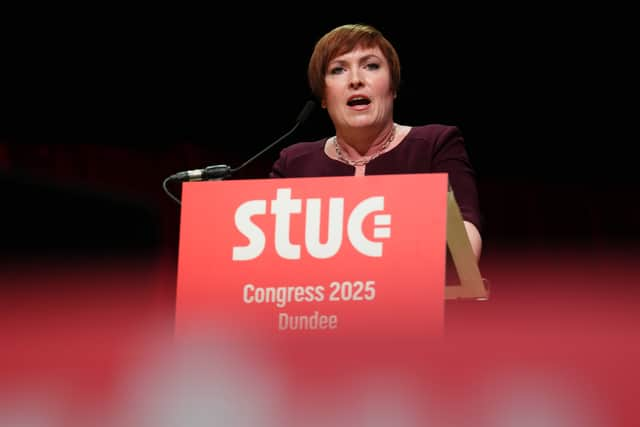
STUC general secretary, Roz Foyer, said: "The commission's final report, aptly named, shows that there really is no time to lose. It's time to do much more, much faster, or the Scottish government will lose what little faith workers still have in the political promises of a just transition.
"Communities deserve better than platitudes and processes that alienate rather than empower local people. We've seen workers leading the charge at Grangemouth and Alexander Dennis but too often they are fighting against the decisions of distant multinationals whilst government support is reactive and piecemeal.”
She added: “People cannot be expected to back a promise for the future, if politicians don't put the right support in place.
"The six key points in this report should be taken forward by the new parliament urgently and we repeat the commission's calls for a more proactive government role, less reliance on markets and to reverse cuts to our colleges which provide the vital skills base for workers to make a just transition a reality."

SNP climate action secretary, Gillian Martin, said: “I am grateful for the work of the Just Transition Commission (JTC) over the course of its term, and I welcome the fact this report recognises some of the key actions we have already taken to achieve net zero in a way that distributes the costs and benefits fairly.
“This includes our just transition fund for the North East and Moray; the just transition plan and £25 million fund for Grangemouth; £9m of support recently announced for Mossmorran; removing peak rail fares for good and our schemes to tackle fuel poverty.
“We agree that ‘business as usual’ is not an option. That is why we have published a draft climate change plan with over 150 actions to reduce emissions and, crucially, support people as our country transitions to net zero. It is the first climate plan in the UK to set out the costs and benefits of policies in this level of detail, and the first anywhere that will track just transition progress at a national level – something the JTC has welcomed.
“We will carefully consider the commission’s recommendations as we prepare to deliver the final climate change plan for Scotland.”
Comments
Want to join the conversation? Please or to comment on this article.