
Nicola Sturgeon 'sidelined' key advisers as SNP Government's Covid-19 planning failure branded 'inexplicable'
UK Covid-19 Inquiry Chair Baroness Hallett said in her second report the SNP administration’s ‘failure’ to ‘take a grip of the situation and make adequate preparations are inexplicable’
Nicola Sturgeon has been criticised for “sidelining” advisors and Cabinet ministers from decision making during the Covid pandemic, as a report from the official inquiry described the Scottish Government’s failure to properly prepare as “inexplicable”.
UK Covid-19 Inquiry Chair Baroness Hallett said in her second report the Scottish Government had “failed to anticipate the scale and speed of the oncoming pandemic and to act accordingly”.
The report also pointed the finger at Ms Sturgeon, the former first minister, for failing to share responsibility and said the “idea of eliminating the virus from Scotland was inappropriate and destined to fail”.
But Ms Sturgeon was praised as a “serious and diligent leader”, in contrast with the “toxic and chaotic culture” in Boris Johnson’s Conservative Government.
The Scottish Government was said to have “failed” to prepare properly for a pandemic that claimed the lives of more than 10,000 people north of the Border.
Baroness Hallett claimed the SNP administration’s “failure” to “take a grip of the situation and make adequate preparations are inexplicable”.
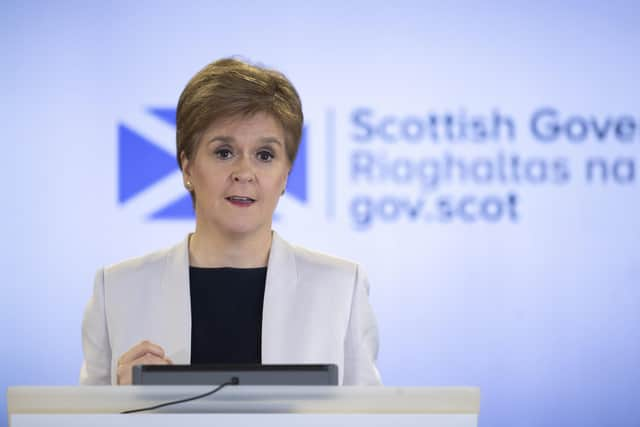

The chair blamed both Ms Sturgeon and Mr Johnson for their poor relationship, which she said “was not in the interests of the people of the UK”.
Key details in the 800-page report
The 800-page report was released on Thursday after hours of hearings into the UK’s handling of the pandemic. A damning part of the report criticised both the Scottish and UK governments for not getting ready between January and March 2020.
The document said: “The four governments knew enough to spur them into action.
“Accordingly, the inquiry finds that the lack of urgency (particularly during the mid-February school half-term holidays) and the failure of the four governments to take a grip of the situation and make adequate preparations are inexplicable.
“They failed to anticipate the scale and speed of the oncoming pandemic and to act accordingly.”
Ms Sturgeon claimed that “between January and March, a considerable amount of work was done to ensure that Scotland was as prepared as possible for the situation that was developing”.
But the report said “in this early period, there appears to have been no real strategy other than monitoring the situation”.
It continued: “The devolved administrations failed adequately to conduct their own planning with regard to the implications of Covid-19.
“Although the inquiry acknowledges that they were entitled to rely upon advice and assistance from the UK government in combating an unknown common threat, the devolved administrations became too dependent on the UK government response, which resulted in each devolved administration being significantly underprepared for what was to come.”
Sturgeon’s response
The former first minister said: "I know that given the unprecedented and highly uncertain nature of what we all faced in early 2020, that it was inevitable that mistakes and misjudgements would be made, and I have no doubt that I made my share of those and that's a burden I will carry for the rest of my life.
“But all the decisions that were taken at that time were taken on the basis of the best information and advice that we had available to us."
Ms Sturgeon said she agreed restrictions should have been introduced earlier, but "the decisions and the timing of decisions were based on the best advice and information that we had available to us".
Elsewhere, she defended her centralisation of decision-making.
"My ministers and all relevant officials played a full part in decision-making. However, it was a very conscious and deliberate decision of mine at the outset of the pandemic to lead from the front and to make very clear that the buck stopped with me.
“And I want to make clear today that I stand by that decision, and if the clock was to be turned back I would make that decision again."
Ms Sturgeon said she tried to work constructively with other government leaders."It was very difficult with Boris Johnson, and that was notwithstanding the efforts that we made. That said, I'm also a great believer that when a relationship doesn't work, you have to reflect on both sides of that, and so yes, I look back now and think, 'should I have done more to try to get a better working relationship with Boris Johnson?
'"I honestly don't know if that would have been the case."
She said she "fundamentally disagreed" with Mr Johnson's leadership approach during the pandemic.
"At the risk of sounding boastful here, I think I've got reasonable powers of persuasion. But my ability to persuade Boris Johnson to be a responsible, serious leader, I'm not sure they extend that far."
On whether she was party political, she said: "I will say this until I draw my dying breath, at no point did I behave in a party political sense in my management of Covid.
"My sole motivation - and I got things wrong along the way - but my sole motivation was doing what I judged to be best for the people I was serving, the Scottish public."
She recalled one night at the outset of Covid, "sitting thinking to myself, you've just got to put everything - politics, independence, everything - to one side and try to lead through this to the best of your ability".
Damaging public trust
The report also stated the Scottish Government saying that it was trying to eliminate the virus risked damaging public trust.
The document said: “Ms Sturgeon told the inquiry that the Scottish Government ‘colloquially’ used terms such as ‘zero Covid’ and ‘elimination’ to describe a ‘maximum suppression strategy’ and not a policy to eliminate the virus in Scotland.”
It continued: “Despite this, the language of ‘elimination’ was on occasion used publicly by Ms Sturgeon … this type of language risked giving the impression to the Scottish public that the emergency was almost over and that life could return to normal imminently.”
The report added: “This resulted in the public wrongly gaining an overly optimistic impression of the course of the pandemic and an underestimation of the significant impact of the second and third waves in Scotland.
“Frequent references to the possibility of restrictions being lifted or certain activities being allowed at some point soon created the expectation that they would be.
“This created a risk that the public’s trust in the Scottish Government’s messaging would be damaged, and that levels of compliance with public health regulations would be affected.”
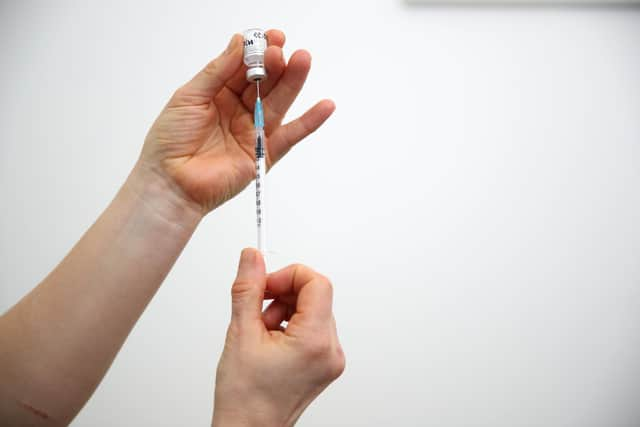
Sturgeon overrode her Cabinet ‘regularly’
Ms Sturgeon was also criticised for overriding her Cabinet regularly, which the report said meant there was less “transparency” and “accountability”.
The report praised the Glasgow Southside MSP because she “took responsibility for decisions”, but added this “also meant that ministers and advisers were often excluded from decision-making”.
It said: “While the Scottish Government purported to rule by Cabinet, more often than not decisions were taken by a small group of people and then formally approved by the Cabinet.”
The report continued: “However, the evidence suggests that important decisions were, in practice, made outside the formal structures of the Scottish Cabinet and the Scottish Government Resilience Room.”
It also said “the delegation of decisions from the Scottish Cabinet to the First Minister and/or the Deputy First Minister of Scotland was regular and, on occasion, extremely wide”.
The document further added: “The First Minister and Deputy First Minister of Scotland also, on occasion, took it upon themselves to make significant decisions outside of the Cabinet structure.”
The report pointed to the decision to close schools in 2020, where it said the Cabinet was overridden. It “frequently became a decision-ratifying body, not the ultimate decision-making body”.
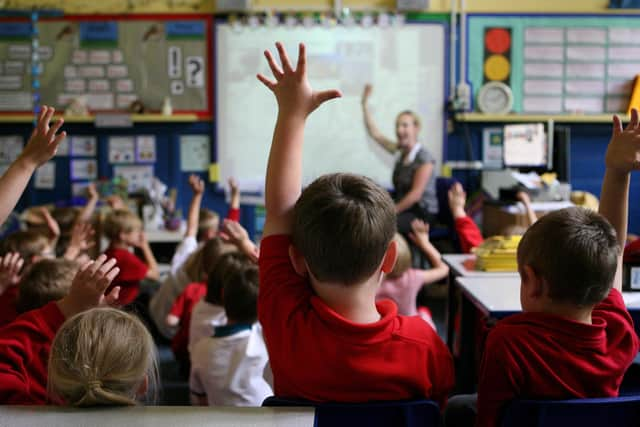
Baroness Hallett said: “The Scottish Cabinet should have been involved to a greater degree in decision-making in Scotland.
“This would have ensured greater transparency and enhanced accountability for decisions taken by the Gold Command and, increasingly, Ms Sturgeon.”
The report said Ms Sturgeon should have “shared the burden” of the daily Covid briefings, rather than doing them all herself. “Utilising a wider range of communicators would build a broader base for the delivery of messaging and for resilience, and it would lessen the burden on the First Minister,” the document said.
“Sharing the burden of public health communications more widely among senior decision-makers and advisers would also reduce the risk of polarisation among members of the public, either along political lines or through perceptions of an individual politician.”
Poor relationship between Sturgeon and Johnson
It said the poor relationship between Ms Sturgeon and then UK prime minister Mr Johnson “was not in the interests of the people of the UK”.

The report said: “Plainly, the relationship between Ms Sturgeon and the UK government was poor, and the approach adopted by Ms Sturgeon and Mr Johnson did nothing to improve it.
“The perception on the part of both the UK government and Scottish Government that the pandemic response was being used for political ends hindered intergovernmental relations between them at a time when trust between the administrations was paramount. In a future emergency, leaders of each of the four nations should seek to minimise political division and prioritise collective working in the public interest.”
The report continued: “There was a particular, constant tension and degree of lack of trust between the UK and the Scottish governments at the highest level.
“This was due largely to the personal and political antipathy between Mr Johnson and Ms Sturgeon, which influenced, in part, Mr Johnson’s decision not to chair the four-nations meetings.
“This was also not conducive to effective intergovernmental relations or to good decision-making, and therefore it was not in the interests of the people of the UK.
“It is self-evident that, in any future pandemic, political antipathies or discord need to be set aside to better address the exigencies of the emergency.”
Kate Forbes reacts to report
Speaking in Holyrood after the report was released, Deputy First Minister Kate Forbes acknowledged "mistakes were made and lessons will be learned".
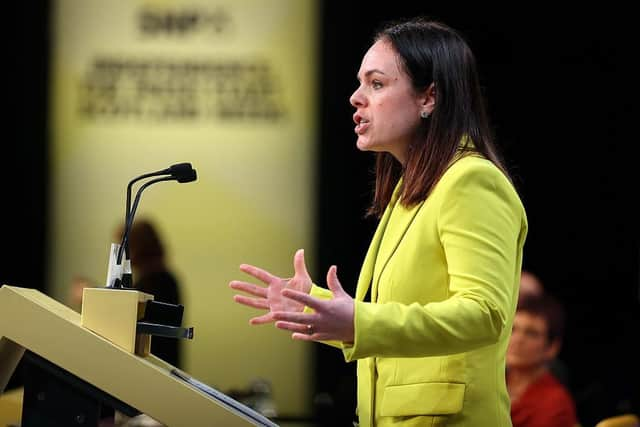
She said the Scottish Government’s "foremost priority was to protect the public from the novel Covid-19 virus".
"We had to learn and adapt rapidly, implementing unprecedented measures to limit transmission and safeguard our most vulnerable communities,” she said. “With the benefit of hindsight, we acknowledge that some choices—made in good faith at the time and under immense pressure—may not have always been the right ones."
Ms Forbes said the Government "will now take the necessary time to carefully consider the findings and recommendations", adding: "We are committed to a thorough and thoughtful review process, and we will respond fully in due course."
Ms Forbes said a dedicated "Covid inquiries response engagement group" - including representatives of bereaved families - will play "a vital role in providing robust and effective challenge as we navigate this journey".
Comments
Want to join the conversation? Please or to comment on this article.