
Single-sex spaces warning over trans discrimination in Scotland as people left 'incredibly distressed'
Public bodies will have to legally meet human rights laws as well as new guidance on equalities in the wake of the Supreme Court judgment.

Scotland’s leading trade union has demanded the equalities watchdog gives urgent “clarity and assurance” to transgender workers who are “facing discrimination at work” following the landmark Supreme Court case on single-sex spaces.
The alarm has been raised by the Scottish Trades Union Congress (STUC) amid a warning public bodies will need to legally meet human rights standards alongside adhering to the Equality Act.
The Scottish Human Rights Commission has starkly warned public bodies the “inaccurate interpretation and implementation of the ruling ... could put rights at risk”.


The Scottish Government and public bodies have come under intense pressure from campaigners to implement their interpretation of the Equality Act after the Supreme Court ruled the term ‘woman’ in the legislation refers to a biological woman.
READ MORE: Scottish Trans warns 'urgent' UK gender law change needed if single-sex guidance not revised
The warning comes as new research highlights barriers faced by trans people in Scotland since the Supreme Court case.
Research from trans rights advocacy group and charity, TransActual, has shown several instances of transgender “segregation” in Scotland following the Supreme Court judgment.
The Equality and Human Rights Commission (EHRC) interim guidance has suggested that in some settings such as hospitals, trans women “should not be permitted to use the women's facilities".
The commission said “in some circumstances” trans women should not be able to use men’s facilities. The equalities watchdog was forced to revise its interim guidance, abandoning a previous recommendation that employers must provide single sex toilets.
READ MORE: Nicola Sturgeon: Supreme Court judgment on definition of woman 'massively overinterpreted'
The TransActual study highlights a trans man in Scotland who has been instructed to “use mixed sex facilities”, but added his trade union “have told me to continue using the men’s bathroom”, but warned he “felt like c**p” over the situation.
A STUC spokesperson said: “It’s clear that, following the Supreme Court’s judgement and from the evidence presented in this report, transgender workers are feeling dismissed and unheard.
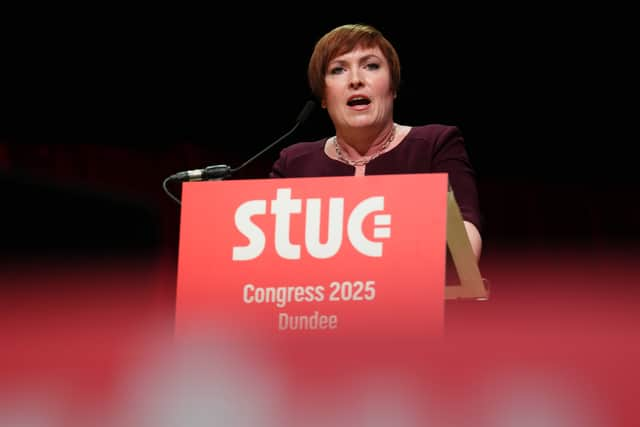
“The EHRC must urgently come forward with their full guidance to give clarity and assurance to trans workers who we know are facing discrimination at work. We expect employers to respect the dignity of trans workers and ensure their policies support trans and non-binary people’s ability to work with dignity.”
The research includes the testimony from the parents of a transgender boy who was told he must “now only use the accessible cubicle” within unisex toilets.
The parent said: “My child was incredibly distressed and upset. He was kept off school the next day as he couldn’t face going in.”
The independent Scottish Human Rights Commission has issued a stark statement, warning that “inaccurate interpretation and implementation of the ruling could put rights at risk” and that “basic rights to dignity and respect for all may be undermined”.
Four days after the EHRC published its interim guidance, Social Justice Secretary, Shirley-Anne Somerville wrote to the organisation’s chief executive John Kirkpatrick asking whether the commission would “agree that no public body, service provider or other association should issue specific guidance at this point in time before the EHRC code of practice and guidance is finalised”.

EHRC chairwoman Baroness Falkner said: “The law it [the judgment] sets out is effective immediately. Those with duties under the Equality Act should be following it and taking specialist legal advice where necessary."
The Scottish Government was contacted for comment.
Comments
Want to join the conversation? Please or to comment on this article.