
Scottish pensioners lose court challenge over winter fuel payment cuts after 'irrational' argument
Pensioners Peter and Florence Fanning had sought to challenge the decisions made by government ministers over the winter fuel payment.
A pensioner couple have lost their legal challenge over government decisions to cut the winter fuel payment and its Scottish equivalent.
Peter and Florence Fanning, from Coatbridge in North Lanarkshire, raised the petition in the Court of Session in Edinburgh following the announcement in July last year from Chancellor Rachel Reeves of plans to cut the allowance.
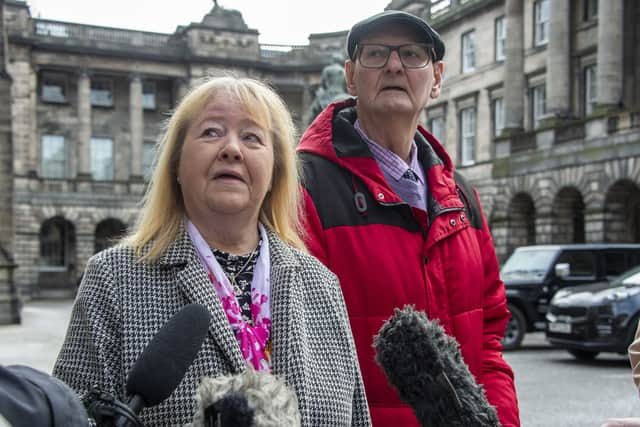

The couple lost their entitlement to the financial assistance and became worried about their ability to afford their heating bills. They brought the legal action with the help of ex-SNP MP Joanna Cherry KC, who represented them as senior counsel.
In April last year, the provision of a winter fuel-related payment was devolved to Scottish ministers who proposed a new benefit – the pension age winter heating payment (PAWHP) – causing an adjustment to the block grant funding provided to the Scottish Government by the UK government.
Scottish ministers proposed the payment would be universal and not means-tested.
After Labour swept to power at Westminster in July last year, Ms Reeves announced the winter fuel payment would no longer be available to those not in receipt of pension credit or other means-tested benefits, resulting in a reduction to the block grant estimated to be around £160 million.
The court heard Scottish ministers considered they had no option, but to replicate the decision of the UK government.
The Fannings, who received the winter fuel payment in 2023, but were not eligible for the Scottish equivalent last year, challenged both decisions, claiming neither government had considered the Equality Act 2010 and had both “failed to consult” with pensioners.

They sought to quash the decisions of both governments and pursued a finding they both acted in a way that was “irrational and unreasonable”. The Fannings also sought a finding that both decisions were unlawful under the Human Rights Act 1998.
The judge’s ruling - and reasons
However, Judge Lady Hood rejected all six requests.
In a U-turn earlier this week, the UK government announced the vast majority of pensioners in England and Wales will again receive the winter fuel payment this winter, and the Scottish Government said it was “working through the options” in the wake of that decision.
In her decision, published on Friday, Lady Hood found neither government had failed to exercise their duties under the Equality Act 2010, and neither government was under a duty to consult.
She also held the decisions were neither “irrational nor unreasonable” and did not breach the Human Rights Act 1998, and she ruled they were “in pursuit of a legitimate aim”.
In a written judgment, Lady Hood said: “It was a policy decision involving questions of the allocation of resources, and practical and political assessments that this court would not be well-placed to judge.
“That the policy decisions could result in hardship for those falling on one side of a brightline rule is not enough to render it irrational in the legal sense.”
Lady Hood added: “The petitioners asserted that elderly people suffering from disabilities rendering them vulnerable to cold temperatures constituted a group in our society which has suffered considerable discrimination in the past … however, mere assertion is not enough to bring a group within that definition, and the petitioners did not sufficiently demonstrate to the court that this cohort of the population did do so.”
Lady Hood’s judgment concluded: “I shall therefore repel the petitioners’ first to eighth pleas‑in‑law and refuse the petition.”
Comments
Want to join the conversation? Please or to comment on this article.