
Scotland's rural communities in 'quiet crisis', ministers warned
John Swinney tells farmers they will be protected amid concerns over food price cap plan
Campaigners have warned ministers that many people in Scotland’s rural communities “live in quiet crisis" because of "unfair" costs imposed on them.
A report to be presented to public finance minister Hannah Mary Goodlad at the Royal Highland Show outside Edinburgh today sets out the “true scale of rural hardship”.
The Poverty Alliance findings follow a three-year study into additional outlays that people living in rural communities have for everyday necessities such as food, transport, heating, childcare and health and social care.
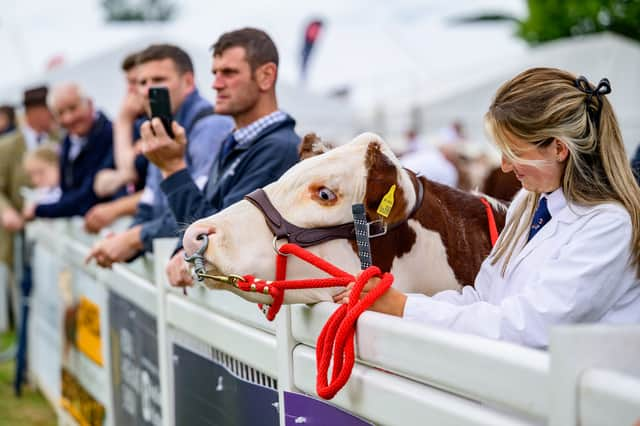

It said “for everyone in rural Scotland” the cost of fuel is “an ongoing challenge”.
The report also warned the “rural poverty premium isn’t just about needing more money to access a good standard of living, it is about additional time to travel, or to navigate services not designed for rural communities, or where the opportunities – for jobs, education and leisure, are more limited”.
It said: “In Aberdeenshire, people told us of the spiralling costs of heating rural homes, exacerbated by the need to buy home heating oil in bulk. For many, it is a choice between being warm or fed.”
Together with the Grampian Credit Union, the Taking Action on Rural Poverty (Tarp) project tested the potential for interest-free loans for home heating oil.
David Reilly of the Poverty Alliance said “postcard perfect landscapes” can sometimes mask the reality of life in the countryside.
Mr Reilly, communications and networks manager for the organisation, said: “The true scale of rural hardship can sometimes be masked by postcard-perfect landscapes.
“But our Tarp project has uncovered how many people living in our countryside are facing a steep, unjust premium just to go about their daily lives.
“People love living rurally but that shouldn’t come at a cost. Many live in quiet crisis.”
He continued: “When you are forced to pay extra for transport, rely on the most expensive off-grid heating, and have virtually no local childcare, a normal life can become unaffordable – especially when you are on a low income already.
“These poverty premiums drain money, time, and opportunity away from rural communities.
“Our project shows how the Scottish Government, local authorities, and other rural partners can work together to dismantle these unfair rural costs.”
Jane Paterson was part of a citizen’s panel that worked with the Tarp project to create photo storyboards highlighting the issues facing rural communities to be shown to the finance minister.
Ms Paterson said: “People in cities don’t realise how quickly everything adds up out here, and how choice is a luxury we don’t have.
“If the local bus only runs twice a day, you have to keep a car, which means you are entirely at the mercy of fuel prices just to get your kids to school or buy groceries.
“Our photo storyboards aren’t just art projects – they are a glimpse into the constant, exhausting calculations we have to make every single day just to keep our heads above water.
“We hope the minister looks at our stories and understands that we aren’t asking for handouts; we are asking for a fair chance to live in our own communities without being financially penalised for it.”
Ms Goodlad said: “As someone from an island, I am conscious of the complexities of rural and island poverty. I therefore welcome this report, and we will continue to do all that we can within our powers to tackle rural poverty and support households that are struggling.
“That is why rural and island needs are front of mind as we implement the National Islands Plan and phase two of the Addressing Depopulation Action Plan, bring forward the Rural Renewal Bill and develop rural policy, helping to ensure our rural and island communities remain sustainable and attractive places to live and work.”
At the Royal Highland Show on Thursday, John Swinney acknowledged “controversy and debate” over Scottish government plans to cap the price of essential supermarket groceries.
The First Minister has vowed to introduce legislation for a price cap within the first 100 days of his post-election government.
However, the policy has led to concern among farmers, who fear they may have to accept lower costs for their produce.
The National Farmers Union (NFU) Scotland has said there could be a “severe” impact if the policy is not implemented properly.
In a speech at the Quality Meat Scotland stand, Mr Swinney said: “I believe that the cap is needed to ensure that while the cost-of-living pressures persist, essential food items remain affordable to members of the public.
“It’s needed because no one should have to choose between feeding their family and meeting other basic needs.
“But we also know that achieving our aim requires very careful consideration and handling. It cannot come at the expense of farmers, growers and producers who produce these items for us all.”
Speaking afterwards, the First Minister said he would have discussions with the farming sector about the impact on producers.
He said: “What I want to do is make sure that agriculture and farming has got a significant role to play in the economic growth agenda that’s at the heart of my government’s agenda.
“So, to do that, we’ve got to make sure that we drive an approach within the agricultural community in taking forward this policy that’s engaged, that listens to farmers, that protects them in the delivery of this policy and that meets the needs of the farming community.”
The new taskforce will be chaired by agriculture minister Jim Fairlie and will meet later this summer.
Andrew Connon, president of NFU Scotland, said: "We welcome the First Minister’s recognition that any food price cap must not come at the expense of Scotland’s farmers and crofters.
“Affordable food is a goal we all share, but it cannot be achieved by squeezing primary producers who are already facing rising costs, volatile markets and increasing regulation.
“Farmers receive only a small proportion of the retail price of food, so any proposals must be developed in close consultation with the industry and focus on fairness across the entire supply chain.
“We look forward to engaging constructively with the Scottish government to ensure any legislation protects both consumers and the long-term viability of domestic food production."
Conservative MSP Finlay Carson said Scotland’s farmers and producers “will be dismayed to hear John Swinney doubling down on his bonkers plan to impose food price caps”.
He added: “Any introduction of a food price cap will be bad news for those who produce Scotland’s iconic products which are revered across the world.
“Swinney should urgently come clean on how he believes his plan won’t be harmful to our farmers, who are already being hammered by ever increasing costs.”
UK Tory shadow chancellor Mel Stride previously warned artificially reducing the price of goods could lead to “rationing”.
Elsewhere, NFU Scotland warned the expectations placed on farmers continue to grow while funding is failing to keep pace.
Agricultural support represents less than 1 per cent of the Scottish government's overall budget, it said, despite farmers and crofters being expected to help deliver some of Scotland's biggest priorities, including food security, climate action and nature restoration.
Figures show 83 per cent of Scottish farms and crofts were profitable when direct support payments were included. Without those payments, profitability falls to just 50 per cent.
“Those figures show just how important agricultural support remains to many farming and crofting businesses,” Mr Connon said.
"Farmers and crofters want to invest, innovate and play their part in delivering Scotland's ambitions.
"But ambition alone will not deliver results. The industry needs certainty, practical support and investment that matches the expectations being placed upon it.”
NFU Scotland wants the government to increase multi-annual and ring-fenced support for farming and crofting, among other measures.
Comments
Want to join the conversation? Please or to comment on this article.