
Scotland 2050: Why Scotland's politicians must seize the opportunity of a better tomorrow
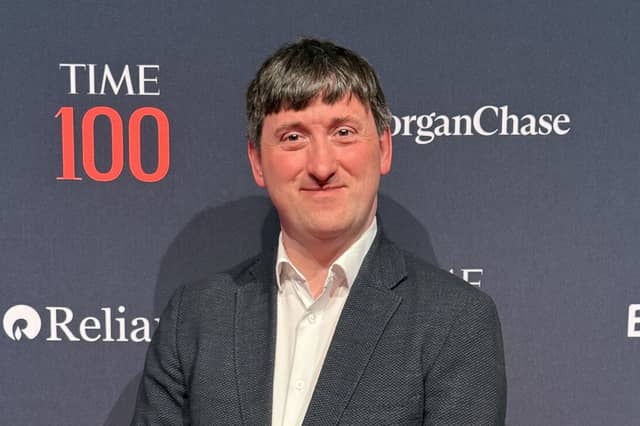

Scotland 2050, which is supported by The Scotsman, brings together leading politicians, business leaders, and others
A better form of politics must emerge from a lacklustre election campaign which has been dogged by toxic rows and feelings of voter apathy, the organiser of this year’s Scotland 2050 conference has said.
Barrie Cunning says all parties must now seize an opportunity to set aside their party-political differences in the national interest and agree a long-term plan for Scotland that goes beyond the five-year parliamentary term.
Scotland 2050, which is supported by The Scotsman, brings together leading politicians, business leaders, and others and will be staged for the second time in Edinburgh’s Assembly Rooms on 2 June.
Cunning, who has just returned from the prestigious Time 100 summit in New York City – the invite only event to celebrate the 100 most influential people in the world - says there has never been a more important time for such an event in Scotland.
“As well as being a politico I’m also a voter and I feel that the whole election has been very flat and lacks energy and focus,” he says.
“The main focus tomorrow will be what is called the Get out the Vote, but for many voters at this stage it’s still a case of give me a reason to vote, and it’s hardly surprising that there is voter fatigue in Scotland which will likely result in a low voter turnout.
“The majority of election material we receive is saying the same thing, only we can beat the SNP, we’re voting to stop an SNP majority, they’ve had 19 years give us 5, bar charts illustrating how a party is best placed to beat the SNP, yet where are the big ideas, the big vision for real transformation in Scotland.
“Something is lacking in our political discourse and what is needed is something that will capture the attention of voters. People need hope, people need to feel like they have a reason to vote, the people of Scotland want a party in government that has their backs, otherwise we will just have more of the same. Without this Scottish politics will further enter the abyss of mediocrity which will at some point start to question the effectiveness of devolution and in turn the Scottish Parliament and by the next Scottish Parliament election in 2031 this could become a key narrative.”
Cunning welcomed comments from John Swinney who said in an interview with The Scotsman that he will work with other parties following the election, even if the SNP achieved a majority.
“John is a good and experienced politician who knows that the optics of this look good to the electorate. Second, it puts the onus back on the other parties to work with the SNP, but if we are serious about cross-party collaboration, then it has to be done in a serious way, not throw away comments underpinned by a political agenda, but in a way that acknowledges that by working together we will get better decision making and ultimately better governance for the people of Scotland, after all that’s what the Scottish Parliament was meant to have done.”
He said that while there is a lot of talk about the future of Scotland especially at election time, Scotland 2050 is committed to shaping the discussion about how the issues and challenges facing Scotland today are tackled for a better tomorrow.
“That’s pretty much what we are about, and I have intentionally kept the Scotland 2050 conference free as I passionately believe that everyone should be part of the conversation about Scotland’s future irrespective of background.
“Everyone is aware of the challenges facing Scotland right now whether it be the cost-of-living crisis, energy security, housing crisis, food security, the impact of social media on our young people, everyone will have an idea of what we should do to tackle these concerning issues.
“Scotland 2050 is more than a one-day conference. After tomorrow we will look to establish a cross-party group to further bolster our ambition to see Scotland have a long-term plan that transcends the parliamentary term. This group will look at the pressing issues affecting Scotland but also examine future opportunities for Scotland. “
Last year’s conference featured the likes of John Swinney, Anas Sarwar, Kate Forbes, Alex Cole-Hamilton, and Cherie Blair.
Scotland 2050 takes place on the 2 June at the Assembly Rooms, George Street, Edinburgh. To secure your free ticket, go to www.scotland-2050.co.uk
Comments
Want to join the conversation? Please or to comment on this article.