
Taxing banks will hit growth, Scottish finance chief Sandy Begbie warns Chancellor
Scottish Financial Enterprise boss says John Healey ‘would be wise to avoid undermining the fundamentals that power our economy’


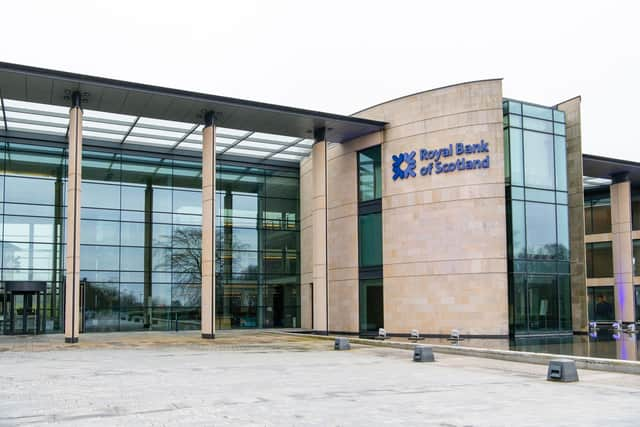
Chancellor John Healey has been urged not to increase tax on banks in tomorrow’s Budget amid a warning the “short-term fix” would risk “undermining the fundamentals that power” Scotland’s economy.
Speculation has emerged that Mr Healey could ramp up tax on the banking sector in order to help fund increased spending on defence after he quit as defence secretary under Sir Keir Starmer over the issue.
READ MORE: SNP ministers were warned oil and gas slump driving renewables investment out of Scotland
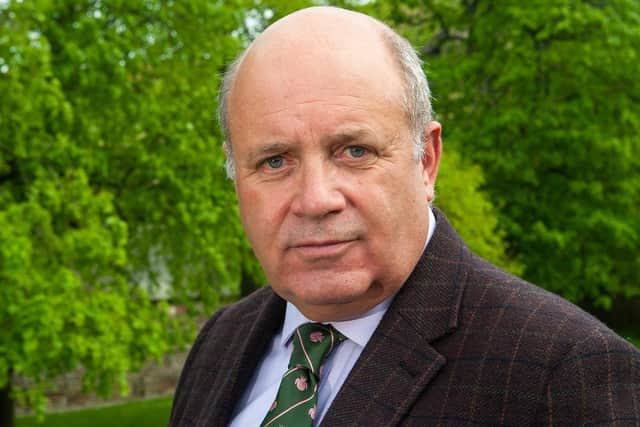
Writing in The Scotsman, Mr Begbie has warned Mr Healey that he “would be wise to avoid undermining the fundamentals that power our economy”.
He said: “It is no exaggeration to say that financial services is the engine that powers the Scottish economy. It finances homes and businesses, helps people save for the future, attracts investment and supports growth in every other sector.
“Scotland’s financial services sector has been motoring along nicely of late, growing at a rate more than double that of the wider economy over the past five years. So, at a time when our economy most needs a reliable driver of growth, the last thing government should do is siphon the oil from that engine.”

Mr Begbie said that “the temptation is understandable” to target the banking sector for tax increases.
“The public finances are under pressure and banks are visible, profitable businesses”, he argued.
“But good economic policy shouldn’t be guided by whatever happens to be the most convenient target. The Chancellor’s focus should rather be on what best strengthens investment, productivity and jobs over the long term.
“A further banking tax would fail that test. It might appear to provide a quick fiscal fill-up, but it would reduce the capacity of the very industry government needs to accelerate growth.”
He has claimed that targeting the banking sector for tax increases would merely be a “short-term fix”.
Mr Begbie was previously appointed by former Scottish Labour leader, Anas Sarwar, who quit to take up a peerage, to the party’s expert independent advisory board for economic growth.
Under that role, Mr Begbie was to give “impartial” advice to Mr Sarwar and his economy spokesperson, Daniel Johnson who is a key ally of current Scottish Labour leader Michael Marra.
As well as retaining his economy brief, Mr Marra named Mr Johnson as his personal “political secretary” over the weekend.
However, in his first public call on the UK government since becoming leader earlier this month, Mr Marra pleaded with his party colleagues at Westminster to make “progressive tax choices”, including requiring banks to pay more.
He pointed to big profits by banks, with the four biggest banks having secured profits of around £15 billion this year. Barclays, which has a prominent campus in Glasgow, has reported a 12 per cent increase in pre-tax profits, for this quarter.

Mr Marra will travel in London for a series of meetings this week, speaking with Scottish Labour MPs as well as meeting the Chancellor and Energy Secretary Miatta Fahnbulleh who last week approved environmental consent for the controversial Jackdaw gas project.
Ms Fahnbulleh is due to determine the Rosebank oil field application in the coming weeks. Mr Marra has publicly called for both fossil fuel projects to be approved as well as reforms to the energy profits levy to be brought forward.
Mr Marra said: “Labour governments should make progressive choices on tax. Labour has already asked the wealthiest and richest to pay more - taxing private jets, private schools and private equity to raise revenue for public services like our NHS.
“Our financial services sector is strong and internationally competitive, so much so that in the first six months of this year the biggest banks have made around £15 billion of profits.”
He added: “That didn't come in efficiency savings but mortgage rates way outstripping the base rate and savings rates not doing so.
“When people are struggling to afford to turn up the heating, we should ask big business to do their bit. Especially when they are seeing windfall profits.
“The banks paying their fair share would be a good place to start to fund measures that give people a bit of breathing space.”
The internal wrangling over banking tax comes as Scottish tourism leaders call on the Chancellor to cut VAT and employment costs to unleash the “considerable untapped potential as a growth industry and a key export for Scotland”.
The Scottish Tourism Alliance wants the UK government to cut hospitality VAT to 10 per cent and to rethink the controversial increase in employer National Insurance contributions.
The tourism and hospitality business in Scotland also wants to see tax-free shopping reintroduced for international visitors, VAT removed from visitor levy charges and investment in major tourism infrastructure projects in Scotland.
Marc Crothall, chief executive of the Scottish Tourism Alliance, said: “Our tourism and hospitality sector is a vital part of Scotland’s economy, and there is a significant opportunity for growth, particularly from our international markets.
“The cost of doing business continues to bite hard, with increased employment and operating costs and high levels of taxation all putting pressure on businesses and their ability to invest.
“We have been very clear in our ask to the UK government to lower VAT for our sector to 10 per cent and look again at employer National Insurance. Both would make a real difference to businesses, allowing them to employ people, invest in their product and continue to grow.”
Mr Crothall argued that the industry needs “to keep driving international footfall”.
He added: “That means continuing to invest in how we market Scotland and the UK overseas, improving our tourism infrastructure and bringing back tax-free shopping.
“Our tourism and hospitality sector has considerable untapped potential as a growth industry and a key export for Scotland. With the right policies in place, it can create more wealth and employment and bring economic benefit to communities right across the country. We need this Budget to recognise that potential and help us turn strong demand for Scotland into economic growth.”
Comments
Want to join the conversation? Please or to comment on this article.