
Rachel Reeves branded 'tone deaf' on energy in Spring Statement
The Chancellor’s statement was blasted for having “nothing in there” about what she would do “when energy goes to the price it was during the height of the Ukraine crisis”.
Rachel Reeves has been branded “tone deaf” after she failed to scrap the windfall tax or announce measures to tackle rising energy prices caused by the Middle East war in her spring statement.
The Chancellor’s statement was criticised for having “nothing in there” about what she would do “when energy goes to the price it was during the height of the Ukraine crisis”.
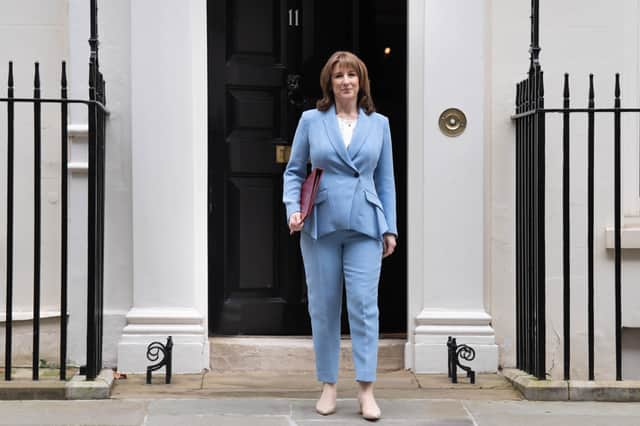

The attack launched by the US and Israel on Iran on Saturday resulted in the UK’s benchmark gas price leaping by 54 per cent on Monday and the global benchmark oil price increasing by nine per cent.
Ms Reeves said she would meet North Sea industry bosses on Wednesday to discuss gas and oil prices sent soaring by Iran’s threats to a crucial shipping route through the Strait of Hormuz.
The Chancellor gave her response to the latest economic forecasting by the Office for Budget Responsibility (OBR) in the House of Commons on Tuesday afternoon.
The OBR indicated that inflation will drop to the two per cent target rate set by the Bank of England and the Government later this year - although these forecasts were made before the latest instability in the Middle East.
Ms Reeves also confirmed an extra £920 million in funding for Scotland due to additional money being spent on special education in England.
The UK also faces weaker economic growth than expected this year - although it is set to be greater than expected in 2027 and 2028.
The Chancellor said the forecasts also showed that the public would be £1,000 better off in real terms by 2029 than they were in 2024.
Ms Reeves said: “This government has the right economic plan for our country. A plan that is even more important in a world that in the last few days has become yet more uncertain.
“With the unfolding conflict in Iran and the Middle East, it is incumbent on me and on this government to chart a course through that uncertainty, to secure our economy against shocks and protect families from the turbulence that we see beyond our borders.
“I want to express my gratitude to members of our armed forces as they serve across the globe to protect our country.
“And I want to reassure this House that I am in regular contact with the governor of the Bank of England, with my international counterparts, and with key affected industries, including our maritime sector.
“And tomorrow I will meet with our North Sea industry leaders to discuss the implications that they face and work with them to manage this uncertain period.”
But SNP MP Dave Doogan asked: “Does the Chancellor have any clue how her tone deaf monologue will have landed in the real economy where growth has been downgraded, where unemployment is soaring, and where the cost of energy has just spiked?
“Nothing in her statement about what she intends to do on a strategic level, about when energy goes to the price it was during the height of the Ukraine crisis – nothing in there.”
The Angus and Perthshire Glens MP also asked: “Will she guarantee that she will step in and protect billpayers if these prices endure?”
Ms Reeves referred to her promise at least year’s budget when she said: “We have taken action to reduce energy bills by £150 from next month.”
Inflation, interest rates and government borrowing cost cuts have put the government “in a strong position” to counter “headwinds” from the Middle East and Iran, she added.
But David Miles, from the OBR’s budget responsibility committee, said its predictions that inflation will fall to target levels early this year have become “more uncertain” after the jumps in oil and gas prices.
He said: “I think what will happen to inflation is particularly uncertain in the past few days.
“As I mentioned earlier and we all know, there have been very large increases in gas prices and oil prices.
“Our central expectation had been that inflation would fall back towards the Bank of England’s 2% target early this year and will be around that level at the end of the year.
“There must be more uncertainty around that right now.”
The Chancellor’s planned meeting with North Sea chiefs comes amid continuing calls for the UK government to scrap its windfall tax on oil and gas profits.
Currently set at 38 per cent, the levy was introduced under the Conservative government in May 2022 after profits rocketed because of a spike in energy prices following Russia’s invasion of Ukraine.
The government has announced a consultation on plans to replace the tax, due to end in 2030, with a new regime aimed at providing more certainty for the sector while protecting consumers against future shocks.
SNP Finance Secretary Shona Robison urged the UK government to reverse the policy.
Ms Robison said: “It is very disappointing that the Chancellor does not appear to have heeded repeated warnings from across the energy industry on the urgent need to remove the tax grab on Scotland’s energy.
“When she meets North Sea industry leaders, she must announce an end to this tax on Scotland’s energy to prevent further loss of jobs and investment.
“In order to provide the necessary certainty and stability, an immediate end date needs to be legislated on at the earliest possible opportunity.
“Amid continued global instability, many households and businesses will be looking for reassurance that their costs won’t increase further.
“Fuel duty is a key concern and the Chancellor has failed to provide that reassurance. This emphasises the need to urgently engage in meaningful four-nations discussions on motoring taxation, as we have repeatedly called for.
“Families will also be worried about increased energy bills given the ongoing international situation, which risks worsening a situation in which people are already struggling to pay their bills.
“Again, it is disappointing that the Chancellor appeared to have no answers for those households.”
Andrew Bowie, the Tories’ shadow energy minister, said the conflict in the Middle East showed why the UK had to prioritise its own energy.
He said: “When the minister comes to cut the ribbon on the GB Energy office in Aberdeen, they might as well switch the lights off. It’ll save them some money.
“This was an opportunity for Labour to reset the dial when it comes to North Sea oil and gas.
“Events in the Middle East over the past few days have shown domestic energy security to be crucial.
“So, the complete black hole of activity toward ditching the Energy Profits Levy, even just making it easier for companies to operate from Britain, has shown this Government’s path will not change.
“Even when the levy runs dry, making pennies, Labour will be there to collect.
“But that’s a Keir Starmer Government for you.”
Comments
Want to join the conversation? Please or to comment on this article.