
Public spending in Scotland £2,720 higher per person than UK average
Scotland’s public spending deficit remains over £25 billion
Public spending in Scotland was £2,720 higher per person than the UK average last year, leading to claims of a “record union dividend”.
It came as the latest annual Government Expenditure and Revenue Scotland (Gers) report showed an estimated public spending deficit of £25.3 billion in 2025/26.
The notional deficit - the gap between public spending and revenues raised – improved by 0.6 percentage points to minus 10.9 per cent of GDP, compared to minus 4.2 per cent for the UK.
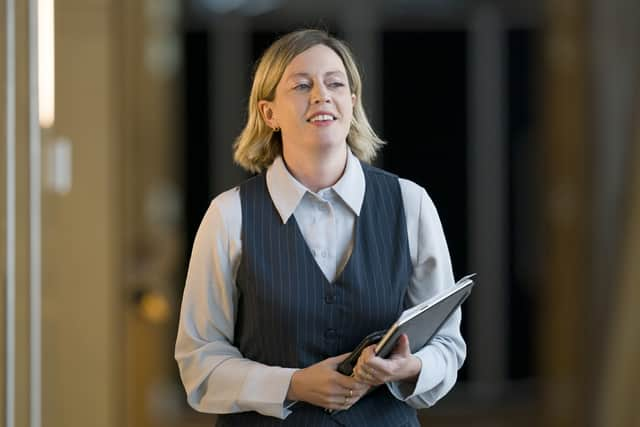

Gers looks at spending levels and the amount raised in revenues through taxation.
Scottish Secretary Douglas Alexander said: “These statistics clearly demonstrate the value to people in Scotland of being part of a strong United Kingdom.
“By pooling and sharing resources across the country, people living in Scotland benefit from significant additional public spending. That means £2,720 more per person compared to the UK average, which the Scottish government can spend on vital services like schools, hospitals and transport.”
Conservative MSP Craig Hoy said: “The SNP government’s own figures reveal that Scots are now benefitting from a record union dividend. Every single Scot is over £2,700 better off because we are part of a strong United Kingdom.”
Cash raised from revenues in Scotland reached a record high, but figures also showed “historically high” levels of public spending. A total of £98.3 billion was taken in revenues, up by £6.3 billion (6.9 per cent) from the previous year.
The increase came about after the UK government hiked employers’ national insurance contributions – with this said to have raised £2.4 billion – while the Scottish government’s decision to freeze higher income tax bands netted £1.5 billion.
However, revenue from the North Sea declined again, from almost £5.5 billion in 2023/24, to less than £4.5 billion the following year and some £3.9 billion in 2025/26.
As a result, the illustrative share assigned to Scotland fell to less than £3.2 billion in 2025/26, down from nearly £3.6 the previous year and almost £4.4 billion in 2023/24.
The Scottish government report said: “The largest decrease in revenue was in North Sea taxes (minus £0.4 billion), which reflects falling oil and gas prices during the year.”
While revenues from Scotland raised £98.3 billion, public spending in Scotland totalled £123.6 billion in 2025/26 – an increase of £5.7 billion (4.8 per cent) when compared to the previous year.
Spending per person in Scotland in 2025/26 was £22,281 compared to £19,561 per person in the UK – meaning public spending in Scotland was £2,720 higher per person than in the UK last year.
“Overall, spending in 2025-26 grew slightly faster than the economy,” the report noted, saying Scotland’s spending as a share of GDP increased to 53.1 per cent.
It added: “Public spending remains historically high, as a percentage of GDP, almost nine percentage points higher than pre-pandemic.”
Deputy First Minister and Finance Secretary Jenny Gilruth said: “The latest Gers stats show that total and devolved revenues grew faster than spending – showing in particular that in the areas where our government has control, we are delivering sustainable finances.
“The significant increase in income tax revenues shows that the decisions which this government has taken are helping to deliver additional funding for measures to ease the cost of living like the Scottish Child payment, free prescriptions, bus travel for under-22s and free university education.
“Gers provides notional estimates for Scotland’s deficit as part of the UK – it simply does not show what an independent Scotland’s position will be.
“With the powers of independence we would be able to chart a different path, ensuring we grow the economy to allow Scotland to reach her full potential.”
Scottish Labour finance spokesperson Michael Marra said: “Today’s Gers figures show that Scotland pays its fair share of tax but enjoys higher public spending thanks to redistribution throughout the UK.
“Billions of pounds of that money has been wasted by the SNP instead of supporting public services, driving growth, and reducing poverty.
“These figures underline the strength of pooling and sharing resources across the UK and the additional funding available to support Scotland’s public services.
“The problem for families now is what the SNP has done with these resources. After nearly two decades in government, billions have been wasted while NHS waiting lists have grown, councils have been squeezed, and too many families remain trapped in poverty. We must demand better.
“We need to get much more value from every pound, grow the economy, and use the resources available to improve public services for every place in Scotland.”
Reform UK’s Scottish leader Malcolm Offord branded the figures a “damning indictment of how the SNP spends taxpayer money”.
He added: “Scotland’s tax take is now rising at a much faster rate than we are seeing invested in public services.
“Scots now have the data showing they are seeing less bang for their buck.”
Scottish Liberal Democrat finance spokesperson Liam McArthur said: "What these figures show is that Scots are better off from being part of a strong United Kingdom. Access to funding puts us in a better place than we'd otherwise be but that doesn't mean success is guaranteed.
"Now we need a government that is locked in on the key issues like fixing the NHS, mending Scotland’s creaking infrastructure and growing the economy. If that relentless focus can be accomplished there is no reason why Scotland cannot flourish.”
Comments
Want to join the conversation? Please or to comment on this article.