
Poll: Scots more likely to think local public services have got worse as 'unfairness' highlighted

Almost three in four Scots think public services in their local area have declined in the last five years
Scots are more likely than those elsewhere in the UK to think public services in their local area have got worse in the past five years, research has shown.
A large-scale survey by Ipsos found almost three in four Scots (74 per cent) think services have declined, compared to 72 per cent in Wales, 66 per cent in Northern Ireland and 62 per cent in England.
The Scottish Government received the most blame for this, with 62 per cent of those who thought services had got worse pointing the finger at it. However, 56 per cent blamed the previous UK Conservative government and 54 per cent blamed councils.
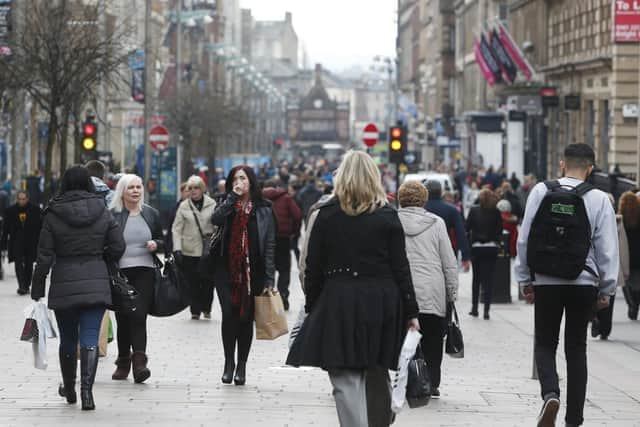

Elsewhere, half of Scots (51 per cent) said they are dissatisfied with the quality of health services provided by local GPs and NHS hospitals, which is an identical proportion to England.
Emily Gray, managing director of Ipsos Scotland, said the results highlighted the “stark geographical inequalities both across the UK and within its constituent nations”.
Writing on Ipsos’s website, she said: “These perceptions risk further exacerbating feelings of unfairness, with those in the devolved nations and the north of England particularly likely to believe the UK government spends less on their local area than on it does on other local areas.
“Taken together, the findings point to the importance of delivering tangible improvements, especially on entrenched issues like regional and local inequalities, if people’s perceptions of public services are not to worsen further.”
The findings are based on a large-scale survey of 20,835 UK adults aged 18 and over, including 2,565 in Scotland. Fieldwork was conducted between September 20 and 25.
Scots are split in their view of the quality of state primary and secondary education, with 30 per cent saying they are satisfied, 28 per cent stating they are dissatisfied and 27 per cent indicating they are neither satisfied nor dissatisfied.
Dissatisfaction is higher in Scotland than in England (21 per cent) or Northern Ireland (17 per cent).
Scots are also more likely to be dissatisfied than satisfied with public transport in their local area. More than six in ten Scots (62 per cent) are dissatisfied with the amount of housing available to buy or rent in their local area. This was particularly acutely felt in Edinburgh and Glasgow, and in the Highlands and Islands.
However, Scots are the most likely of any of the UK nations to say they are satisfied with the way people from different backgrounds get on together in their local area.
The survey found 47 per cent are satisfied with this, compared with 44 per cent in England, 42 per cent in Wales and 35 per cent in Northern Ireland.
“These findings underline that both devolved and Westminster governments cannot afford not to focus on public services, not least because services matter to voters,” wrote Ms Gray. “Polling conducted ahead of both Westminster and Holyrood elections makes this clear.”
She added: “The old adage that all politics is local is one that First Minister John Swinney and his party would do well to heed ahead of next year’s Holyrood elections. At present the public are much more likely to view the Scottish Government’s record on key services such as the NHS and education critically than they are to view it favourably.
“Whether the Scottish Government is able to demonstrate tangible progress on the services that matter to voters in Scotland before next May may well make a difference to the Scottish National Party’s fortunes at the ballot box.”
Comments
Want to join the conversation? Please or to comment on this article.