
Police investigate cases of suspected election voter fraud in Glasgow
Glasgow City Council reported four cases of alleged “personation”
Glasgow City Council reported four cases of alleged “personation” following Thursday’s poll.
The offence occurs when a person votes as someone else.
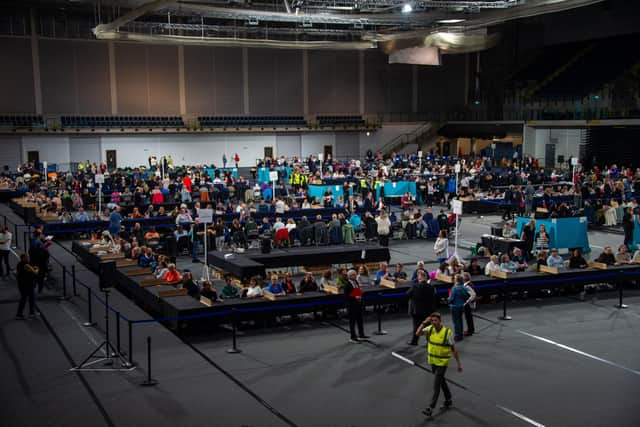

It is understood that of the alleged incidents, two are being investigated in the Glasgow South West seat and one in Glasgow West.
A spokesman for the council said: “Over the course of the day, we have received four reports of potential personation at polling places.
“The police subsequently asked us to extract three ballot papers from the count and this was done when the relevant ballot boxes arrived at the count centre.”
This year was the first time in the UK that everybody wanting to vote in person at a general election had to show ID before receiving a ballot paper.
Not all types of photo ID were accepted at polling stations, but a passport, driving licence or blue badge were valid.
Other forms of permitted ID include an Older Person’s or Disabled Person’s Bus Pass or an Oyster 60+ card, the new free Voter Authority Certificate, and an identity card bearing the Proof of Age Standards Scheme hologram (a Pass card).
Photo ID rules were brought in by Boris Johnson’s government as part of the Elections Act 2022, as the Government said they were necessary to combat the risk of in-person voter fraud.
The requirements were first enforced at the May 2023 local council elections in England.
A report published in June 2023 by the Electoral Commission estimated that at least 0.25 per cent of people who tried to vote at a polling station in those elections were not issued with a ballot paper because of the ID rules, the equivalent of approximately 14,000 voters.
Voter ID has been a requirement for elections in Northern Ireland since 2002.
Comments
Want to join the conversation? Please or to comment on this article.