
Oil and gas sector warns it will be 'taxed to death' after Rachel Reeves extends windfall tax
The Chancellor announced in her speech in the House of Commons on Wednesday that the Energy Profits Levy (EPL) will remain in place until March 2030 - when it will be replaced by a new Oil and Gas Price Mechanism (OGPM).
The oil and gas sector has warned it will be “taxed to death inside five years” after Rachel Reeves rejected calls to scrap the windfall tax in her Budget.
The Chancellor announced in her speech in the House of Commons on Wednesday that the Energy Profits Levy (EPL) will remain in place until 2030, as she hiked taxes by £26 billion amid forecasts of weaker growth, faster inflation and higher unemployment.
The measures, including a freeze on income tax thresholds, will take the tax burden to an all-time high of just over 38 per cent of GDP, according to the Office for Budget Responsibility (OBR).
The windfall tax, which was brought in by the Tories as a temporary measure in May 2022, sees oil and gas producers paying a headline tax rate of 78 per cent on their profits.
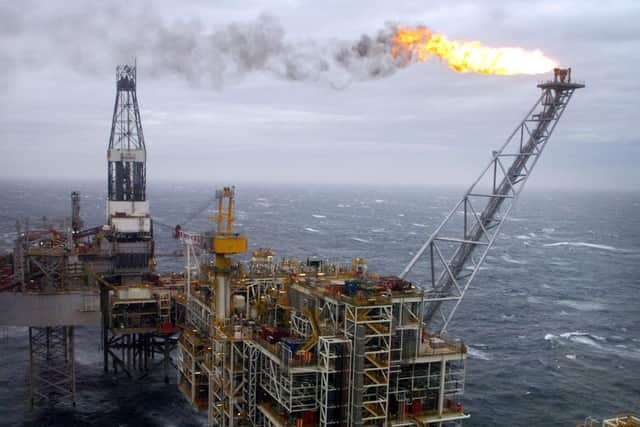

The oil and gas industry said extending the EPL will cause thousands of jobs to be lost, despite the government announcing it will allow drilling for new oil and gas near existing fields.
Russell Borthwick, Chief Executive at Aberdeen & Grampian Chamber of Commerce, said: “The UK Government has accepted, through their announcement on tiebacks, that their policy towards a sustainable future for the North Sea is completely and utterly flawed, risks terminal damage to the UK’s energy security and is proving economically ruinous.
“But limited flexibility on licensing is immaterial if those companies producing the energy we need are taxed at a crippling rate of 78 per cent until 2030. They cannot invest or survive while the EPL remains in place.
“The industry put forward a case for a reformed EPL that would have delivered more than 100 projects, £50 billion of investment and protected around 160,000 jobs. Crucially, it would have also delivered an addition £10billion in tax revenues over the next decade.
“Without so much as a mention in the Chancellor’s statement today, the UK Government has instead opted for a cliff-edge end to North Sea production and to tax the industry to death inside five years. Jobs will be lost in their thousands as a direct result of this government’s failure to act.
“As the voice of business in the North-east of Scotland, we will refocus our efforts on ensuring that this jobs and economy-wrecking tax is brought to an end as soon as possible. Aberdeen is not going down without a fight.”
David Whitehouse, Offshore Energies UK Chief Executive, said: “Today, the government turned down £50 billion of investment for the UK and the chance to protect the jobs and industries that keep this country running. Instead, they’ve chosen a path that will see 1,000 jobs continue to be lost every month, more energy imports and a contagion across supply chains and our industrial heartlands.
“This is not over. We will keep pressing for change – this industry’s people, their communities and the value of this strategic national asset are too important to dismiss. The Government was warned of the dangers of inaction - they must now own the consequences and reconsider.
“The future of North Sea energy depends on investment, which won’t come without urgent reform of the windfall tax. If the levy stays in place beyond 2026, projects will stall and jobs will vanish, no matter how pragmatic licensing policy becomes. Fixing this outdated tax is the key to unlocking billions in investment across the UK’s entire energy mix.
“Waiting four years for reform of this tax is too late. The North Sea continues to be one of the least competitive places for our industry in the world. We put forward a pragmatic plan: a reformed, permanent windfall tax in exchange for billions in UK investment, more tax paid, and jobs sustained. Government said no.”
SNP Westminster Leader and Aberdeen South MP Stephen Flynn said: “We can’t escape from the fact that 1000 jobs are being lost each month because of the Labour Party’s tax on Scotland’s energy.
“Having promised to save the Grangemouth refinery only for it to close, having failed to lift a finger to save Mossmorran and by choosing to tax the North Sea out of business – the Labour Party seem determined to tax Scotland’s energy sector and industrial base out of existence.”
Ms Reeves’ hiked taxes by £26 billion as she increased welfare spending, announcing national insurance and income tax thresholds - in England, Wales and Northern Ireland - will be frozen for an extra three years after 2028. This means people will pay more tax as earnings go up.
She acknowledged the freeze in tax thresholds would hit "working people" - the group Labour had promised to protect.
The freeze will help fund measures including the scrapping of the two-child benefit cap, energy bills being reduced by £150, an extra £820 million for the Scottish Government’s Budget, and an increase in the minimum wage, which was announced on Tuesday.
In response, the Scottish Government’s Finance Secretary Shona Robison did not rule out an across-the-board threshold freeze in Scotland when she sets out her budget in January. The Scottish Government previously ruled out any changes to rates and bands next year.
The Budget was overshadowed by Treasury Watchdog the OBR accidently publishing details of what was in it shortly before Ms Reeves got to her feet. OBR chairman Richard Hughes apologised and launched an investigation.
The OBR forecast gross domestic product would grow by 1.5 per cent this year, an increase from its earlier 1 per cent forecast. But it downgraded growth in 2026 from 1.9 per cent to 1.4 per cent, in 2027 from 1.8 per cent to 1.5 per cent, in 2028 from 1.7 per cent to 1.5 per cent and in 2029 from 1.8 per cent to 1.5 per cent.
The OBR said the Budget "raises taxes by amounts rising to £26 billion in 2029/30, through freezing personal tax thresholds and a host of smaller measures".
Measures to save £150 from the average household energy bill will cost £3 billion next year and an average £2 billion in the following two years.
Other measures announced by the Chancellor include:
- The annual cash Isa limit will be reduced from £20,000 to £12,000.
- A promise of a further £4.9 billion in government efficiency savings by 2031.
- The 5p cut in fuel duty will remain in place until September 2026 , when it will be reversed through a staggered approach.
- Drivers of battery electric cars will be hit by a 3p per mile tax from April 2028 , with the charge to rise annually with inflation.
- Compensation payments from the infected blood scheme will be exempted from inheritance tax.
- Debt will rise from 95 per cent of GDP this year to 97.0 per cent by 2027/28 before falling to 96.8 per cent the following year.
- Consumer Prices Index inflation is forecast to be 3.5 per cent this year, higher than the 3.2 per cent forecast in March, and 2.5 per cent next year, higher than the 2.1 per cent previously forecast, before settling at 2 per cent.
Conservative leader Kemi Badenoch said the Budget was a "total humiliation" for Rachel Reeves and "if she had any decency she would resign".
But the Budget was welcomed by the Scottish Trades Union Congress General Secretary Roz Foyer.
She said: “By staving off short-term cuts, the Chancellor may have just played Labour’s ‘Get Out of Jail Free’ card. For working people still reeling from a pandemic, cost-of-living crisis and Tory austerity, the increase to the living wage, cuts to their energy bills and uprating welfare offers a lifeline when they need it most.”
Comments
Want to join the conversation? Please or to comment on this article.