
Oil and gas chief claims North Sea investment could 'eradicate' fuel poverty


Offshore Energies UK believe extra North Sea oil and gas investment could allow the UK government to eradicate fuel poverty
The head of the North Sea’s oil and gas sector has claimed allowing an expansion of drilling for fossil fuels could “eradicate” fuel poverty.
David Whitehouse, the CEO of Offshore Energies UK (OEUK) made the comments in evidence given to the House of Commons energy security and net zero committee.

The UK government has stressed that the best way to lower energy bills for the public is to wean our energy system off fossil fuels, which are subject to international and volatile markets.
OEUK has rallied against the continuation of the energy profits levy, introduced by the Conservative UK government and continued under Keir Starmer’s leadership.
The organisation believes that reforming the levy from April 2027 instead of waiting until 2030 as planned, would significantly increase investment and production and strengthen energy security and public finances.
Bringing forward the so-called oil and gas price mechanism (OGPM) would, according to OEUK, deliver an additional £2.8 billion in direct taxes from the sector over the next decade, alongside a further £10.6bn in payroll taxes from the workforce.
In total, OEUK has argued that £13.4bn of additional revenue would be made available to the UK Treasury.
The oil and gas sector has highlighted data showing that around 3m UK households are in fuel poverty, unable to afford to heat their homes or cook regular hot meals.
Speaking at the evidence session, Mr Whitehouse said: “The argument that we make there is really just showing that if you support UK industry rather than imports, you get tax.

“You get tax from people’s wages, you get tax from what we produce and it gives us choices.
“We are simply saying one of the choices the government could lean into is eradicating fuel poverty.”
He added: “The government’s own statistics say that on average, those people need somewhere in the region of £380 per annum to address that fuel poverty.
“When you look at that and the tax revenue we have, that is sufficient to eliminate fuel poverty in the United Kingdom.
“Because we produce oil and gas ourselves, the government, the Chancellor will have the choice as to whether or not to do that. That’s the value of producing your own energy and that’s the value of supporting your own industry.”
But Tessa Khan, director of Uplift UK, who also gave evidence to the committee, warned that “we are now in a new era of extreme volatility and unpredictability when it comes to oil and gas markets”.
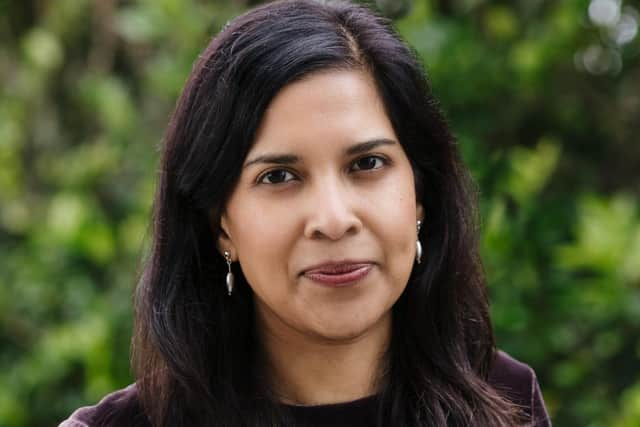
Ms Khan argued that claiming North Sea oil and gas was “a source of affordable energy or indeed as a major engine of economic growth” was “misconceived”.
But the GMB’s Scotland organiser, Claire Greer, told the committee that energy workers are being driven to a cliff-edge.
She said: “The message to workers remains confused and unclear. They do not see a clear route ahead at this moment.
“There is no transition, there are no other jobs for them to go to. There is only a cliff-edge.
“This transition is something that is happening to them, not with them. The only thing they hear is this rush to net zero at the expense of all of these people whose jobs rely on the North Sea, one way or another.”
At Prime Minister’s Questions, the Tories accused the UK government of “destroying” well paid jobs in Scotland.
Shadow energy secretary Claire Coutinho claimed Deputy Prime Minister David Lammy is more willing to take oil from Russia or Qatar than Aberdeen.
Mr Lammy said the government is “delivering clean energy security”, as he stood in for Sir Keir Starmer while he was at the G7 summit in France.
Comments
Want to join the conversation? Please or to comment on this article.