
North Sea jobs lost 'within days' as UK Budget ignores economically ruinous oil and gas policy
If you haven’t read the thousands of pages that accompanied today’s Budget, I’ll save you the trouble.
One line buried on page 62 of the Office for Budget Responsibility’s analysis tells the whole story, when it acknowledges that none of the policy measures put forward by the Chancellor will stimulate growth.
It’s a damning indictment of a government that says it wants to grow the economy, but delivered a Budget that does the exact opposite for the UK’s energy capital.
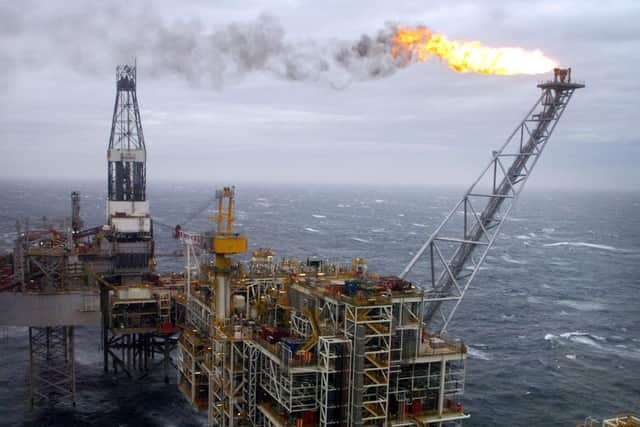

The small concession on North Sea “tiebacks”, allowing some existing fields to hook into nearby infrastructure, shows that ministers now grudgingly accept what industry, workers and economists have been saying for years: their North Sea policy is fundamentally flawed.
The government’s own North Sea Future Plan, published yesterday, makes clear that UK oil and gas will “continue to play an important role for decades to come” and that a “managed, orderly and prosperous transition” depends on continued investment in existing fields.
Yet the same government refuses to create the conditions for that investment to happen.
Because while tiebacks may offer a glimmer of practicality, they are meaningless when the companies delivering our energy are taxed at 78 per cent until 2030. No business can commit long-term capital in that environment.
And today’s Budget confirmed what many feared, that the energy profits levy [EPL] stays exactly as it is – crushing investment, hollowing out supply chains and pushing skilled workers out of the industry at the very moment their expertise is needed for the energy transition.
The industry put forward a costed, credible proposal for a reformed EPL, one that would have unlocked more than 100 new projects, generated £50 billion of investment, protected 160,000 jobs, and crucially delivered £10bn more in tax revenues over the next decade.
It was designed to dovetail with the government’s new long-term fiscal model, the Oil & Gas Price Mechanism, which explicitly aims to create “predictability and certainty for industry” once the EPL ends.
Instead, the Chancellor didn’t even mention the North Sea in her speech.
By sticking rigidly to a cliff-edge end to UK production and maintaining the EPL in its current form, ministers have chosen ideology over economic sense.
Jobs will now be lost in their thousands – within days – as a direct and immediate consequence of government policy. That means a 93 per cent drop in tax revenue according to the OBR, weaker energy security and a diminished national capability in sectors the UK claims it wants to lead.
Aberdeen knows the energy transition better than anyone. This region has powered the UK for 50 years, and it stands ready to power the next 50 – if given a fighting chance.
But today’s Budget does nothing to help the workers and businesses who will deliver that future. Limited flexibility on licensing means nothing if investment collapses. Warm words mean nothing if policy is economically ruinous.
As the voice of business in the North-east, our message is simple: the EPL must end as soon as possible. The stakes for jobs, communities and the nation’s energy security could not be higher.
Aberdeen is not going down without a fight.
- Ryan Crighton is policy director at Aberdeen & Grampian Chamber of Commerce
Comments
Want to join the conversation? Please or to comment on this article.