
Nicola Sturgeon, Ruth Davidson and Kezia Dugdale speak out on 'relentless' misogynistic abuse

The majority of female election candidates said they experienced online abuse during their campaign.
Nicola Sturgeon, Baroness Ruth Davidson and Kezia Dugdale have spoken about the relentless sexism, harassment and misogyny they experienced as elected politicians.
The trio led Scotland’s three main political parties for years, but have said they are worried the growing levels of sexism are pushing women out of politics.
The comments come after research by Engender suggested 70 per cent of female candidates standing for Westminster, Holyrood or local councils experienced online harassment.
Only 11 per cent of those surveyed by the gender equality organisation said they felt “very safe” during their election campaigns.
Many respondents said they faced verbal abuse, stalking or physical assault, and reported changing their behaviour to protect themselves, such as avoiding certain areas, limiting social media use and even being forced to move house.
Speaking to The Sunday Post, Ms Sturgeon said: “Unfortunately, I know many women look at politics just now and see it as a space where women are torn down rather than lifted up.
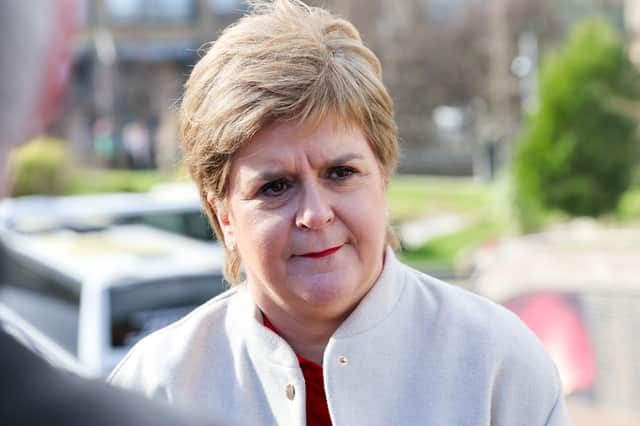

“This has to change because if half the population is pushed out of our politics through fear or exhaustion, then we will all suffer. The abuse, harassment, sexism and misogyny women face in politics is relentless.
“I’ve experienced it myself for many years. People attempt to belittle or dehumanise you simply for being a woman with an opinion, in a position of power - and I’m far from alone.
“We need to stop tolerating it because every time we let it slide, we give it permission to grow. We need to call it out and keep standing up against it until women feel safe and supported in every space they enter.”
Baroness Davidson, who led the Scottish Conservatives from 2011 until 2019, said: “I don’t know of any female MSP that hasn’t been targeted and I think things have got worse.

“I was elected in 2011 and I don’t think it was as bad as it is now. I was the only openly gay leader of a major political party anywhere in the UK, so I got quite a lot of targeting for that, as well as for being female.
“There’s probably three occasions, including one since I’ve left Holyrood, where something has crossed over, with enough detail on location and all the rest of it, to be a credible threat.
“I think when you talk about more needing to be done, it’s more about speaking about it and explaining it to people. It’s not about waiting until something happens to act, it’s about making sure that there is an understanding that it’s not OK to talk to anyone like that whether they are a politician or not.”
Ms Dugdale, who led Scottish Labour from 2015 until 2017, said: “The bit that stands out as being of greatest concern to me is the sections in the report that point to how much abuse female councillors, MSPs and MPs face - and the intensity of that is definitely increasing.

“Time and time again women told me they’d sooner stick a fork in their eye than be a politician. All that does is turn away the best people and concentrates power in the hands of quite middle-aged, middle-class men.
“It’s highly toxic and there’s lots of evidence that proves that point. When I was an MSP, the vast majority of the abuse I got was online. People making threats about where you live - it’s persistent, dark and anonymous, which makes it more frightening.
“Some of the things I did ten years ago I wouldn’t dream of doing now. I used to run street surgeries on my own. I don’t think I would do that now without a degree of security.”
The Engender survey also found only 35 per cent of female candidates felt their party genuinely prioritised diversity in their candidate selection. Only 26 per cent had a diverse interview panel when being assessed.
A further 24 per cent said they experienced sexist language or bullying.
The report also found 62 per cent said their personal connections heavily influenced their chances of being selected, and 22 per cent were being judged on “unofficial” criteria.
It also found 44 per cent of female candidates had caring duties, including 31per cent who had regular childcare responsibilities.
The report detailed women experiencing sectarian hate mail and receiving thousands of abusive social media messages. This comes after a quarter of the SNP’s female MSPs said they would not stand for re-election in 2026, with many reporting relentless online abuse, burnout and a lack of support.
Noomi Anyanwu, Engender’s equal representation development officer, said the research exposed entrenched discrimination within the political system.
She said: “This research confirms that the most marginalised women experience the highest levels of abuse. Failures can be found across the entire political system. We urgently need change.”
The Scottish Government said it would meet with Engender to discuss the findings. A spokesperson said: “Whilst we welcome the right to question politicians, there is no space for abuse or violence in any walk of life.”
Comments
Want to join the conversation? Please or to comment on this article.