
Exclusive:New SNP Scots flight tax 'risks making holidays less affordable', airports warn
The devolved Air Departure Tax (ADT) is set to replace the UK-wide Air Passenger Duty (APD) next year.
A new Scottish tax on flights could “risk making holidays less affordable”, Scotland’s biggest airports have warned.
The devolved Air Departure Tax (ADT) is set to replace the UK-wide Air Passenger Duty (APD) next year.
Private jets are set to be taxed as part of the shake-up, and the Scottish Government said in a recent consultation said that it “remains open to considering the case for future changes”.

But they have been blasted for a “lack of detail” on what the new levy would mean for commercial flights.
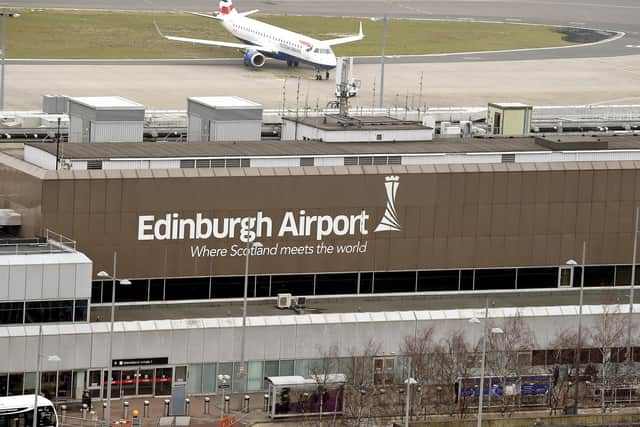
Scotland’s three largest airports - Edinburgh, Glasgow and Aberdeen - have warned against raising the tax. These are also Scotland’s only privately owned airports.
AGS Airports - which owns Aberdeen and Glasgow - said that having higher rates of aviation tax in Scotland would cause airlines to reduce their number of flights and “force Scottish passengers to rely on connecting flights.”
Edinburgh Airport said “routes will be at risk if Scotland becomes too expensive” and that this would impact “well-earned holidays”.
A spokesperson for AGS Airports said: "The UK has the highest rate of aviation tax in the world, and it is well documented that it's a barrier to growth. Scotland has a unique reliance on aviation, simply because of geography, and the Scottish Government has stated it recognises aviation's strategic importance. It is vital ADT is used in a way that helps strengthen our domestic and international connectivity.
"We cannot risk having a divergent tax regime, whereby Scotland has higher rates of aviation tax. Airlines will respond by removing capacity which will have a direct impact on the economy and force Scottish passengers to rely on connecting flights. The introduction of ADT presents a very real opportunity to provide Scotland with a competitive advantage. It should be reinvested into securing key routes, supporting the development of a Scottish Sustainable Aviation Fuel (SAF) industry and advancing net-zero flight technologies."
A spokesman for Edinburgh Airport said: “The lack of detail around this proposal leaves the industry unclear about the Scottish Government’s plans - but what is clear is that any increase to ADT would harm Scotland’s competitiveness in an aviation market that operates internationally.
“Our airports compete with those across Europe for the connectivity that underpins our economy, and because aircraft can be redeployed elsewhere, routes will be at risk if Scotland becomes too expensive. That would affect business, tourism, and the ability of families to take well‑earned holidays.
“There is a real risk that any changes will make holidays less affordable and price Scotland out of the market.”
An industry source said: “The government is using the private‑jet tax as cover while slipping in wider changes that will hit ordinary passengers. Everyone knows tax changes mean rises - and ministers will eventually have to admit they’re undermining competitiveness and adding costs for families during a cost of living crisis that the government often references."
Currently APD includes £7 per economy class passenger on UK flights and £13 on international flights up to 2,000 miles, rising to £90 for flights up to 5,500 miles.
Private jet passengers pay £84 APD in the first two categories, which will increase to £142 from April, and £647 in the third category, increasing to £1,097.
A Scottish Government spokesperson said: “The Scottish Government recognises the importance and benefits to Scotland of good international aviation connectivity and has already set out that promoting Scotland’s connectivity and growth objectives is one of its high-level principles for Air Departure Tax (ADT).
“A consultation has been launched this week which invites views on the future role of ADT. The Scottish Government is engaging with the aviation sector and other stakeholders to ensure that future ADT policy is well-designed, takes full account of the Scottish context and maximises the opportunities offered by devolution. This includes introducing a Scottish Private Jet tax to ensure those who choose to use private jets pay their fair share.”
Comments
Want to join the conversation? Please or to comment on this article.