
MSPs 'scrolling social media' during committee hearings says ex-minister

Interviews conducted by IPPR Scotland lay bare the level of internal frustration with Holyrood
MSPs are asking “rubbish” pre-prepared questions at Holyrood committees because they are too busy scrolling social media on their phones, a former SNP minister has told a think tank.
IPPR Scotland conducted a serious of “exit interviews” with seven ex-MSPs from the SNP, Labour and Conservatives, including those who had held senior Cabinet roles, all of whom left the Scottish Parliament at the election in May.
Their contributions were anonymised to allow them to speak freely, but between them, they had clocked up 47,001 days as parliamentary representatives, and they included politicians who had been in Holyrood since 1999.
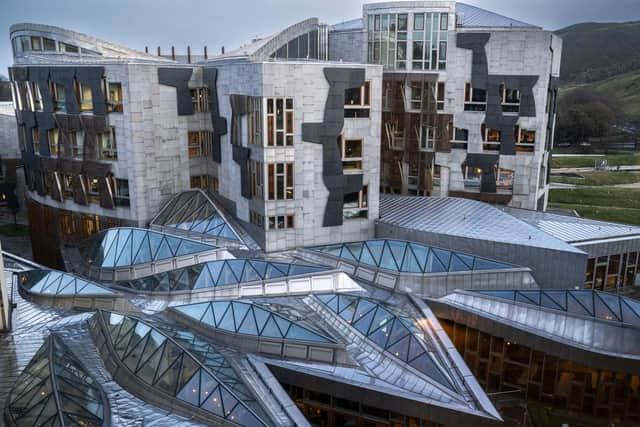

One former minister told researchers: “If you go as a minister to be interrogated by the opposition or backbenchers, the greatest disappointment is always how rubbish their questions are because they're all sitting on their phones, you get to their shot, they ask a pre-prepared question.
“It's either political or general most of the time. And then they go back to scrolling on Twitter.”
Another MSP said the reports produced by committees - which were intended to be powerful bodies capable of holding the government to account - are ultimately watered down.
“Committees have become much more politicised in the last 10 years...back in 1999...the committees were far, far less political,” they told the think tank.
“People went in, they almost lay aside the politics...come to a committee view on this...[today] you end up in private with the committee clerks producing a good report which will ultimately be altered and watered down.”
One MSP said: “When committee members don't even read their papers, you can tell they've not read their papers, and that's their credibility undermined.
“It also means that they'll be undermined in the world of what they're engaging with. I get feedback of people saying, ‘oh, we had such and such come along, but they didn't know what they were talking about,’ and that's embarrassing to everybody. That's a parliament thing.”
Another added: “There has been an insufficient appetite to challenge from the committees, the government of the day, and I think that's really disappointing.”
IPPR Scotland said committees had “veered towards the shallow, the formulaic and party-lines”, adding: “Where legislation should be a collaborative process drawing on expertise and ideas both within and beyond parliament it has tended towards the performative and headline-grabbing, resulting in what many MSPs describe as bad law.”
It recommended setting up a “citizens’ commission on Scotland’s democracy”, which would “work on upgrading Scotland’s democratic institutions”.
In a new report, it said: “According to our interviewees, parliament has fallen into bad habits. It is time to refresh Scotland’s democracy and give citizens a voice in building a new consensus on how Scotland is governed.”
Dave Hawkey, senior research fellow at IPPR Scotland, said: "Scotland faces formidable challenges, from cutting emissions and mitigating the impacts of climate crisis to managing the ageing population and reducing inequality.
“Solving each of these will need bold and far-reaching policy, including ideas from every corner of Scottish society.
“Low trust in politics is a major barrier to building the consensus we need to successfully guide Scotland through these changing times. Concretely, if citizens lack trust in politics, they will not agree to pay the taxes we need to fix our shared problems."
Comments
Want to join the conversation? Please or to comment on this article.