
MPs vote against supporting Rosebank and Jackdaw oil and gas fields
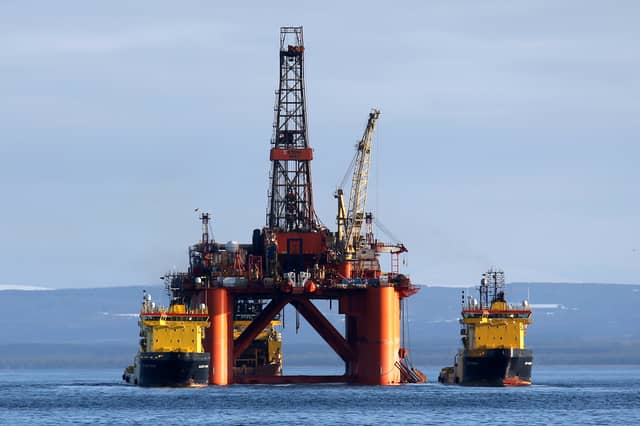

The Conservatives had forced a vote on whether the Commons should signal its support for drilling in the two sites off the Scottish coast.
MPs have been accused of voting to “shut down the North Sea” after they rejected a bid to support the proposed Rosebank and Jackdaw oil and gas fields.
The Conservatives forced a vote on whether the House of Commons should signal support for drilling at the two sites off the Scottish coast, but MPs rejected the move by 323 votes to 108.
Labour’s UK Energy Secretary Ed Miliband said boosting renewable energy supplies will stop “petrostates and dictators” meddling with the UK cost of living.
But Tory shadow energy secretary Claire Coutinho warned “only a complete whacko” would scale down North Sea oil and gas production.
She said Labour whips wanted MPs to “vote to shut down the North Sea” at the end of Tuesday’s King’s Speech debate.
“This is the single greatest act of industrial self-harm we have seen in a generation,” the shadow energy secretary added.
“Only a complete whacko would respond to a supply shortage by shutting down their own oil and gas industry.”
She said the government’s position would leave the UK “more reliant on higher-emission gas from Qatar or the US”, or funnelling “billions of pounds to Norway to import gas from the very same basin” in the North Sea.
“He’s shutting down British oil and gas to show climate leadership,” Ms Coutinho continued.
“He put that in the King’s Speech.
“Let’s be crystal clear, though – what he’s saying is that he’s willing to turn his back on British industry even though we won’t need any less. We’ll just rely on higher emission imports from abroad because he cares more about the climate bureaucrats than the jobs of British workers.”
The Conservative frontbencher warned that a call for “reindustrialisation” was “just a meaningless slogan unless you back the North Sea, axe the carbon taxes that are killing British industry, and cut the cost of energy”.
In addition to a plea to drill for oil and gas off the coast of Scotland, the Conservatives’ motion included a warning that the government’s proposal “will have a particularly negative impact on Aberdeen, the North East of Scotland and wider UK economy”.
The motion was an amendment to the King’s Speech, and these tend not be be backed by MPs from the governing party as they are viewed as matters of confidence in the government. At the King’s Speech last year, several Labour MPs were suspended for backing a motion to scrap the two-child benefit cap.
Last week the UK government unveiled plans for an Energy Independence Bill, designed to meet a Labour manifesto pledge to not issue new licences to explore new fields.
According to government papers, the proposed Bill will set up a new strategy for green-lighting new energy infrastructure projects and accelerating the development of offshore wind, hydrogen and grid technologies.
Mr Miliband told MPs: “While we remain exposed to the fossil fuel rollercoaster, we are deeply vulnerable as a country.
“Our sovereignty, our security and the British people’s living standards are undermined by this dependence and exposure because – for a simple reason – we do not control the price of oil and gas, which is set on international markets.”
He added: “There is an answer staring us in the face – energy independence through clean home-grown power we control.
“Clean home-grown energy that comes from our own winds, sun, and nuclear resources, that cannot be disrupted by foreign wars, that cannot be controlled by the whims of petrostates and dictators, that means our national security and energy security cannot be held hostage.”
SNP MPs abstained on the Tory amendment. The party’s Westminster leader Dave Doogan asked Mr Miliband whether he would be forced into a “screeching U-turn” if UK oil and gas production fell faster than the rate of consumption.
Mr Miliband replied that Mr Doogan’s party “has had more positions on this than the Kama Sutra”.
He said existing oil and gas fields could stay open for their lifetime and added: “We’re not in favour of a turning off the taps position but, I’ll just be honest with the House, nor are we in favour of a drilling every last drop position.
Some 24,000 people in Aberdeen and Aberdeenshire are employed directly in the oil and gas sector.
According to lobby group Offshore Energies UK (OEUK) 128,400 people are employed in Scotland’s offshore energy sector, and it contributes £24 billion a year to the Scottish economy.
Comments
Want to join the conversation? Please or to comment on this article.