
Labour targets Catholic voters as SNP and Reform 'abandon' faith schools
Catholic schools have recently become a hot topic again - and Labour could use this to its advantage.
Traditionally, Labour was the political home for Catholics in Scotland.
In the last 200 years, hundreds of thousands of Irish Catholic people travelled across the sea and settled in the west of Scotland, while lots of Scottish Gaelic-speaking migrants also moved to the central belt in the 19th century.
These people have since made up the bulk of the Catholic community - although there are also significant numbers of Italian, Lithuanian, Ukrainian, and Polish descent.

Until recent years, these people were generally loyal to Labour. As migrants with very little to no wealth, the party seemed to represent their interests.
This can be seen from the number of high-profile Scottish Labour figures who have been Catholic.
Former Scottish Government ministers Hugh Henry and Margaret Curran are of Irish Catholic descent, while ex-Scottish Labour leader Jim Murphy is also a member of the church.
The faith still has a presence in the party today, with MSPs Paul O’Kane, Michael Marra, Monica Lennon, Pauline McNeill and Paul Sweeney all attending Catholic schools.
The most senior Scot in the UK Government, Work and Pensions Secretary Pat McFadden, is a Glaswegian Catholic whose parents were from Donegal.
The most outspoken Scottish Labour MP of the current parliament, Brian Leishman, is also part of the faith.
Despite these strong links, Scottish Labour has lost many members of the community in the past quarter century to the SNP.
But recent events have convinced some in the party that it can win their support in May - and that this could put them over the line in close-run contests.
Reform UK
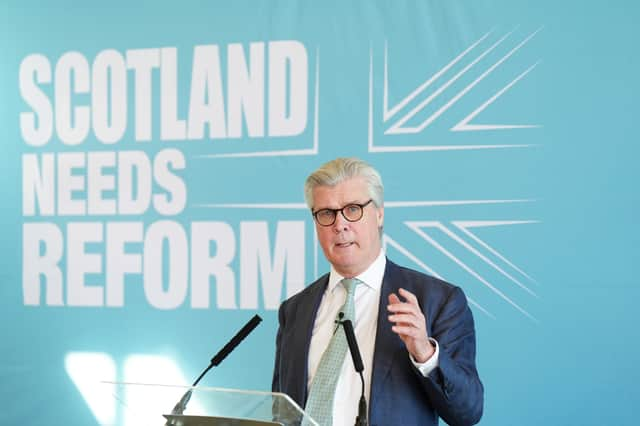
Catholic schooling is generally accepted in Scotland, but it became a hot topic earlier this month when Reform UK’s Scottish leader called for an end to what he said was “sectarian” schooling.
Malcolm Offord ended up rowing back on his comments - but they are unlikely to be forgotten by Scotland’s Catholic community.
Labour is losing a lot of voters to Reform - with polling guru John Curtice saying the figure is about roughly one in six.
Although some have tried to suggest that the phenomenon is purely among Scotland’s protestant community, this is not the case.
Glasgow City Councillor Audrey Dempsey is an example, having attended All Saints Secondary School in the Barmulloch area of Glasgow.

Labour wants to win these voters back. It quickly wrote a public letter to Scotland’s bishops and reaffirming its support for Catholic education after Mr Offord’s comments.
Labour’s education spokesperson Paul O’Kane, whose family came to Scotland from Derry in the 1950s, said: “It is clear that Malcom Offord and Reform are out of touch and don’t understand how our excellent state schools operate.
“Reform claim to stand up for faith communities and the rights of parents but Offord claims without foundation that Catholic schools foster sectarianism and shouldn’t exist. This is outrageous.
“It is just another example of the division they are seeking to sow in our communities and is why they shouldn’t be trusted.”

SNP
Despite Labour’s historical dominance among the Catholic community, the SNP has managed to win many members over in the last quarter century.
In the past the Nationalists had very few figures of Catholic background - but this has changed in recent years.
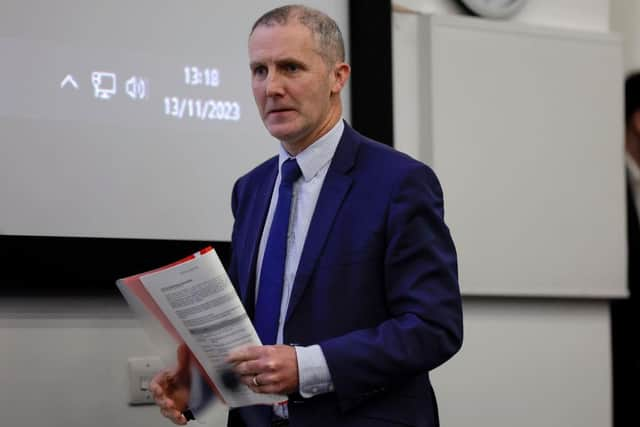
Chris Stephens, Stephen Gethins, Dave Doogan, Brendan O’Hara and Angus MacNeil are just a few who have represented the party at Westminster. Former senior cabinet minister Michael Matheson attended John Bosco Secondary School in Glasgow.
First Minister John Swinney is a member of the Church of Scotland but was married in a Catholic church.
The SNP has managed to win over some Catholics by successfully presenting itself as the main left-of-centre party in Scotland.
But some Labour figures also believe it is because the Nationalists have managed to conflate support for Scottish independence with support for Irish unity.
Former first minister Alex Salmond won over the trust of many Catholics, even claiming that they voted Yes in the 2014 referendum.
Many Labour figures now believe that this has been put at risk by recent SNP policy decisions.
In particular, there have been concerns about the SNP Government’s Children (Withdrawal from Religious Education and Amendment of UNCRC Compatibility Duty) (Scotland) Bill - which will allow young people to withdraw from religious observance without parental involvement.
This has been condemned by bishops and some churchgoers believe it opens the door to dismantling Catholic education.
It comes on top of the SNP’s previous power-sharing agreement with the Greens - who openly want to abolish catholic schools.
Labour says this allows them to present themselves as the main protectors of religious education.
Mr O’Kane said: “As for the SNP it has been quite shocking to see how they appear to have abandoned Scotland’s Catholic schools.
“The SNP’s Religious Education/Religious Observance Bill passed recently suggested a lack of understanding relating to the importance of Catholic education and how schools operate.
“The rushed and chaotic Bill threatened to undermine key tenets of religious education without proper discussion or consultation, which is why Scottish Labour voted against the legislation, and sought to amend it to explicitly protect denominational education by putting the relevant provisions of the 1918 and 1980 Education Acts on the face of the Bill. It was extremely disappointing that SNP and Green MSPs voted this down.
“I am clear that Scottish Labour will stand up for and protect our faith schools, the important role they play in our society and the diverse choice they offer parents and children.”

A crucial part of the electorate
What made Mr Offord’s comments about Catholic schools even more surprising is that the Greenock native is Reform UK’s candidate for Inverclyde.
Inverclyde had the highest proportion of people who identified as Catholic in the 2022 census at 33.4 per cent. This was higher than those who said they had no religion (32.2 per cent) or those said they were Church of Scotland (23.7 per cent).
It is a key target seat for Labour. Martin McCluskey won 47 per cent of the vote there in 2024. Even in 2017 - when the SNP won the bulk of Scottish seats - the Nationalists only beat Labour by a few hundred votes.
All other areas with high Catholic populations will be in play. Some 29.9 per cent of people in North Lanarkshire said they were Catholic in 2022, as did 28.2 per cent of people in West Dunbartonshire.
Glasgow was on 20.7 per cent, East Renfrewshire was 20.6 per cent, South Lanarkshire was 19.3 per cent and Renfrewshire was 19.1 per cent.
With many of the seats in these areas expected to be three-way contests, Scottish Labour hope that staunchly supporting Catholic schools could help win the crucial extra votes required to push them over the line.
A Scottish Government Spokesperson said: “The Scottish Government is an unequivocal supporter of the role of Catholic schools and recognises the vital role played by religious observance and religious education within Catholic education.
"The Act will not affect the existing legal protections for denominational schools. Religious observance and religious education are interwoven in Catholic schools and the mandatory statutory guidance accompanying the Act will reinforce this.
"The Scottish Government consulted closely with the Scottish Catholic Education Service throughout the Bill process, and introduced amendments at Stage 3 which require representatives of denominational schools, including the Scottish Catholic Education Service, to be consulted as statutory guidance is developed."
Comments
Want to join the conversation? Please or to comment on this article.