
Sir Keir Starmer rules out second Scottish independence referendum while he is Prime Minister

The Prime Minister says his government needs to focus on the economy rather than the constitution.
Keir Starmer has ruled out the possibility of a second independence referendum during his time as Prime Minister.
Sir Keir said it is more important for his government to focus on the economy rather than the constitution.
This comes after First Minister John Swinney said he wants to achieve “demonstrable support” for independence during his time in office.
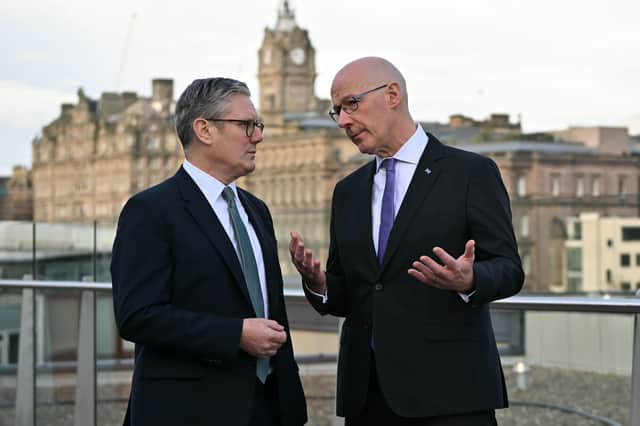

Speaking to BBC Good Morning Scotland, the Prime Minister said even an SNP victory at next year’s Holyrood election would not change his mind on a second referendum.
He said: “I think it’s really important to focus on the priorities that matter most.
“We got a big election win last year on the basis that we would stabilise the economy and ensure that on that foundation we built a stronger Scotland in a stronger United Kingdom and that’s what I intend to do.”
He also says his recent talks with Mr Swinney had not focused on independence.
The Prime Minister added: “Nobody’s raising that with me as their first priority, certainty in the discussions I’m having with the First Minister.
“We’re talking about jobs, energy, security and dealing with the cost-of-living crisis.”
Mr Swinney previously said it would be unacceptable for a Westminster government to veto a referendum if there was enough support for the idea in Scotland - he compared this to the 1997 devolution referendum, which was supported by 74 per cent of Scots.
Polling expert Professor Sir John Curtice says Scotland is still “divided down the middle” when it comes to independence.
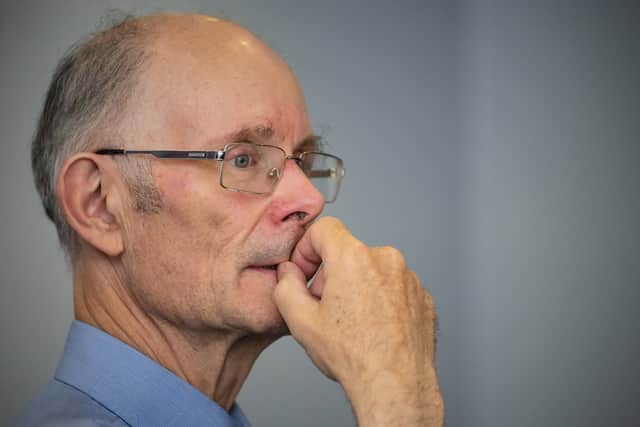
He said: “If you are in favour of independence you would like a referendum, although not necessarily immediately.
“If you are opposed, you simply don’t want one.
“Scotland is divided down the middle - any expectation that the advent of a Labour government in Westminster instead of a Conservative one would see diminishing support is not held up by the polls.
“If we take the average polls since the general election there is 49 per cent support for Yes, which is slightly up from the 48 per cent before the election.
“So Scotland remains divided down the middle, as it has done ever since 2019.”
Comments
Want to join the conversation? Please or to comment on this article.