
John Swinney's Scottish independence plan branded 'not sensible' by top constitutional expert

Experts have also warned independence campaigners they are ‘wasting their time’ looking for a legal route to independence.
A leading constitutional expert has said John Swinney’s plan for a second independence referendum is “not sensible”.
MSPs have also been told pro-independence campaigners are “wasting their time” looking for a legal route to independence, and should not rely on the 1707 Act of Union’s claims the UK is a voluntary union.
Professor Aileen McHarg, from Durham University, told a key Holyrood committee the First Minister should not be tying himself down to his independence strategy.
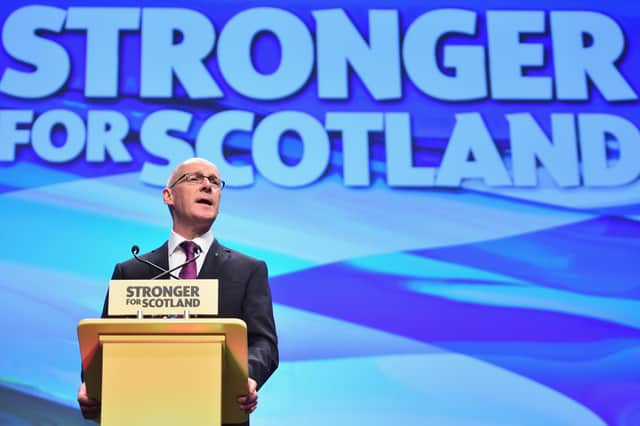
Last month at SNP conference Mr Swinney said electing a pro-SNP majority of 65 seats to the Scottish Parliament in May’s Holyrood election would trigger calls for a second independence referendum to be held.

Prof McHarg said: “Saying that if the SNP or some other pro-independence party won an overall majority then that’s the trigger and the only trigger, that’s not likely to happen, so it doesn’t seem sensible to me.
“If you want another referendum, to tie yourself down like that is inevitably fluid.”
She added: “[Independence campaigners] are wasting their time looking for a legal route to independence. If they want Scotland to be independent, they need to persuade a significant majority of Scotland - that is the best constitutional route.”
Prof McHarg was joined at the constitution committee by Prof Adam Tomkins and Prof Stephen Tierney, when the criticism of Mr Swinney’s independence strategy was made.

The trio were at the committee to talk about the legal mechanisms for a second independence referendum. All three panellists agreed that campaigners should not rely on laws from the 18th century or on references to Scotland as a colony when it comes to independence.
Prof Tierney said: “There can be a frustration with lawyers presenting a legal position when it doesn’t tally with preferred political position or moral principles people think should apply.
“The Act of Union as a voluntary union is of rhetorical importance. The reason we legally don’t discuss it in court and not give much truck to it is that the Scotland Act makes clear that the acts of union are subject to the Scotland Act, so it has passed out of discussion.”
He added: “It doesn’t inform legal debate.”
Prof McHarg added: “It is not a legal trump card to overcome the much clearer modern authority based on the Scotland Act and the sovereignty of the Westminster Parliament.”
During the evidence session, the SNP’s deputy leader Keith Brown asked about independence in places like St Kitts and Nevis and the Turks and Caicos islands in the Caribbean.
In response, Prof Tomkins said: “I would be cautious indeed about analogising former colonies to Scotland’s position. In the contexts of colonialisation and decolonisation and oppression, those conditions don’t pertain in Scotland’s case.
“Whatever we think of the constitutional arrangement, Scotland is not oppressed and is not a colony of the British Empire, it was part of the imperial forces.”
Prof McHarg added: “We are not in that space. There are attempts to argue that, but they are wholly misconceived of our constitutional history.
“We are an integral part of the UK state, not a colony.”
Speaking afterwards, SNP MSP George Adam said: “Professor McHarg is right - the route to independence is through persuading a clear majority of people in Scotland that decisions about our future are best made here in Scotland.
“That is exactly what the SNP will do between now and the election next May.
“Our focus is on building support for a fresh start with independence, one that delivers real democracy, fairness, and opportunity for everyone who lives here.
“The people of Scotland have a right to decide their future, and the SNP will keep making that case.”
Comments
Want to join the conversation? Please or to comment on this article.