
It would 'defy belief' for Jackdaw and Rosebank to be blocked, say North Sea bosses

A new report suggests the UK Government is looking at ways of transporting and storing oil and gas imports from overseas
North-east bosses say it would “defy belief” for Jackdaw and Rosebank to be blocked, following a new government report stating the UK needs “gas for decades to come”.
The report from the UK Government suggests ministers are looking at obtaining a ship capable of vaporising liquified gas brought in from overseas, or creating a government-controlled stockpile of natural gas for emergencies.
The UK Department for Energy Security and Net Zero argues it will protect Britain’s energy security. Either option would cost billions of pounds and be an “unprecedented government intervention or investment in the gas market”.
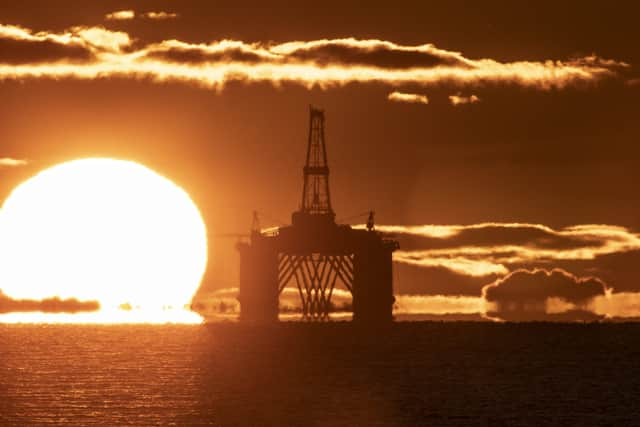

However North Sea bosses have criticised the suggestion as they want the government to prioritise domestic oil drilling by approving the Jackdaw and Rosebank oilfields.
Two public consultations on whether or not these two oilfields should be developed closed earlier this month.
Russell Borthwick, chief executive of Aberdeen and Grampian Chamber of Commerce, said: “The hypocrisy of efforts to halt new North Sea production has been laid bare by this paper, which should become essential reading for anyone who thinks blocking domestic production means Britain will somehow stop using oil and gas.
“The government admits we will need gas for decades to come, warns explicitly that the North Sea decline threatens our energy security, and is now considering unprecedented intervention to support additional liquified natural gas import capability, potentially costing billions.
“If you block North Sea production, you get imports. It would therefore defy belief for a Prime Minister to block production at Jackdaw and Rosebank - two fields which alone could provide around 10 per cent of our future gas supply - only to then wave in tankers carrying higher-carbon liquified natural gas from overseas.

“Climate action should begin with reducing our reliance on imported energy - but it appears that the only oil and gas some politicians and activists object to is our own.”
UK Energy Minister Michael Shanks has previously said gas would be vital for “decades” to come, despite Labour’s commitment to achieve net zero by 2050. Mr Shanks also said the “geological reality” was that the North Sea could be relied on to meet the UK’s gas needs, despite the party’s 2024 manifesto saying no to any new drilling in the North Sea.
It also comes after reports that Prime Minister Andy Burnham has delayed making a decision on whether or not to give production at Jackdaw and Rosebank the green light into the autumn. It is understood this is due to concerns over the optics of making such a decision after a summer of devastating wildfires, including the month-long fire in the Cairngorms.
Mr Borthwick added: “The economic case is just as compelling. Every million barrels produced at home supports 90 times more jobs, generates 150 times more employment taxes and more than 400 times more industry taxes than importing the same amount.
“The North Sea decline outlined in this paper is being driven by government policy, not geology.
“The energy profits levy must go and Jackdaw and Rosebank have to be consented - and they must be the first of many projects which replace imports with cleaner domestic production, protecting jobs, investment and our energy security.”
David Whitehouse, chief executive of OEUK, also said it was clear the “right and responsible choice” was to “prioritise domestic production over imports”.

He said: “Yet nowhere in this interim strategy response is there a commitment to prioritise North Sea gas to strengthen that security.
“It makes no sense to increase Britain’s dependence on imported gas, particularly liquified natural gas that carries more than four times the emissions of domestically produced gas, at a time of continued geopolitical uncertainty and cost-of-living pressures.
“This outcome is not inevitable. With pragmatic action, the North Sea can continue to play a significant role in meeting Britain’s gas needs, supporting jobs, investment and energy security well into the future.”
However environmentalists maintain these two oilfields cannot be developed because of the impact it will have on the climate emergency.
Daniel Jones, head of research and policy at Uplift, said: “Production in the North Sea has been in decline for 25 years and this is the latest in a series of government consultations grappling with the fact that oil and gas is no longer the solution to energy security and jobs.
“Whether it comes online next week or next year, for example, the Jackdaw field will have no impact on our energy bills, which is the thing really keeping people up at night, and will do little to increase our energy security.
“Even in the most optimistic scenario, and assuming none of its gas is exported, it would provide just 2 per cent of UK gas demand over its roughly 10-year lifetime.
“The same is true of Rosebank which is largely an oil field and will be traded on the international market, giving money to its owner Adura and not the people of the UK.
“The reality is, the UK has already burned most of its gas and the only way to insulate ourselves from price shocks is to double down on renewables and upgrade homes to get us off gas. This is just common sense in today’s world.
“What both fields would do is add more fossil fuels to a global supply that already exceeds what we can burn in a liveable climate. Given the fires, drought and heatwaves that have ravaged the country in recent months, it would be a disaster for the UK Government to prioritise oil and gas companies over the public that has suffered through this extreme weather.”
A spokesman for the UK Department of Energy Security and Net Zero said: “The North Sea remains a vital national asset, supporting jobs, growth and the UK’s energy security.
“We are delivering a gas system that is fit for the future, maintaining secure supplies, ensuring value for money for consumers and giving the sector the certainty it needs to invest in Britain’s energy.”
Comments
Want to join the conversation? Please or to comment on this article.