
Exclusive:'I can't put into words what he did to me': Will the Nordic model safeguard women in Scotland?
A Nordic model of prostitution could be ‘game changing’ for Scotland - but supporters fear the clock is ticking down

On her first night in Edinburgh, Venessa slept in a recess at the entrance to HMV on Princes Street.
She was 16, alone and had nothing more than a rucksack and the train ticket her father had bought her when he banned her from the family home.
Venessa managed to secure work cleaning toilets in a hostel in exchange for a bed for the night and quickly made friends with an older woman who let the teenager sleep on her sofa.
This woman, who was 28, suggested she come for a job interview at her place of work - one of Edinburgh’s brothels.
Vanessa had been offered a council flat but soon couldn’t afford her rent and debts were mounting up.
Feeling she had no other option, she went for the “interview” with the 60-something brothel manager, an experience she describes in awful detail.
“I vividly remember how I felt coming out,” Venessa said. “I don’t think there are words for it.
“It felt like everyone knew what I’d just done, like people were staring at me. ‘Dirty’ isn’t a strong enough word.”
Venessa, who was now 17, began what would be one of two traumatising periods working in brothels in the capital.
She was, she said, popular with clients who fantasised about underage girls because of her youthful appearance and slim body.
After around a month of seeing six or seven punters per shift, taking away £10 per man, an incident occurred that so horrified her she left.
A man asked her to pretend to be his six-year-old sister. “I can’t put into words what that did to me,” she said.
“I reported him to the manager, who said he would be barred. But I knew nothing would change.”
Now 31, Venessa has decided to talk about her experience for the first time to give support to proposed legislation that would introduce the so-called Nordic model to Scotland.
Sponsored by Ash Regan MSP, the Unbuyable bill currently making its way through the Scottish parliament would criminalise the purchase of sex, remove criminality from those in prostitution and introduce a legal right to support for those in and exiting prostitution.
It is already the law in eight other countries - the first of which was Sweden in 1999 - and one US state.
While this may seem straightforward, passage of this member’s bill has lagged and there has been vocal pushback from both sex workers’ rights groups and opposition MSPs.
Ms Regan has long been frustrated by what she sees as unacceptable delays and is now concerned the government will use procedural delays in parliament to run down the clock on the proposed legislation before the last sitting day in March.
Ms Regan described procedural delays to her bill as “unnecessary and unacceptable”.
She said that in the second year of this five-year parliament she was told parliamentary resource had been allotted - that is, there was no resource left to help progress her Members’ Bill.
The Criminal Justice Committee has still not agreed its Stage One report, despite Police Scotland, COPFS, COSLA, the Lord Advocate and the Scottish Government stating agreement in principle with criminalising the sex buyer.
The final evidence session, after a delay, took place on November 26 yet the Stage One deadline, formally agreed by Parliament in November, has been pushed back in a parliament with a last sitting day of March 26.
"This is a Bill that the successive governments have failed to bring forward, one that tackles the roots of what every MSP claims, every International Women’s Day, to be their priority: ending male violence against women,” Ms Regan said.
“Yet when it comes to fundamental action, to stop the state-sanctioned normalising of women and girls being dehumanised as products by sex buyers and the sex trade infrastructure of pimps, traffickers, groomers and brothel keepers, women are once again being asked to wait.”
Most recently, the Nordic model was introduced in Ireland in 2017.
Ruth Breslin, Director of The SERP Institute - the Sexual Exploitation Research and Policy Institute - in Ireland spoke recently at an event in the Scottish Parliament.
One of the groups pushing back against the legislation is those who say they freely choose sex work as a profession.
In Ireland, Ms Breslin says, parsing the numbers of people involved in the sex trade, this group makes up around five per cent.
At the other end of the Bell curve, she adds, are those who have been trafficked, thought to make up around 10 to 15 per cent.
“In the middle, however, we see the large majority - roughly 80 per cent - and this is the most important group to understand,” the academic said.
“These women are extremely vulnerable. When you talk to them, they will often say they have chosen prostitution.
“But when you listen to their stories in full, it becomes clear that it is not a real choice at all.”
Many are migrant women, often without secure immigration status or with very little English.
Prostitution becomes “a means of survival” for them and the families they send money home to.
Ms Breslin added: “What is particularly striking is that when you trace some of these women’s stories back to the beginning, many of them actually started out in the trafficked category of the bell curve.
“They were originally trafficked. They may have managed to escape the original trafficker, but by then they had already been drawn into the trade.
“At that point, they were trapped.”
The profile of women in Scotland’s sex trade is very similar.
Buyers, however, are usually men who are married or in relationships, who are well educated and have incomes above the national average.
The power imbalance between the two groups is “unmistakable”.


“On one side, you have women who are economically insecure, socially marginalised, often migrants, and in many cases traumatised,” she said.
“On the other, you have men using their disposable income to purchase sexual access to their bodies.
“That imbalance - economic, social, and gendered - is where sexual exploitation lies.
“It is not about individual choices in a vacuum; it is about power.”
While the focus of the Nordic - also called the “equality” model - is on the punitive criminalisation of buyers, one element Ireland’s legislators focused on was deterrent.
“It has a declarative and normative function,” Ms Breslin said.
“It says something about who we are as a society. In Ireland, a central part of the conversation was this: we have decided that it is not acceptable for people with greater power and privilege to buy sexual access to the bodies of people who are almost always more vulnerable than they are.”
The legislative model also aims to protect victims by decriminalising those who sell sex and offering non-judgement support to those who wish to stop.
Crime statistics from Ireland’s Central Statistics Office, show that even before 2017 the tendency was for women to be criminalised less and less for soliciting-related offences.
Prosecutions are now almost non-existent. Any remaining figures often relate to buyers being charged under older public order laws.
Simultaneously, there has been an increase in recorded offences relating to sex buyers and a shift to targeting brothel-keeping.
Ms Breslin said one of the most vital shifts since the law change is that women are more likely to report violence.
“Prostitution remains an inherently violent system - there is no law anywhere in the world that can make it safe—but what has changed is access to justice,” she said.
Cases are taken seriously by the police and courts and perpetrators are prosecuted.
“Women were able to give evidence because they knew they were no longer the ones being criminalised,” she added.
“This simply did not happen before the law.”
Last year, the Irish Department of Justice published a formal review of the legislation.
Its conclusion was that the law is making progress despite implementation problems.
Some of those weaknesses - particularly around enforcement - are now being addressed through recommendations such as on-the-spot fines and stronger deterrents.
Ms Breslin’s opinion is that the law has been particularly successful in its protective elements but less so at tackling buyer behaviour.
“But we are learning,” she said.
“While our model is not perfect, I think there are positive aspects of Ireland’s experience that Scotland can learn from, and pitfalls that can be avoided.”
There has, however, been strong opposition to the proposed legislation from sex workers rights groups.
They maintain the Nordic model makes women less safe and forces them to adopt more dangerous practices in less secure spaces in order to conceal their work.
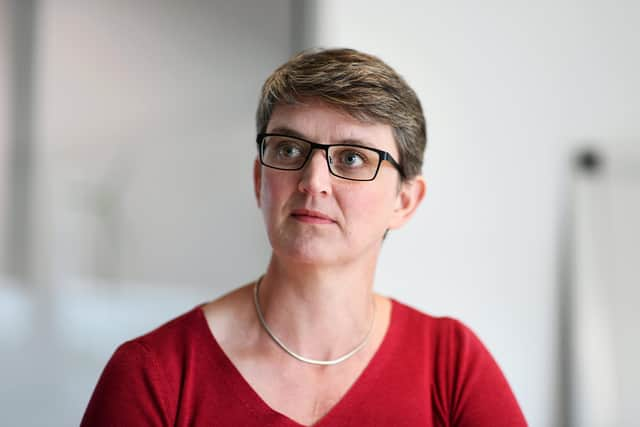
Scottish Greens MSP Maggie Chapman also has concerns about the legislation.
“It might feel as though it should protect sex workers because the enforcement activity is on those who purchase sex,” she said.
“But that very act of the threat of enforcement means that sex workers have to find less safe, less secure, less well supported spaces to work.”
She said that in discussions with sex workers, they say they need full decriminalisation of their work, legal recognition, the ability to unionise and the freedom to work together.
Trusting relationships with institutions such as the police and local authorities would also be vital.
Ms Chapman added: “If a client is violent or goes beyond what has been consented to, the Nordic model makes it much less likely for a sex worker to approach the police or any other organisation for support.
“It also makes it less likely the sex worker will seek justice because of the threat that their clients will be targeted for enforcement and therefore their ability to earn money compromised.
“The Nordic model also makes it much harder for those who want to exit sex work to do so safely for the same reasons mentioned above.”
The Scottish Greens MSP was emphatic that neither she, nor her party colleagues, condone trafficking in any form or the coercion of people into sex work.
She said: “What we need is much closer collaboration between law enforcement, social work and all public agencies to tackle the scourge that is trafficking. But we should not conflate two different issues here.
“And we should have a social security system that means no one has to sell sex to survive unless they really want to.
“Nothing in this dangerous Bill does anything to tackle trafficking or the failings of our social security system.”
Ultimately, she said, “sex work is work” and women should have the autonomy to make the choice to do what they will with their own bodies.
“What this bill does,” she added, “Is further entrench taboos around sex and sex work, which will continue to exist regardless of the laws that are put in place.”
In June 2024, Reem Alsalem, UN Special Rapporteur on Violence against Women and Girls, presented the first comprehensive report by any United Nations entity on prostitution and its relationship to violence against women and girls.
That report set out how prostitution gives rise to serious human rights violations.
Prostitution, she outlined, undermines fundamental rights, including the rights to security, dignity, privacy, freedom of movement, family life, and the highest attainable standard of health.
At an evidence session in Holyrood this month, Ms Alsalem spoke to how prostitution is a gendered issue.
“Although the bill refers to ‘prostituted persons,’” she said, “The reality is that the vast majority of those in prostitution are women and girls, and those who purchase sexual acts are almost exclusively men.
“Prostitution is therefore a sex-based and gender-based form of violence against women and girls.”
In two recent reports, the human rights expert has recommended states adopt a Nordic model as a step toward tackling violence against women and girls.
However, she said, she believes the proposed Scottish legislation does not go far enough and should extend to the purchase of sexual services online, as in Sweden.
“Criminalising the buyer is, in my view, the true game changer,” Ms Alsalem said.
READ MORE: 'Inexcusable tide of violence': Councils pay £1 million in compensation to injured school staff
“The buyer is the only actor in this equation who exercises genuine free will.”
She makes the argument that the harm caused by prostitution is not limited to those in prostitution.
Rather, it extends to society as a whole by normalising harmful social norms and reinforcing the idea women are commodities.
For her research on the subject, Ms Alsalem drew evidence from 150 countries and found that legalising demand - full decriminalisation - increases violence and fails to protect women and girls in prostitution.
She also said that providing routes out of prostitution is vital, saying this must include pathways to secure legal residence and protection from deportation for migrants.
On the issue of consent, she said: “Some argue that adult women freely choose prostitution and find it empowering.
“This framing is deeply flawed. Consent is frequently coerced—economically, psychologically, or physically—and is often extracted through manipulation and abuse.”
Dr Claire Methven O’Brien is a University of Dundee Law School academic with more than 20 years’ experience advising on human rights.
She was asked to write an opinion paper evaluating the proposals contained in Ms Regan’s bill and how consistent they are with human rights law.

Her work was commissioned in response to criticisms that the Nordic model is an infringement of the human rights of people who sell sex.
Her paper, she said, asks the question “Is there a human rights case to be made for this legislation?”
Her conclusion, she added, is: “To come directly to the point: criminalising the sale of sexual acts, as Scots law presently does, represents a likely breach of the human rights of women.”
As the law in Scotland stands, she argues, it discriminates against women and girls because they are who predominantly sell sex.
She added: “If the bill were adopted and those offences repealed, this would represent a contribution to the realisation of human rights and a corrective to the current breach of international human rights law.”
Full decriminalisation, she went on, would be inconsistent with human rights responsibilities as governments have a responsibility to attempt to prevent violence against women and suppress trafficking.
Dr Methven O’Brien added: “Overall, the measures contained in the bill would reduce the risk of non-compliance with the UK’s international human rights obligations and would contribute positively to fulfilling those obligations.
“In human rights terms, this would be a step forward.”
Venessa would agree with this. The second time she worked in Edinburgh’s brothels she told herself it would be different - because she had made a conscious choice to do it.
Without a support network, without financial resources and on the cusp of being made homeless for a second time, it was barely a choice.
She expands a little on the reasons she had left her home, near Aberdeen.
Venessa experienced abuse in the family home and, at 15, was raped by a boy she went to school with.
Unable to fully process that experience, she began acting out - and her father threw her out.
She has blocked out much of her time in the brothels but she remembers her first shift.
The teenager was provided with underwear because nothing she owned was skimpy enough; the brothel manager would answer the phone - which “rang constantly” - and describe the girls to the prospective buyer.
“He would say I was 18,” she said, “Young. My body was described - my bust size.”
The brothel had panic buttons but they were out of reach, there was no guarantee anyone would come if they were pressed and, besides, the punters knew where they were.
She left after a month but, at 19, returned to a different venue.
This was post-Operation Windermere, a wide-scale Police Scotland series of raids on Edinburgh’s saunas. Nothing had changed, Venessa said.
This time round she saved money to study and move into a mainstream career.
For a long time she coped by not talking about it.
Then she read Virginia Giuffre’s book about being trafficked by the paedophile Jeffrey Epstein and decided she must help other women.
“I waited for years for someone else to fix it,” Venessa said. “I’ve realised maybe I can help change things for someone else.”
She argues that women never enter prostitution as a free choice.
“Some women believe they choose it,” she said, “But society feeds us messages from a young age—through media and money narratives.
“That shapes what we think is choice.”
As she waits for a date for the stage one vote on her bill, Ms Regan has one question for her colleagues.
“The question for the Scottish Government and for Parliament is simple: will they commit to real change by passing my Bill into law before the end of this parliamentary session,” Ms Regan said.
“Or will vulnerable women and girls be let down yet again?”
Comments
Want to join the conversation? Please or to comment on this article.