
Exclusive:Hunterston and Torness 'could host new nuclear reactors' if SNP lifts ban - UK minister Michael Shanks
Michael Shanks said there was “enormous potential” at former nuclear sites in Scotland - but they cannot be considered because of the Scottish Government’s opposition.
Former Scottish nuclear sites could host nuclear reactors if the SNP lifts its ban, a UK government minister has said.
Michael Shanks said there was “enormous potential” at sites like Torness and Hunterston - but he stressed they could not be considered for now because of the Scottish Government’s opposition to nuclear.
It comes as the Labour energy minister said Scotland was “missing out on really good, well-paid jobs and apprenticeships” due to the SNP’s opposition to nuclear energy.
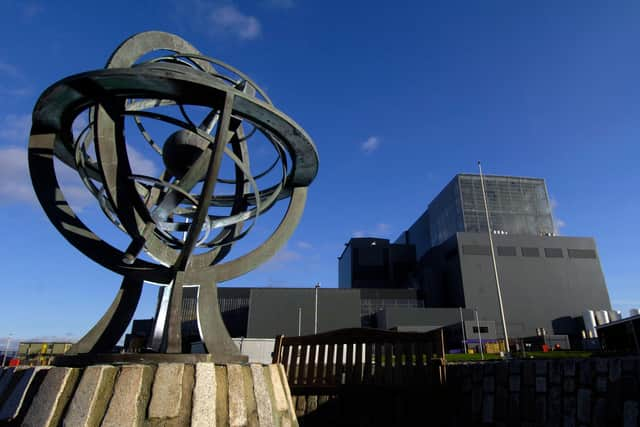
Torness in East Lothian is Scotland’s last remaining active nuclear power plant. The facility is scheduled to close by 2030.
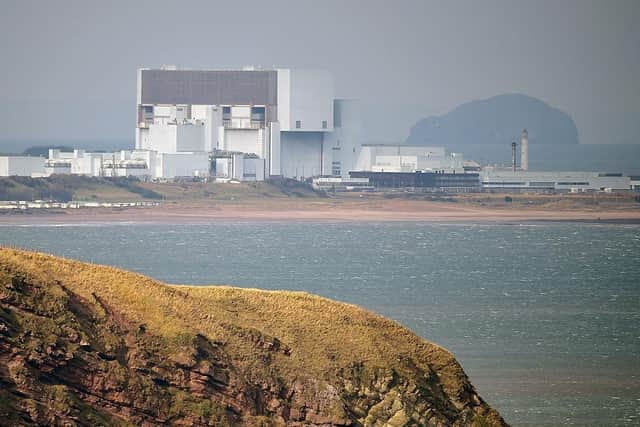

Hunterston A in North Ayrshire shut down in 1990, while Hunterston B shut down in 2022.
Mr Shanks’s comments come after the UK and US announced a new nuclear energy deal ahead of US president Donald Trump’s visit this week.
Speaking on a visit to Torness on Thursday, Mr Shanks told The Scotsman: “This new age of nuclear should also benefit Scotland. There’s enormous potential in former nuclear sites in Scotland for future small and advanced modular reactors.
“At the moment those aren’t being considered in Scotland, because the SNP takes this absurd ideological position against nuclear - and that has to change.”
When pushed where the sites could be, Mr Shanks said: “We look at nuclear sites for a range of factors on specific projects. The challenge at the moment is we can't consider sites in Scotland because of the moratorium that the SNP Government's put on it.
“But clearly there are former nuclear sites across the country. Torness is continuing to deliver nuclear power at the moment, but will be decommissioned at some point in the 2030s
“Sites like this and Hunterston clearly have a nuclear legacy, and we'd like to see new reactors coming to Scotland to deliver the sorts of jobs that have been here for decades.”
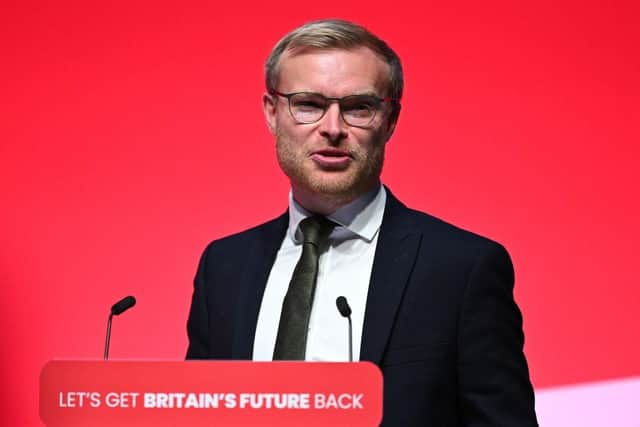
The Scottish Government has an effective ban on new nuclear power plants. It says it is focusing on renewable energy instead.
Energy policy is largely set at Westminster, but the Scottish Government can block projects due to planning power being devolved.
The UK and US agreement aims to generate thousands of jobs by making it quicker for companies to build new nuclear power stations in both countries.
The UK government invested £14.2 billion earlier this year on the construction of a new nuclear power plant in England, alongside £2.5bn on small modular reactors.
Industry figures said earlier this week that Scotland risks missing out on thousands of well-paid jobs due to the SNP’s opposition to nuclear.
The Nuclear Industry Association said Scotland had the lowest growth in jobs in the sector compared to other regions in the UK over the last year.
Scotland’s workforce only grew by 5 per cent to 5,413, whereas the number of jobs in England went up by 13 per cent to 11,000.
Rutherglen MP Mr Shanks said: “In the past year, we’ve added more than 10,000 workers, and many, many more will be added as we move forward with new nuclear projects.
“The 500 people at Torness have done an incredible job on our energy security, and we want to protect that by delivering even more jobs in Scotland, if we could change the SNP’s ideological position against new nuclear.”
He continued: “There’s almost 100,000 people across Britain in the nuclear industry. Many of the supply chain jobs do come to Scotland.
“But actually the rise in Scotland has only been 5 per cent, much less than we could have seen if we had embraced new nuclear. The result of that has been that we’re missing out on really good, well-paid jobs and apprenticeships.
“Crucially for young people thinking about a career in energy, nuclear has been blocked off.”
Mr Shanks said that a Labour win in next year’s Holyrood election “would bring thousands of well-paid jobs” in the nuclear energy sector to Scotland.
He said: “I think what happens with [Scottish Labour leader] Anas Sarwar being elected as first minister, is a reset of quite a lot of things. Clearly, we want an industrial strategy in Scotland that would deliver the investments that we're seeing across the rest of the UK.
“Nuclear would change as well, and that would allow the UK government, it would allow me as energy minister, to start looking at options for nuclear in Scotland that's really important to unlock that potential.
“May next year comes at a crucial time for this next generation of nuclear. So if we can change the government of a new direction in Scotland, what we deliver would be thousands of well-paid skilled trade, unionised jobs and apprenticeship apprenticeships right across the country.
“Not just in nuclear, but in everything we're trying to do in our clean power mission in the supply chains and in the industrial strategy that a Labour government would deliver that, sadly, has been left by the SNP Government at the moment as an afterthought.”
Scottish Energy Secretary Gillian Martin said: “The Scottish Government is focused on supporting growth and creating jobs by capitalising on Scotland’s immense renewable energy capacity rather than expensive new nuclear energy, which takes decades to build and creates a legacy of radioactive waste, which is difficult and costly to dispose of.
“Significant growth in renewables, storage, hydrogen, carbon capture and decommissioning are key opportunities for our future energy workforce in Scotland – with independent scenarios from Ernst and Young (EY) showing that with the right support, Scotland’s low carbon and renewable energy sector could support nearly 80,000 jobs by 2050.“
Comments
Want to join the conversation? Please or to comment on this article.