
How Reform, the Greens and Alba failed to find a foothold in Scotland

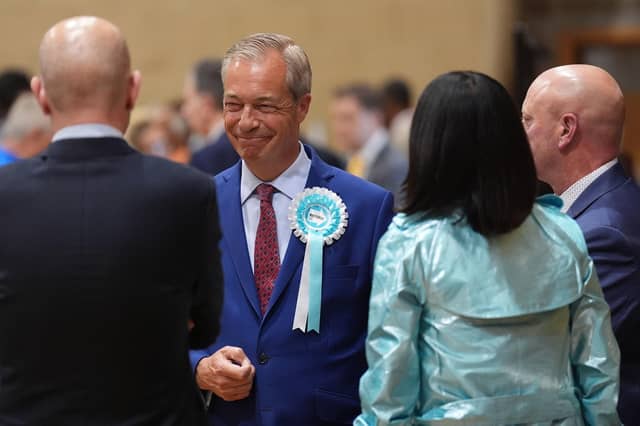

Across the whole of the UK, one minor party - Reform - has a lot to be happy about. Nigel Farage has finally been elected to Westminster, at the eighth time of asking, by overturning a Conservative majority of more than 25,000 in Clacton, Essex
While minor parties - particularly Reform - played a huge role in decimating Tory vote share, the impact in Scotland was much less keenly felt than in the rest of the UK.
The right-wing party, which won 14 per cent of the vote overall, attracted just 6.9 per cent of the vote share in Scotland, with zero seats.
However, Reform has been credited with denying Scottish Conservative leader Douglas Ross election in the Aberdeenshire North and Moray East constituency.
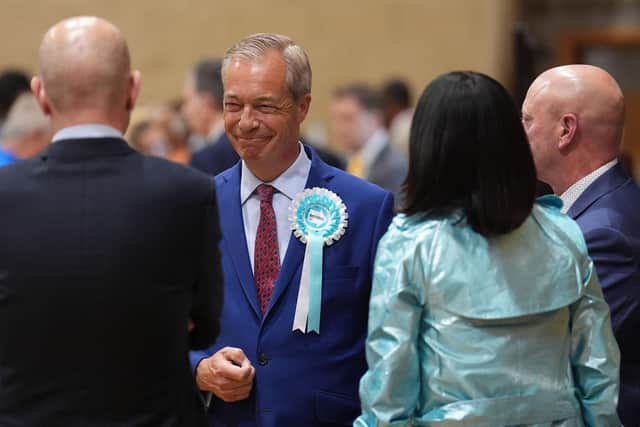
Mr Ross himself said the 5,562 votes the party secured was a “big factor” in the Tories not winning the seat by splitting the right-leaning vote. The winner, the SNP’s Seamus Logan, won by just 942 votes.
The Scottish Greens did not stand in every constituency, but received 3.8 per cent of the vote share across Scotland as a whole.
None of the party’s candidates were successful in Scotland, but having received just one per cent of the vote share in Scotland at the 2019 general election, the Greens are celebrating a significant growth in their support.
The party will now be hoping to use this increased popularity to take more seats at the Scottish Parliament election in 2026.
Scottish Greens co-leader Patrick Harvie has already said he hopes the result will be a "springboard" to future success.
"We have established our party as the third political force in Glasgow and have broken new ground across the country,” Mr Harvie said.
"Scotland cannot afford five more years of tepid status quo politics, and nor can our planet.
"We need bold policies that live up to the scale of the crisis our climate faces."
The Alba Party contested just 19 seats, across which they received 1.5 per cent of the vote share. Across Scotland as a whole, however, they received just 0.5 per cent overall.
This was largely in line with the party’s performance at the 2021 Scottish Parliament election, and the local elections in 2022.
No candidate won back their deposit, with the party’s 19 candidates sharing a total of 11,894 votes between them.
Former SNP MPs performed the best out of their candidates, with Neale Hanvey receiving 2.8 per cent of the vote in Cowdenbeath and Kirkcaldy, Kenny MacAskill winning 1.5 per cent of the vote in Alloa and Grangemouth, and George Kerevan receiving 1.2 per cent in Lothian East.
A similar result at the next Scottish Parliament election would return very few MSPs, if any.
Across the whole of the UK, one minor party - Reform - has something to be happy about. Nigel Farage has finally been elected to Westminster, at the eighth time of asking, by overturning a Conservative majority of more than 25,000 in Clacton, Essex.
Former Conservative MP Lee Anderson, who defected to Reform earlier this year, was re-elected in Ashfield, Nottinghamshire, while Reform also won seat in Great Yarmouth and the Boston and Skegness constituency.
Mr Farage said Reform’s result is "the first step of something that is going to stun all of you".
Comments
Want to join the conversation? Please or to comment on this article.