
How Labour’s brutal rebuild of Glasgow’s red wall left the SNP in tears

Glasgow’s red wall has been rebuilt after a dramatic election night in Scotland’s largest city wiped out the SNP.
Nine years of SNP dominance in Glasgow came crashing down as Labour rebuilt its first red wall in the space of an hour and left a now-former frontbench MP holding back the tears.
Labour has had a chip on its shoulder about Glasgow – a city lost to the SNP in the 2015 general election, held just nine months after the independence referendum.
The city’s reputation for socialism, trade unionism and political activism has given claim to Glasgow being a Labour city. But Glaswegians have been turned by the draw of Scottish independence, and despite Labour turning all six of the city’s seats red, many in the city still support tearing up the Union.
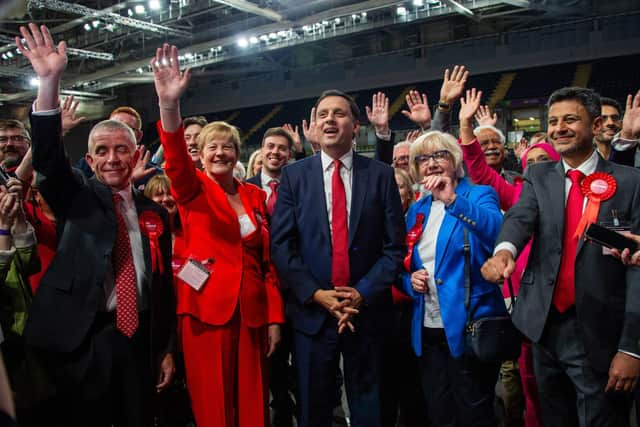


Speaking after his six new Glasgow MPs were confirmed, Scottish Labour leader Anas Sarwar acknowledged his party had borrowed the support of some pro-independence voters – but he denied the surge of support was simply a protest vote.
Speaking to The Scotsman, Mr Sarwar said: “I want to say directly to people who voted Yes or voted for the SNP in the past or may even vote for independence some time in the future – I want to thank them for putting their faith and trust in the Labour party.
“I'm not going to turn my back on anybody across this country - that's not the approach I've taken in the last three years. That's why so many people who have supported independence have backed Labour in this election.”
Mr Sarwar arrived at the Emirates arena in Glasgow’s East End just before 4am on Friday, probably in the hope that some, if not all, of Glasgow’s constituencies had already turned red. Instead, all the Scottish Labour leader could do was insist he was “confident that we are going to win this election in Scotland” and “start the process of change tomorrow”.
Moments later, Mr Sarwar was in the thick of a sea of Labour activists cheering on his candidate Maureen Burke, who became the new MP for Glasgow North East, evicting the SNP’s Anne McLaughlin from Westminster.
In an emotional victory speech, Ms Burke stressed “Glaswegians have spoken in the strongest possible voice” and highlighted Scottish Labour “sending a strong team of MPs to be at the heart of our new Labour government”.
She said: “Now it is up to us to get to work and deliver for the people of Glasgow.”
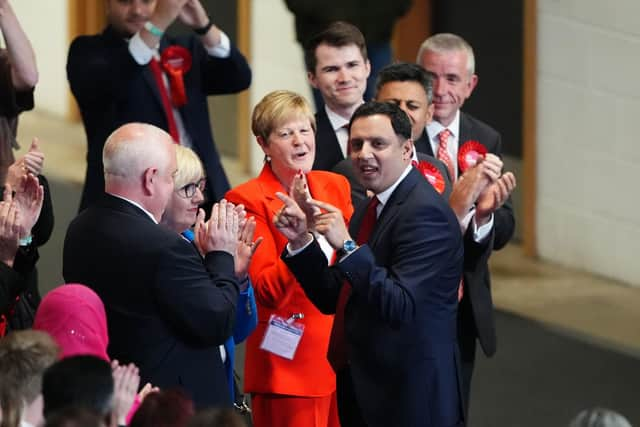
Mr Sarwar, still amongst his activists, was overheard telling a member of his inner circle “we’ve just won Stirling” to genuine shock, before another activist joked “we’re going to need a bigger bus”.
And then one after the other, Glasgow’s former SNP strongholds all turned red as Labour activists, who haven’t tasted victory in years, lapped it up.
First, the SNP’s David Linden lost his Glasgow East seat to Labour’s John Grady. It wasn’t even close, with the new MP enjoying a majority of almost 4,000.
Next it was now-former SNP MP Stewart McDonald in the firing line, losing his Glasgow South seat to Labour’s Gordon McKee, again by around 4,000 votes. Mr McKee’s acceptance speech showed off the former adviser to Labour’s soon-to-be Scottish secretary Ian Murray as a charismatic new MP and one to look out for at Westminster.
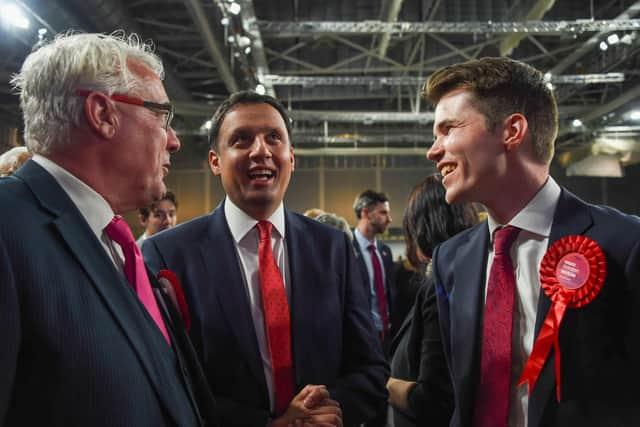
Almost immediately, the SNP’s Carol Monaghan was gone, losing her Glasgow West seat to Labour’s Patricia Ferguson by more than 6,000 votes. The SNP’s Chris Stephens was next in line for the chop, losing his Glasgow South West seat to Labour’s Zubir Ahmed by more than 3,000 votes.
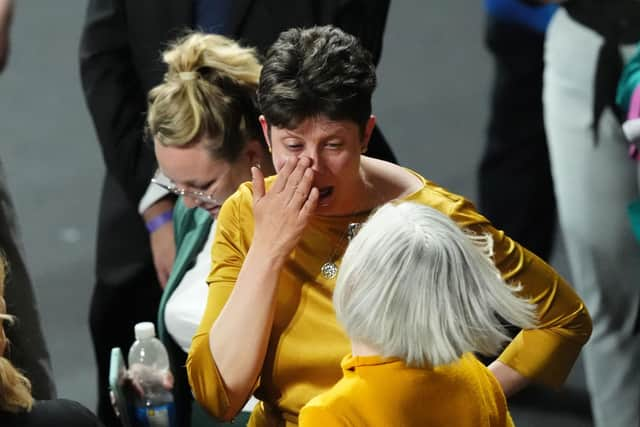
But the most painful Glasgow loss for the SNP was saved until the sun had started coming up when Alison Thewliss was left holding back the tears after failing to make a return to Westminster.
Ms Thewliss, a well-known SNP face at Westminster, lost out to Labour’s Martin Rhodes by more than 3,000 votes in the Glasgow North constituency. Ms Thewliss, the former MP for Glasgow Central, before the constituency was abolished, got a raw deal in the boundary changes. She looked unsurprisingly devastated.
For large parts of the night and early morning, she was seen staring silently as her constituency’s votes were verified and counted, probably in the knowledge that her time at Westminster was coming to an end.
Speaking to journalists on Friday, Mr Sarwar reflected on when he took charge of Scottish Labour three years ago, with the party trailing the SNP by 32 points and “people were talking about our survival”.
The Scottish Labour leader said that to go from that to “win such a convincing majority in Scotland is absolutely incredible”.
He stressed his strategy had been “changing the Labour party so that when the election was called, we could look the Scottish people in the eye and ask for their support and their trust”.
Clearly that blueprint has paid off in Glasgow and across the Central Belt.
Sir Keir Starmer, as part of his attack on the SNP during the election campaign, has criticised John Swinney’s party for simply “wanting to send a message” to Westminster. Instead, the Labour leader stressed he wanted “to send a government to Westminster”.
Labour is sending a government to Westminster, but it has also sent a big message that it is back where many believe it belongs - in charge of Glasgow and the Central Belt.
But with support for independence still strong across the Central Belt, and Mr Sarwar acknowledging those who favour separation have leant him their support, what Labour does next could be crucial in determining whether Glasgow remains red going forward.
Comments
Want to join the conversation? Please or to comment on this article.