
Gaelic officialdom is failing to engage with its existential crisis
The Scottish Languages Bill is simply a rehash of the status quo, writes Professor Conchúr Ó Giollagáin, the co-author of a landmark study published in 2020
The remaining Gaelic communities in Scotland are in the final stages of their absorption into the UK’s dominant culture of English monolingualism. The recently passed Scottish Languages Bill suggests nothing of consequence to counteract this troubling situation. From the Gaelic perspective, the Bill is an unfortunate example of legislation that deteriorates as it moves through the various parliamentary stages; its final version is weaker than what was originally proposed.
As we saw from many of the parliamentary debates, this poorly drafted legislation put Scotland’s parliamentarians in the invidious position of feeling obliged to support a less-than-optimal parliamentary response to the critical situation of the Gaelic communities. Cognisant of its weak relevance to societal reality, the parliamentarians could only muster a lacklustre ratification, rather than a much-needed ringing endorsement of a new departure in Gaelic affairs.
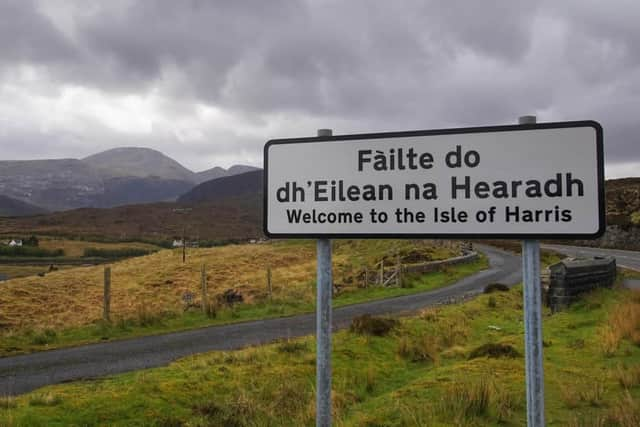

Excepting Scots, the Bill is a rehash of the status quo. It is, therefore, largely pointless. Much of what is proposed could be achieved without recourse to such a bureaucratically cumbersome legislative approach. As the Bill’s provisions are intended to be mostly symbolic and performative in their implementation, it is reasonable to enquire what justifies the legislative expense, time and official effort in devising a Bill that evades social reality. It is apparent that the Bill was initiated to address the challenges posed by Soillse’s 2020 Gaelic Crisis in the Vernacular Community sociolinguistic evidence, but the Bill fails to respond coherently and credibly to the documented reality of Gaelic community demise.
What has led to this hapless situation of proposing a variant of the official approach which led to the crisis in the first place? The failure in the Bill to prioritise support for fragile Gaelic communities is largely to blame.
The official and academic failure to engage sincerely with the reality check which the Gaelic Crisis evidence engendered is also implicated in this misguided legislation. The book’s evidence was subjected to an irrational academic and official antagonism in which custodians of existing Gaelic promotion colluded to ensure that the Gaelic Crisis perspective would be denied a fair hearing. In censoring the Gaelic Crisis, these custodians have merely reasserted a version of what constitutes Gaelic promotion while at the same time refusing to accept any responsibility for its societal failings. They have washed their hands of any linkage between their institutional power and the consequences of official inertia. The efforts of the MSPs to focus the parliamentary debates on the Gaelic Crisis evidence are to be especially commended, given the hostility of Gaelic officialdom to it.
In discounting the challenging lived reality of Gaelic speakers, the Bill was destined to veer back towards the ideological rigidities of established promotion efforts. Its social denialism is exacerbated by reiterations of official pieties and reassertions of symbolic appeals to the importance of Gaelic to a sense of Scottish culture, despite the obvious constraints on that social culture in supporting actual and viable Gaelic communities. The reality is that the Gaelic Crisis evidence has never been properly considered or debated in Scottish academia, in official language bodies or in governmental circles. Five years on, nobody in these key sectors for Gaelic affairs has sat down with the authors for an in-depth discussion on the implications of their research for the sustainability of Gaelic in Scotland. The Bill is an undemocratic reaction to the Gaelic Crisis, rather than an engagement with its evidence leading to its integration into policy developments. The Gaelic affairs power class in Scotland decided to enact a Languages Bill despite the demise of Gaelic communities, rather than instituting strategies to assist the Gaels in their current predicament.
The official rejection of the third-stage amendments tabled by MSPs Pam Duncan-Glancy, Michael Marra and Ross Greer were instructive. The common denominator in these amendments was to propose strategic indicators of community agency and progress. This rejection would suggest that the status of ‘Areas of Linguistic Significance’ is to be adhered to more in a symbolic rather than in a practically productive manner. In the absence of a clear strategic intent, the Bill is more likely to generate a cottage industry of navel-gazing language politics, rather than offering practical help to a language community in existential crisis. The policies that emerged from the 2005 Act failed to generate much traction among the Gaels. Given the irrelevance of this Bill to the social circumstances of the Gaels, it is likely that this legislation will become the sociolinguistic equivalent of a religious liturgy for a non-existent congregation.
In practical terms, the legislation amounts to a rebuff to the remaining Gaelic communities. In this situation, it might be wise for council and community leaders, Gaelic activists in the Gaelic districts and representatives of other Gaelic networks to call a Gaelic community summit to identify sources of practical and societal support, outwith the political sphere, which can bolster the remaining capacity. Besides availing of the limited opportunities from the Bill, it is clear that the Gaels are going to require a bespoke fund to support their collective efforts to reverse the current trajectory towards social erasure. The terminal decline of native-speaking Gaelic communities can be the only possible outcome of anaemic and untargeted official Gaelic promotion. Gaelic is in dire need of community protection rather than more symbolic promotion.
Conchúr Ó Giollagáin is the Gaelic Research Professor at the University of the Highlands and Islands
Comments
Want to join the conversation? Please or to comment on this article.